



Surfing in Thailand: Best Surf Spots, Seasons and Conditions
Thailand is not one of Asia’s top surfing destinations, but it has a handful of worthwhile spots for beginners and intermediate surfers. From the Andaman coast to the Gulf of Thailand, here is where to surf, when to go and what conditions to expect.
Why Surf in Thailand?
Thailand may not be the first country that comes to mind when you think about surfing, but it offers a surprisingly accessible experience, particularly for beginners and intermediate surfers.
Warm water, a relaxed atmosphere and several easy-to-reach beaches make Thailand a good place to learn the basics or improve your skills without the crowds found at some of Asia’s major surf destinations.
Thailand cannot compete with Indonesia when it comes to consistent, world-class waves. However, its beaches can produce gentle conditions that are well suited to learning. More experienced surfers can also find stronger waves and reef breaks along the Andaman coast during the southwest monsoon.

When Is the Best Time to Surf in Thailand?
The best time for surfing in Thailand depends largely on which coast you choose.
| Region | Best time to surf | Typical conditions |
|---|---|---|
| Andaman Sea (Phuket, Khao Lak) | May to October | Larger and more powerful waves during the southwest monsoon |
| Gulf of Thailand (Hua Hin, Rayong) | October to December | Smaller waves, generally better suited to beginners |
The Andaman coast is Thailand’s main surfing region, with the southwest monsoon generating the most consistent surf from roughly May to October.
The Gulf of Thailand can also produce surf, particularly during periods of stronger weather activity, but conditions tend to be less consistent.
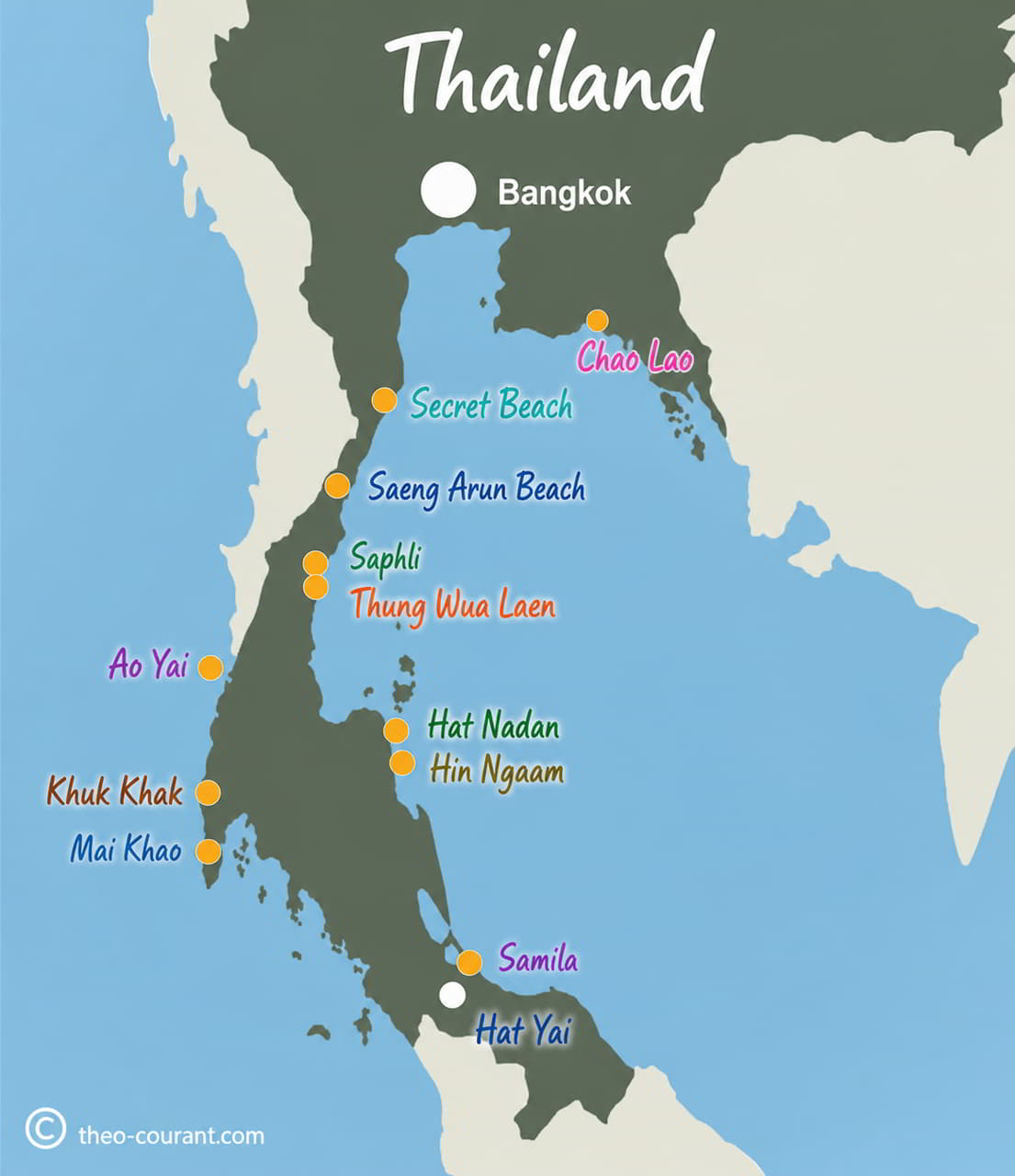
Best Surf Spots in Thailand
1. Andaman Coast – Surf Season: May to October
The west coast is where you will find most of Thailand’s established surf spots. Phuket is the main hub, while Khao Lak and several less-developed destinations offer alternatives for travelers looking for a quieter setting.
| Surf spot | Level | What to expect |
|---|---|---|
| Kata Beach, Phuket | Beginner | Consistent waves, surf schools and board rentals |
| Nai Harn, Phuket | Beginner–Intermediate | Less crowded and a scenic setting |
| Khao Lak, Phang Nga | Beginner | Gentle waves and sandy-bottom beaches suitable for learning |
| Kalim Beach, Phuket | Advanced | Stronger waves and a reef break |
| Surin Beach, Phuket | Advanced | Faster waves and generally less crowded |
| Koh Phayam, Ranong | Intermediate | A quieter island destination with good surf potential |
| Koh Lanta | Beginner | Smaller waves, particularly suitable for longboarding |
Kata Beach is probably the easiest place to start if you are looking for lessons, equipment rental and a well-established surf scene.
Further north, Khao Lak offers a different experience, with long beaches and a generally quieter atmosphere. It is particularly interesting for beginners looking for a less urban setting.
For experienced surfers, conditions at Kalim Beach and other exposed sections of Phuket’s west coast can become considerably more challenging when the monsoon swell arrives.
2. Gulf of Thailand – Surf Season: October to December
Surfing is less established on Thailand’s eastern coast, but some beaches can produce rideable waves when weather conditions are favorable.
| Surf spot | Level | What to expect |
|---|---|---|
| Hua Hin | Beginner | One of the Gulf’s best-known surf locations, with several surf schools |
| Cha-am | Beginner | Gentle waves and generally quieter than Hua Hin |
| Rayong | Beginner–Intermediate | Variable conditions along the eastern coast |
| Koh Samui | Beginner | Occasional surf during periods of stronger monsoon weather |
| Chanthaburi | Beginner | Small waves and conditions that can also suit SUP |
The Gulf of Thailand should not be considered a year-round surfing destination. Conditions are more dependent on local weather systems, wind and seasonal swells than on a regular surf season.
Surf Competitions and Events in Thailand
Thailand’s surf scene has grown considerably over the past decade, with local competitions and events helping to develop the sport.
- Phuket Surf Series: a popular local competition series, although its schedule has become less predictable in recent years.
- Thailand Surfing Championship: an event bringing together Thai and international surfers.
Competition schedules can change from one year to another, so check the organizers’ latest announcements before planning a trip around a specific event.
Surfing in Thailand: What Conditions Can You Expect?
| Factor | Typical conditions |
|---|---|
| Wave size | Around 1–2 metres on many surf days, with larger waves possible during the Andaman monsoon |
| Water temperature | Around 27–30°C throughout the year |
| Wetsuit | Usually unnecessary |
| Best coast for reliable surf | Andaman coast |
| Best coast for beginners | Mainly the Andaman coast, depending on conditions |
Thailand’s warm water means that a wetsuit is generally unnecessary. A rash guard, however, is useful for protection from the sun and prolonged exposure in the water.
Wave size can vary considerably from one beach to another and from one day to the next. Always check the local forecast and surf conditions before entering the water, particularly during the monsoon season.
Is Thailand Good for Surfing?
Thailand is a good surfing destination for beginners and intermediate surfers, particularly if surfing is part of a wider trip around the country.
For more experienced surfers, expectations should be different. The best chance of finding stronger and more interesting waves is on the Andaman coast during the southwest monsoon, from May to October. Phuket remains the country’s main surfing hub, while Khao Lak and quieter islands provide alternatives.
The Gulf of Thailand can offer occasional surf, but conditions are generally less predictable.
So, if you are already planning a trip to Thailand and want to spend a few days on a board, there is no reason to leave your surfboard at home.
Thailand Island Guides
Looking for more information about Thailand’s islands? Check out our guides to the islands of the Gulf of Thailand and the Andaman Sea:

You can also read our guide to Thailand’s beaches:

FAQ: Surfing in Thailand
Where is the best place to surf in Thailand?
Phuket is the country’s main surfing destination, with several established beaches and surf schools. Kata Beach is particularly suitable for beginners, while Kalim and other exposed beaches can offer stronger waves for experienced surfers.
What is the best month to surf in Thailand?
For the country’s most reliable surf, the best period is generally May to October on the Andaman coast, when the southwest monsoon generates larger swells. Conditions vary from year to year.
Can beginners surf in Thailand?
Yes. Thailand has several beaches with relatively gentle waves and surf schools, particularly around Phuket and Khao Lak. Always choose a beach appropriate to your level and follow local safety advice.
Is there surfing in Phuket?
Yes. Phuket is Thailand’s main surfing destination. Popular spots include Kata Beach, Nai Harn, Kalim Beach and other beaches along the west coast. The main surf season is generally May to October.
Is surfing possible in Thailand all year round?
Surfing is possible at different times of the year, but conditions vary significantly between the two coasts. The Andaman coast is generally best from May to October, while parts of the Gulf of Thailand can see surf later in the year.
Is the water warm enough to surf without a wetsuit?
Yes. Sea temperatures in Thailand generally remain around 27–30°C, so most surfers do not need a wetsuit. A rash guard is useful for sun protection.
Is Thailand a good alternative to Bali for surfing?
Not if your main goal is consistent, high-quality surf. Indonesia, including Bali, offers much more reliable and varied waves. Thailand is better suited to travelers who want to combine surfing with a broader holiday and to beginners looking for accessible conditions.