

Indonesia Fires: How Far Could the Haze Spread Across Southeast Asia?
Written by the editors of theo-courant.com, your reference guide to Thailand and South-East Asia - based in Bangkok, at the heart of Thai culture.

Wildfires are spreading across parts of Indonesia, sending smoke into neighboring countries. With Malaysia and the Philippines already affected, could Thailand also face the consequences?
Wildfires are now affecting countries beyond Indonesia
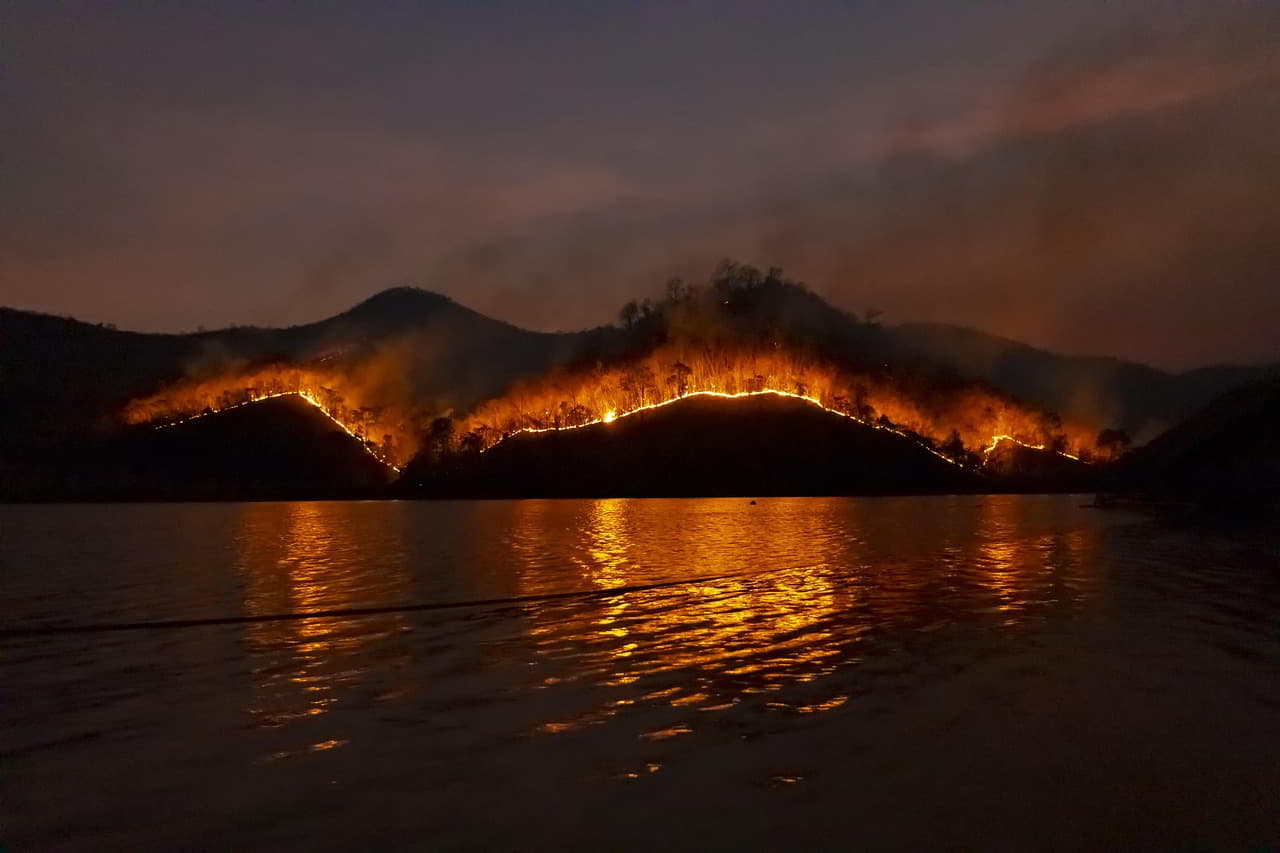
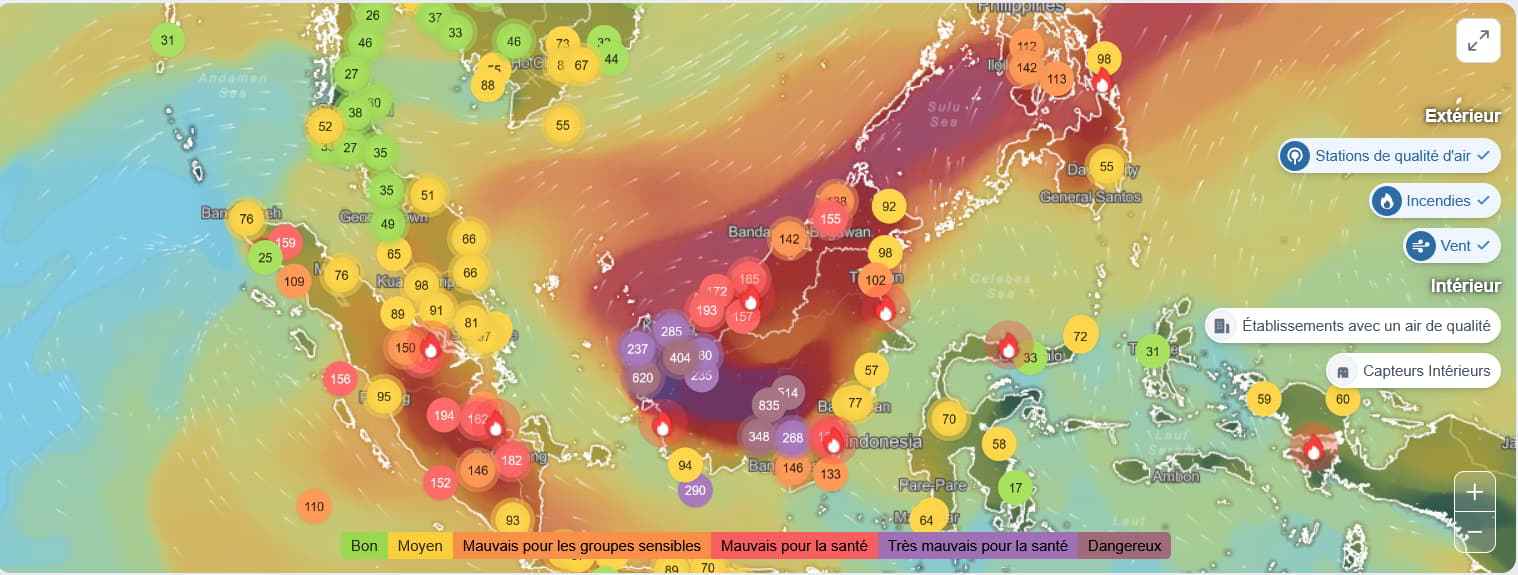
The current wildfire season is taking on a regional dimension across Southeast Asia. Fires in several parts of Indonesia are producing large amounts of smoke, some of which is now being carried across national borders.
Known as transboundary haze, the phenomenon is not new in Southeast Asia. However, its current development deserves close attention as several countries begin taking measures in response to deteriorating air quality.
The consequences are already being felt in Indonesia. In six provinces, around 1.4 million students have had to switch to remote learning because of poor air quality.
Malaysia and the Philippines are already affected
The smoke is no longer confined to areas where the fires are burning.
Malaysia is particularly exposed because of its proximity to the affected parts of Indonesia. In the Philippines, authorities have also reported smoke arriving from Indonesian wildfires and advised people to take precautions, particularly in areas where air quality has deteriorated.
The situation is relevant for other countries across the region because the movement of smoke depends largely on the location of the fires, prevailing winds and atmospheric conditions.
Could Indonesian wildfire smoke reach Thailand?
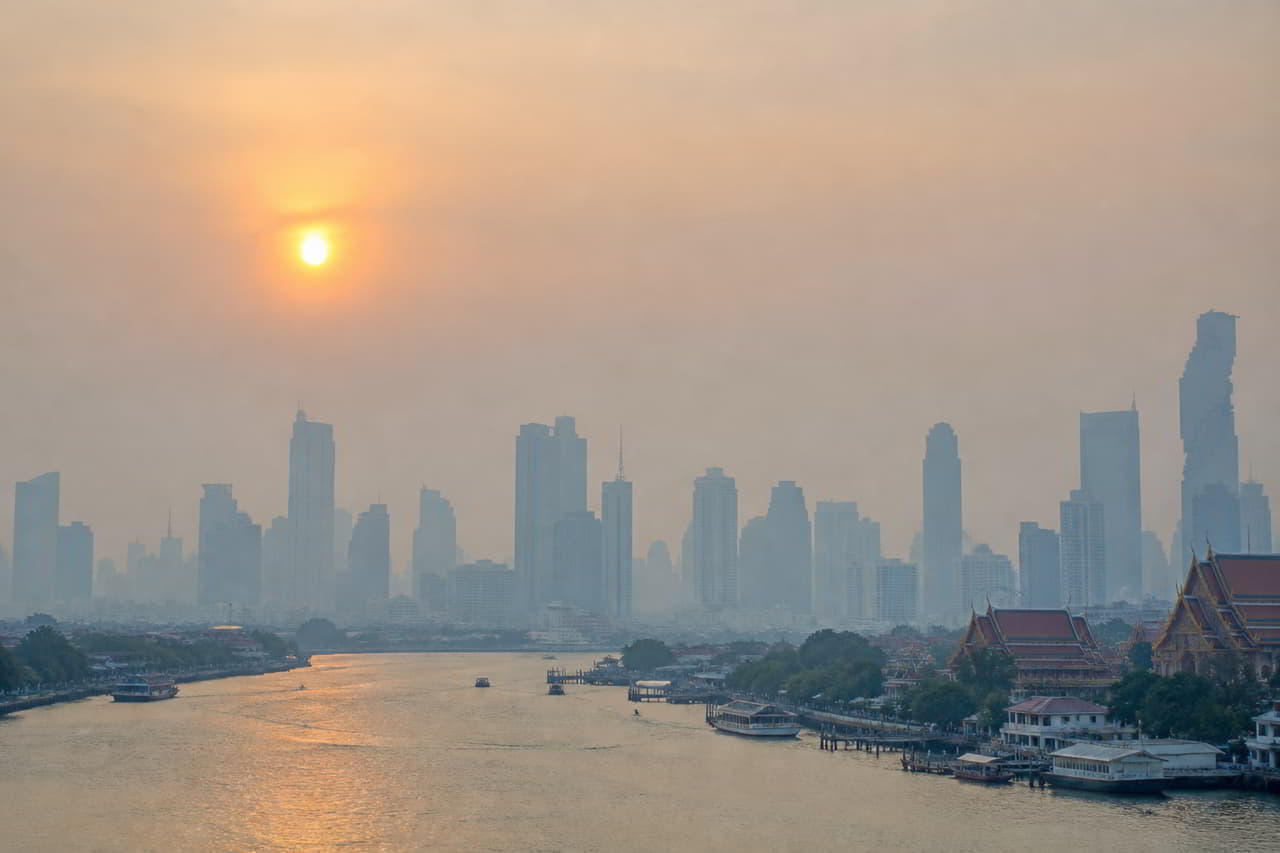
This is a particularly relevant question for travelers already in Thailand or planning a trip there.
At this stage, Thailand should not be described as directly threatened by Indonesian wildfire smoke. The situation observed in parts of Malaysia and the Philippines does not automatically mean that smoke will reach Thai territory.
Distance, prevailing winds and atmospheric conditions all play a major role in determining how airborne particles disperse.
Southern Thailand is the area to watch
If weather conditions become favorable for smoke to move northward, southern Thailand would be the first part of the country to monitor.
This includes provinces close to Malaysia as well as major tourist destinations in southern Thailand.
However, a meteorological possibility is not the same as a pollution forecast.
For travelers, the most useful approach is therefore to check local air-quality readings rather than assume that Indonesian wildfires will automatically affect Thailand.
What health effects can wildfire smoke have?
Wildfire smoke contains fine particulate matter, including PM2.5 particles, which can penetrate deep into the respiratory system.
When concentrations rise, health authorities may recommend limiting outdoor activities and, in some circumstances, wearing an appropriate mask.
Should travelers already wear masks in Thailand?
There is currently no reason to recommend that everyone in Thailand wear a mask because of the Indonesian fires.
Any recommendation should be based on actual local air-quality measurements.
People who are particularly sensitive to air pollution, as well as older adults, children and those with respiratory conditions, should take extra precautions if local air quality deteriorates.
The situation is different in Indonesia
In areas directly affected by the fires, the health impact is already significant.
The temporary closure of schools and shift to remote learning show that the pollution is having consequences beyond reduced visibility or discomfort.
Could the haze disrupt flights?
Yes. When smoke becomes dense enough to significantly reduce visibility, aviation operations can be affected.
The greatest risk is for airports close to active fires or located in areas directly affected by the haze.
Severely reduced visibility can result in operational restrictions, delays or changes to flight schedules.
What about flights to Thailand?
The presence of smoke in Indonesia should not be confused with an automatic disruption to air links with Thailand.
Travelers should monitor two things:
- air quality and visibility at their departure airport;
- information provided by their airline and the airport.
At this stage, there is no basis for assuming widespread disruption to flights to Thailand because of the current situation in Indonesia.
What could the economic consequences be for Southeast Asia?
The wildfires are already having measurable economic and social consequences in Indonesia.
Temporary school closures, restrictions on activities and reduced visibility can affect transport, trade and some tourism-related activities.
The aviation sector is also particularly sensitive to significant reductions in visibility.
Could tourism be affected?
In areas directly affected by the haze, poor air quality can restrict outdoor activities and reduce the appeal of some destinations.
For neighboring countries, the impact will depend largely on the duration and geographical extent of the phenomenon.
It would nevertheless be premature to speak of a region-wide impact on tourism across Southeast Asia.
Why are the fires so significant this year?
The current fires are being driven by several factors.
Hot and dry conditions make vegetation and soils more vulnerable to fire, while human activities also play an important role in the ignition and spread of fires.
El Niño-related conditions are an aggravating factor in some areas, but they do not by themselves explain the fires.
Significant CO₂ emissions
The scale of the fires also has a direct environmental and climate impact.
According to figures reported by Reuters based on Copernicus observations, Indonesian wildfires produced around 17.1 million tonnes of CO₂ in a single week.
This does not mean that the fires will cause a short-term change in the climate of Thailand or neighboring countries.
It does, however, illustrate the scale of the phenomenon at both regional and global levels.
How long can the haze remain across the region?
There is no fixed timeframe.
The duration and movement of the haze depend on several factors, including the evolution of the fires, wind speed and direction, rainfall and atmospheric conditions.
One area can therefore see conditions improve rapidly after a change in weather, while another may remain affected for longer.
What should travelers monitor over the coming days?
For travelers in Thailand, Malaysia, Singapore or Indonesia, several indicators are particularly useful:
- local air-quality readings;
- PM2.5 concentrations;
- health advisories from local authorities;
- visibility conditions;
- any airport-related alerts;
- the development of wildfires in neighboring regions.
The presence of smoke in a neighboring country does not automatically mean that air quality will deteriorate in Thailand.
What is the situation in other Southeast Asian countries?
The situation is changing rapidly, and exposure levels vary considerably from one country to another.
Indonesia
Indonesia remains the main source of the current haze. Wildfires are already causing significant air pollution and disruption in several provinces.
Malaysia
Its proximity to affected areas of Indonesia makes parts of Malaysia particularly exposed to transboundary smoke.
Singapore
Singapore is closely monitoring the haze. Authorities and experts have nevertheless stressed that the current situation does not necessarily mean that a crisis on the scale of 2015 will return.
Philippines
Smoke from Indonesian wildfires has already reached parts of the Philippines, where authorities have urged residents to take precautions.
Thailand
Thailand is not currently at the center of the transboundary pollution episode. Southern Thailand should nevertheless be monitored as wind patterns and air-quality conditions evolve.
Should travelers be concerned about visiting Thailand?
Not solely because of the wildfires currently burning in Indonesia.
Travelers in Bangkok, Chiang Mai, Phuket, Pattaya and other major Thai destinations are not automatically exposed to Indonesian wildfire smoke.
The situation should be assessed using local air-quality data.
Anyone traveling to southern Thailand may wish to check conditions shortly before departure and during their stay, particularly if authorities report deteriorating air quality.
FAQ – Indonesia fires and haze in Southeast Asia
Is Thailand’s air quality currently affected by the Indonesian fires?
There is no basis for assuming that Thailand as a whole is affected. Air quality varies by location and should be checked using local measurements.
Should I wear a mask in Thailand because of the haze?
Not automatically. Mask use should depend on local PM2.5 levels and official health advice.
Can the Indonesian fires disrupt flights?
Yes, particularly where dense smoke significantly reduces visibility. This does not mean that international flights to Thailand will automatically be affected.
Which countries are currently most affected?
Indonesia is the main source of the haze, with parts of Malaysia and the Philippines also affected. Singapore is closely monitoring the situation.
How long could the haze last?
There is no fixed timeframe. Wind, rainfall, atmospheric conditions and the development of the fires will determine how long individual areas remain affected.
What should travelers in Thailand monitor?
Check local air-quality readings, PM2.5 levels and official health advisories. Air travelers should also monitor their airline and airport for any operational updates.