


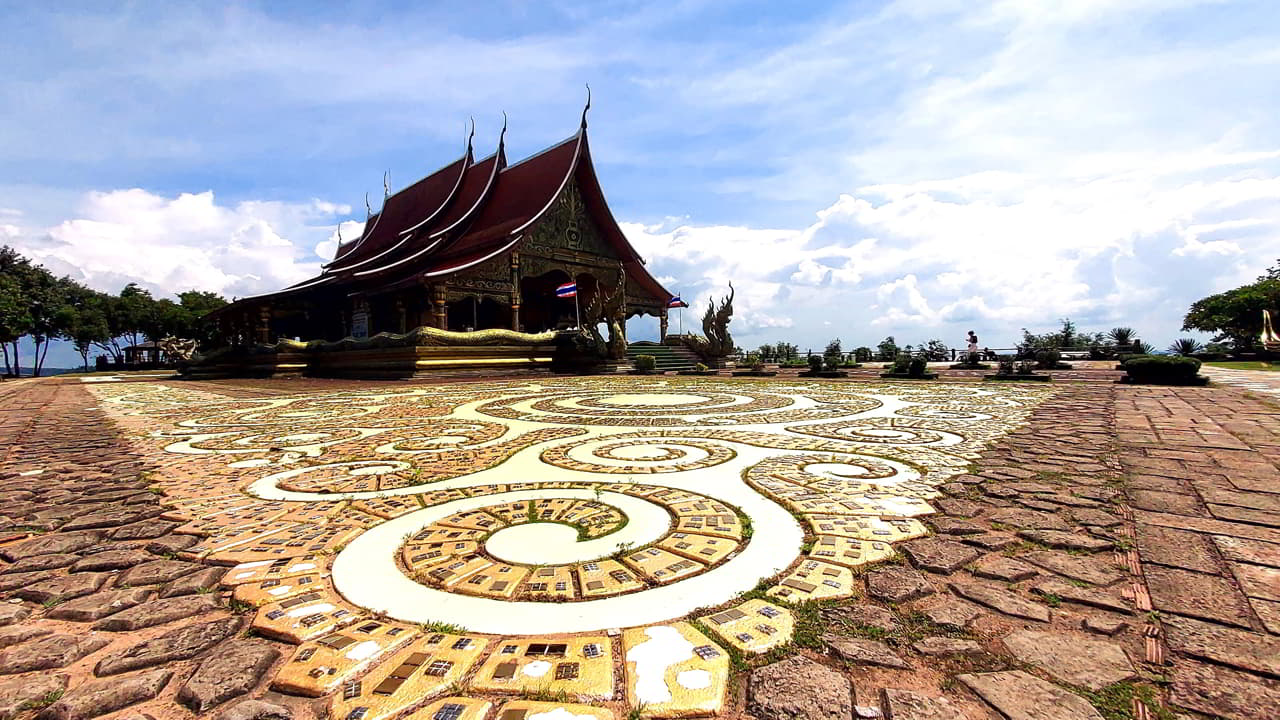
Wat Sirindhorn Wararam: Ubon Ratchathani’s Glowing Temple
At the eastern edge of Ubon Ratchathani, Wat Sirindhorn Wararam Phu Prao stands on a hill just a few kilometres from the Lao border. A temple still little known outside the region, it offers visitors an unexpected experience.
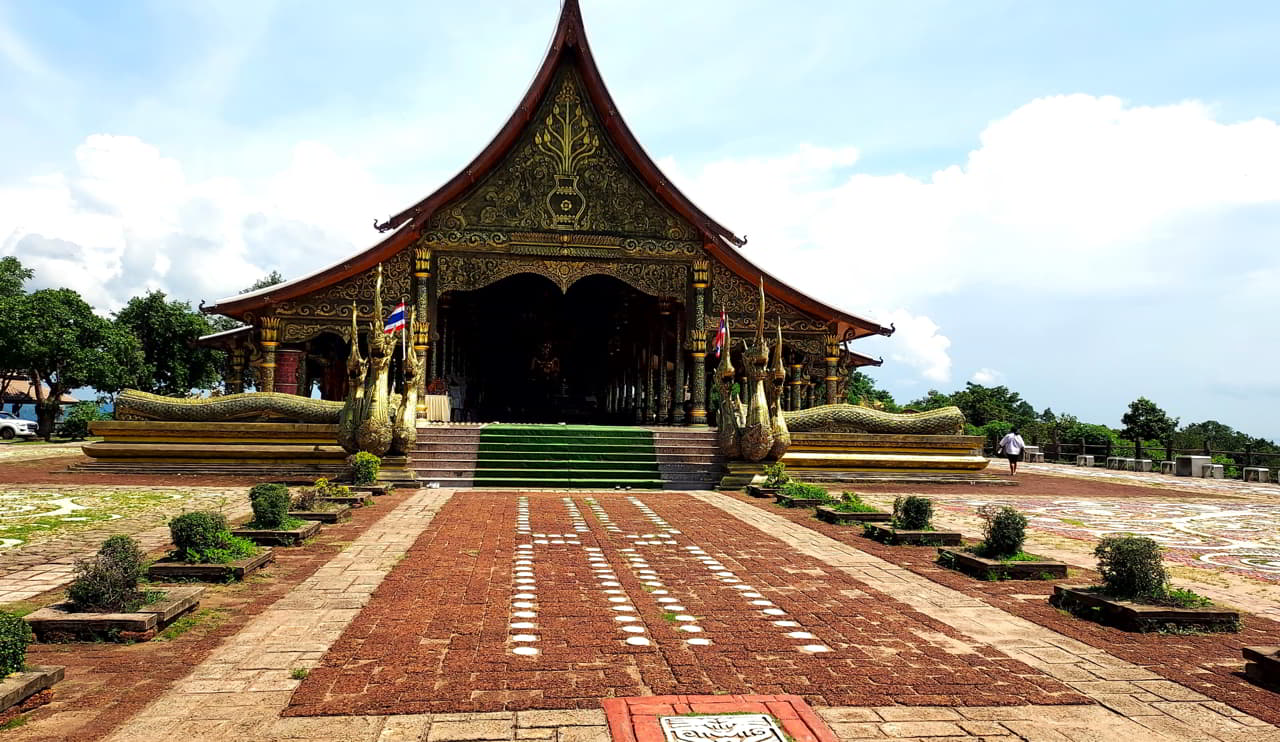
Also known as Wat Phu Prao, the temple is located in Sirindhorn District, not far from the Chong Mek border crossing with Laos. Its architecture, location and unusual artwork, which becomes visible in the dark, make it one of the most photogenic sites in Ubon Ratchathani.
Where is Wat Sirindhorn Wararam?
The Wat Sirindhorn Wararam Phu Prao is located in Sirindhorn District, in eastern Ubon Ratchathani Province.
The temple stands on a hill near Chong Mek and the Thailand-Laos border, which is about 10 minutes away. From the top, visitors can look out across the surrounding landscape and the border region.
From central Ubon Ratchathani, the drive takes approximately one to one and a half hours, depending on the route and traffic conditions.
The temple is therefore better suited to a trip by car or with a driver than to a simple visit from the city centre. It is also a useful stop when travelling through the region. For example, you can stop at the nearby lake for lunch and enjoy the small water park. It is an easy option for families.
A temple inspired by Lao architecture
The main building is one of the first things that catches the eye on arrival at Wat Sirindhorn Wararam.
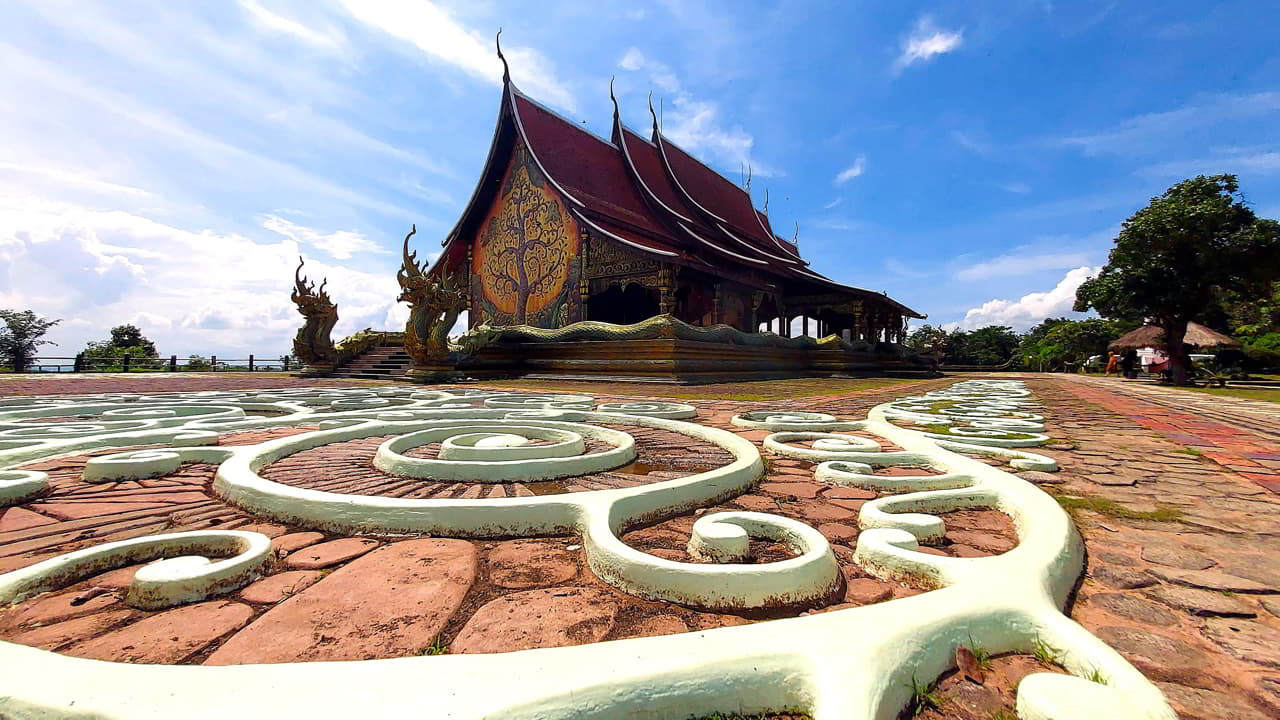
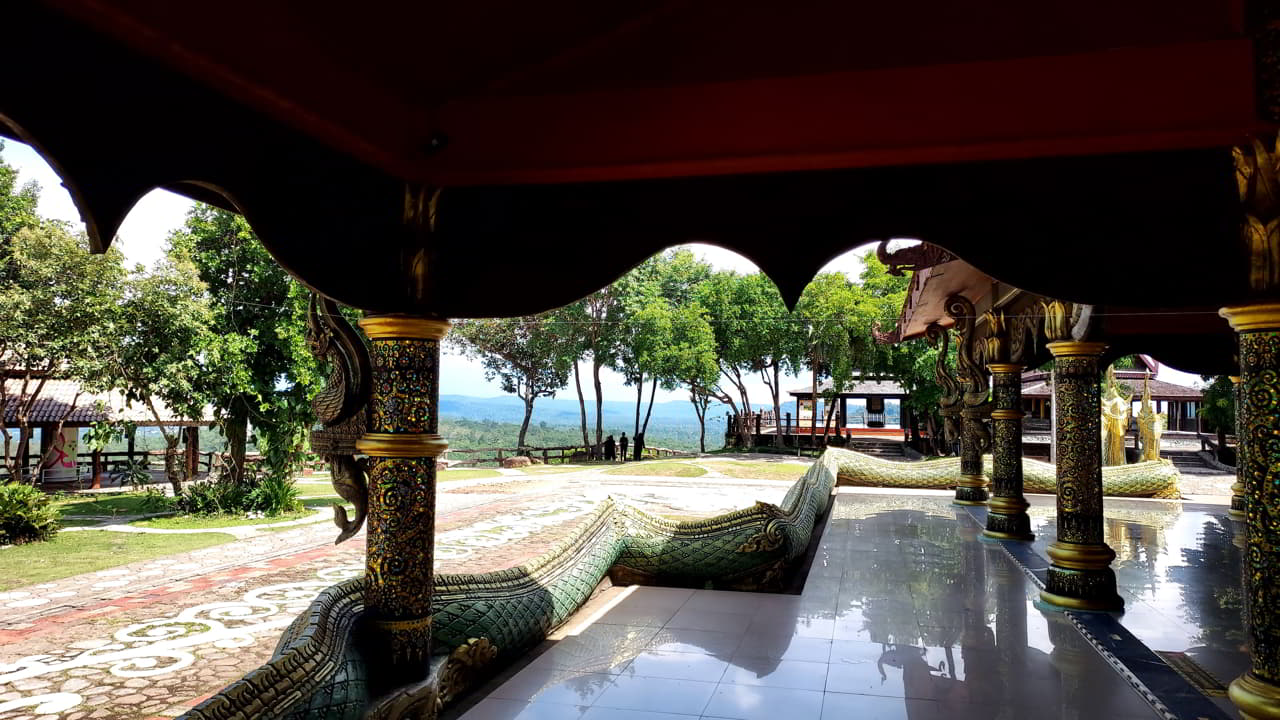
Its architecture is notably inspired by Wat Xieng Thong in Luang Prabang, Laos, while offering its own interpretation of traditional Thai and Lao architectural elements. The building itself is not particularly imposing. It is the decorative details on the ground that give the site much of its distinctive character.
During the day, natural light makes it possible to observe these details and appreciate the different elements surrounding the temple.
This is worth keeping in mind because the best-known photographs of Wat Sirindhorn Wararam focus almost exclusively on the Tree of Life after dark.
The temple has another dimension during the day that is worth taking the time to see.
The famous phosphorescent Tree of Life
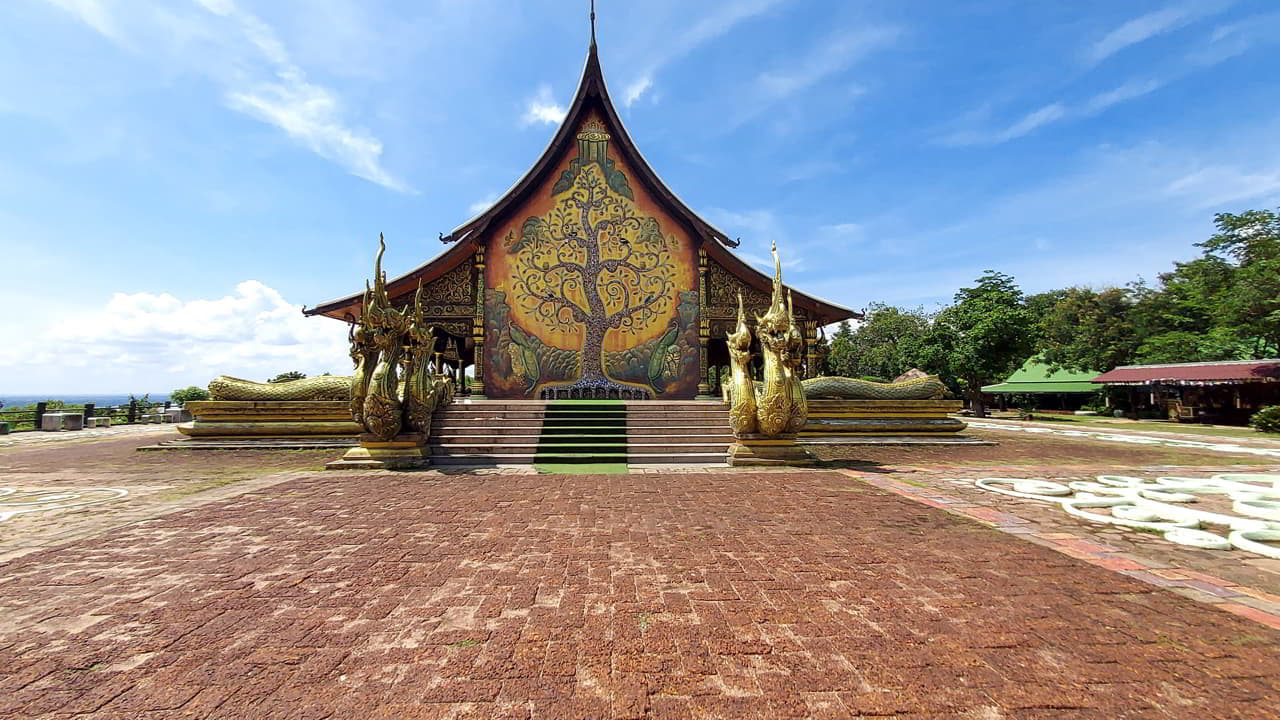
The main reason many visitors come to Wat Sirindhorn Wararam can be found behind the main building.
A large Tree of Life covers the rear wall of the temple. In Buddhist tradition, the tree is associated with the idea of a celestial or miraculous tree, often represented in religious art.
In daylight, the artwork appears as a detailed decorative composition.
After sunset, its appearance changes completely.
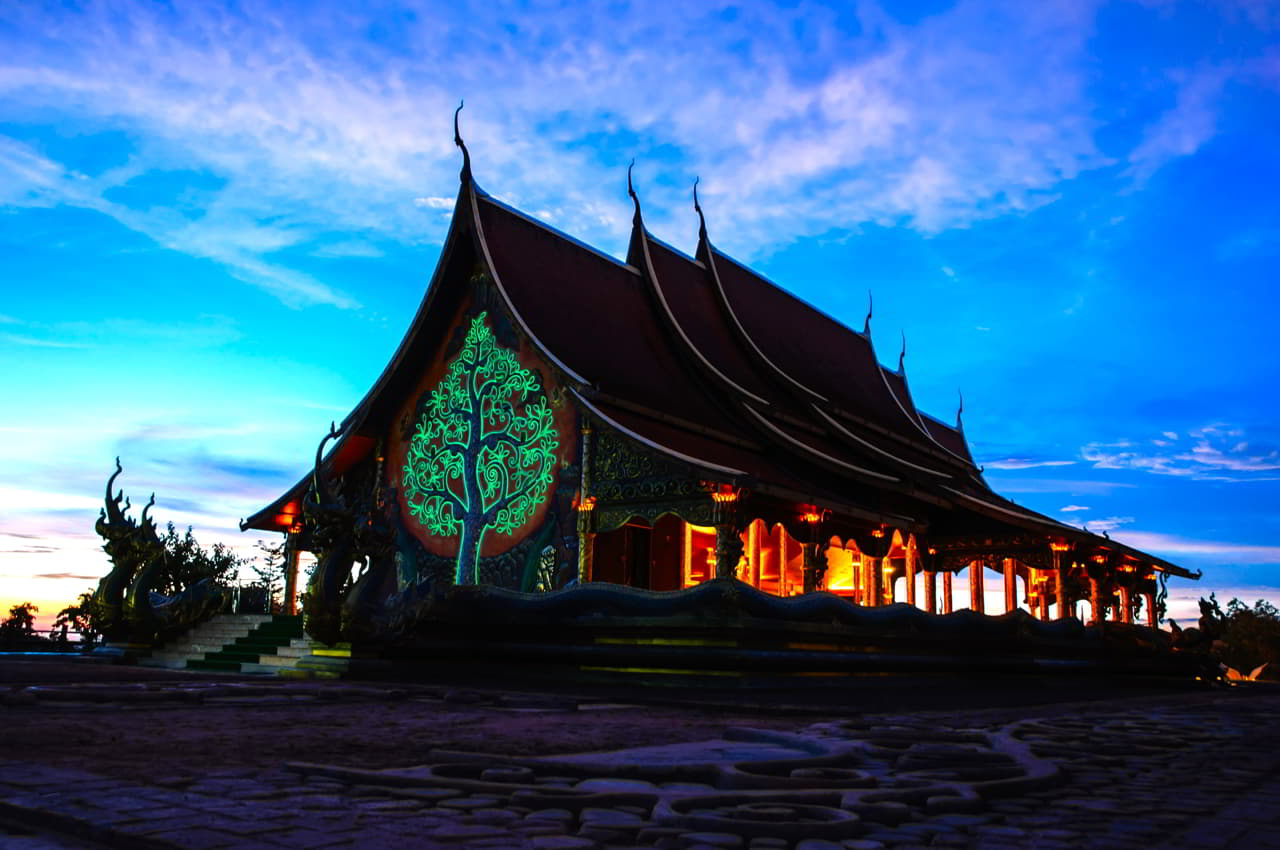
The artwork uses a phosphorescent material that absorbs light during the day before releasing it in darkness. As natural light disappears, the tree gradually appears with a blue-green glow.
This unusual effect has helped make Wat Sirindhorn Wararam one of the best-known photographic subjects in Ubon Ratchathani.
The Spiritual Tree of Life and Light Art
Inspired by the ancient concept of the Bodhi tree — a symbol of enlightenment, interconnectedness and inner awakening — luminous motifs spread across the temple courtyard, extending their energy outward while softly glowing. The design combines flowing patterns rooted in traditional Thai and Buddhist aesthetics.
This light artwork represents the invisible spiritual forces connecting humanity, the earth and the ideal of all beings. Its branches extend and intertwine, projecting outward the roots and branches of a sacred tree.
Why arrive before sunset?
Visiting the temple only after dark means missing part of what makes the site interesting.
The best approach is to arrive in the late afternoon, around 6:00 pm.
This gives you time to see the temple and its architecture in natural light. Its elevated position also provides views across the surrounding landscape.
As the sun goes down, the atmosphere changes.
Then, as night falls, the phosphorescent artwork gradually becomes visible.
Its appearance depends in particular on how much sunlight it has received during the day and on the surrounding conditions. It is therefore better to allow enough time rather than arriving just after dark.
For photographers, this transition is particularly interesting, as it allows several different types of photographs to be taken during the same visit.
A viewpoint over eastern Ubon Ratchathani
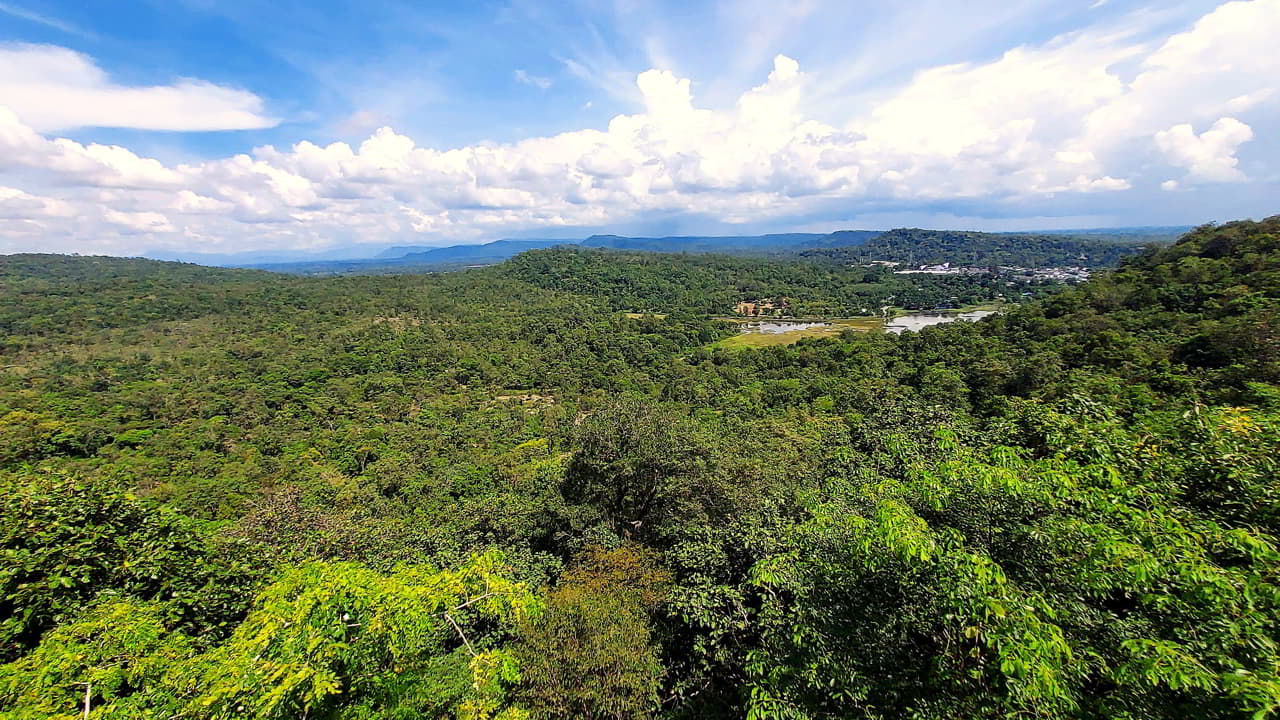
The location of Wat Sirindhorn Wararam is an important part of its appeal.
The temple overlooks the surrounding landscape and provides views towards the region around the Thailand-Laos border.
Late afternoon is therefore also a good time to enjoy the panorama.
Rather than seeing the temple simply as a nighttime attraction, it is worth taking time to look at the landscape before focusing on the luminous artwork.
For travellers visiting eastern Ubon Ratchathani, the temple can easily be included in an itinerary covering several sites in Sirindhorn District and the Khong Chiam area.
What is the best time to visit Wat Sirindhorn Wararam?
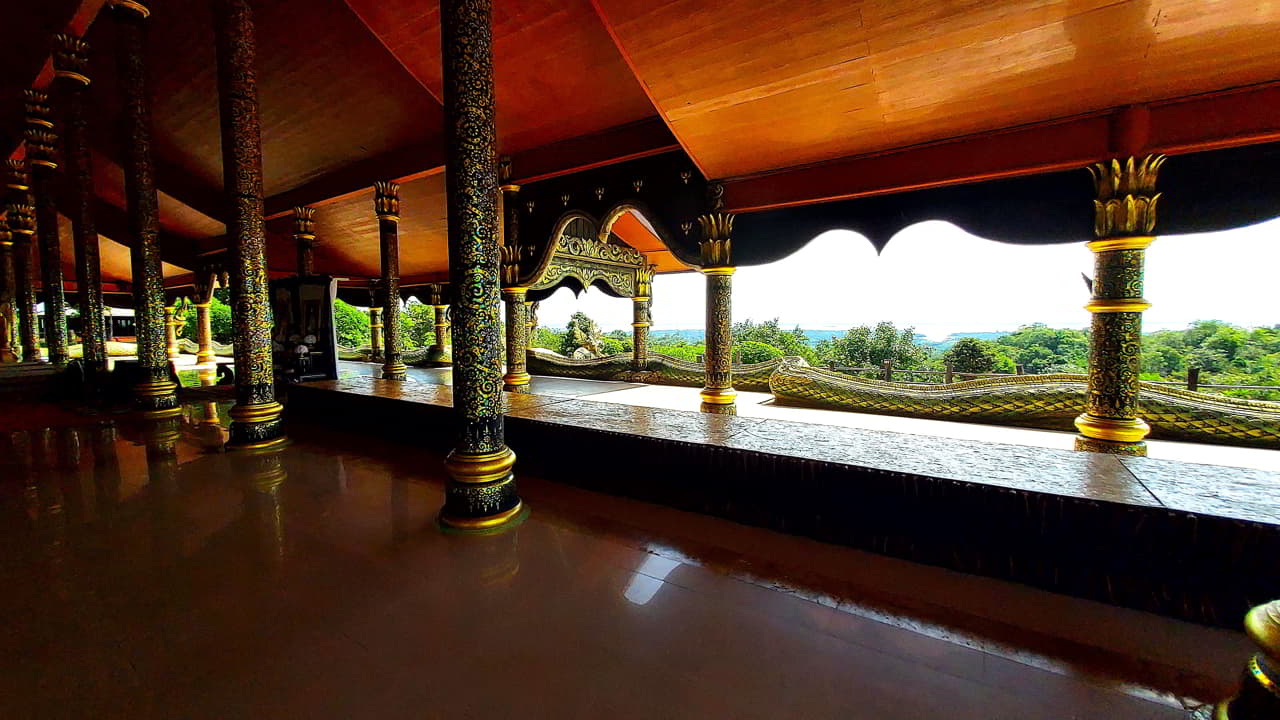
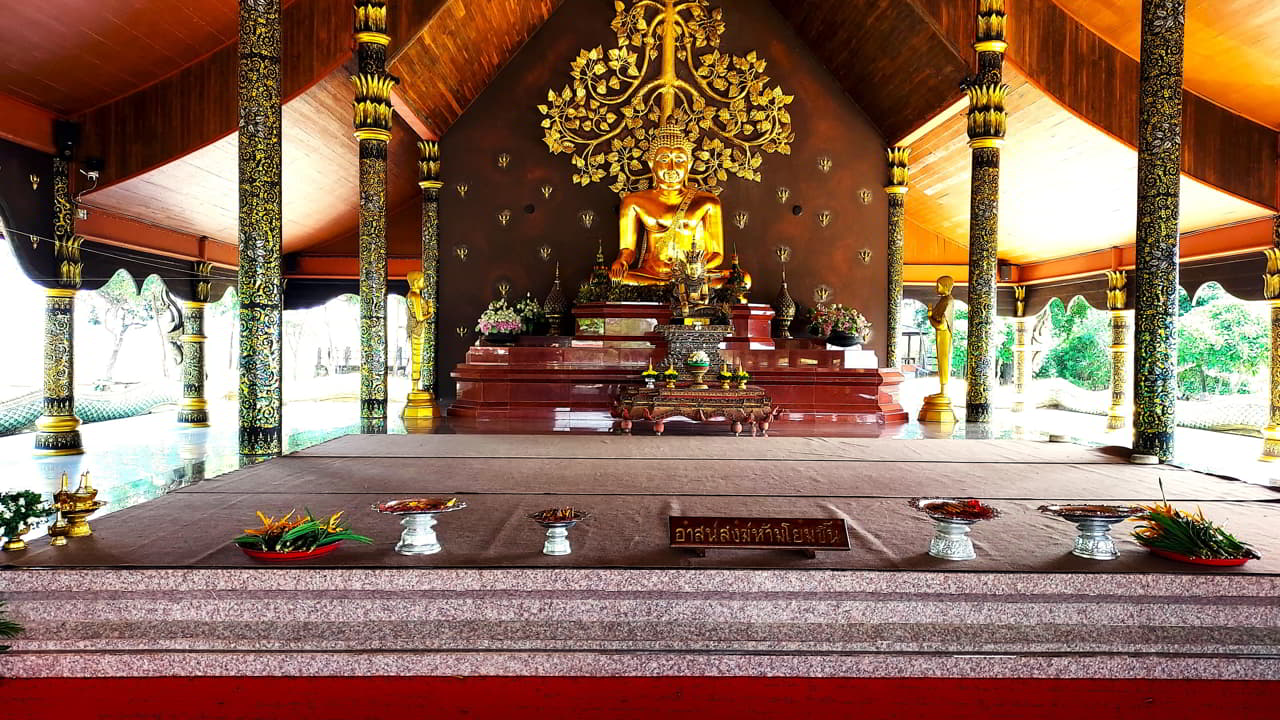
Late afternoon is probably the best time to begin the visit. The visit itself is not very long, as there is one main building, two smaller annexes and the viewpoint to enjoy. Then, as darkness falls, you can take in the phosphorescent artwork, whose brightness can vary depending on the amount of sunlight received during the day.
The result can therefore vary from one evening to another.
For travellers heading to Laos through the Chong Mek border crossing, the temple visit needs to be completed by around 6:00 or 7:00 pm at the latest, as the border crossing closes at 8:00 pm.
Another point to keep in mind concerns days with strong winds. Because the temple stands on elevated ground, it is particularly exposed to the weather. It is better to postpone your visit if weather conditions are unfavourable.
Wat Sirindhorn Wararam for photographers
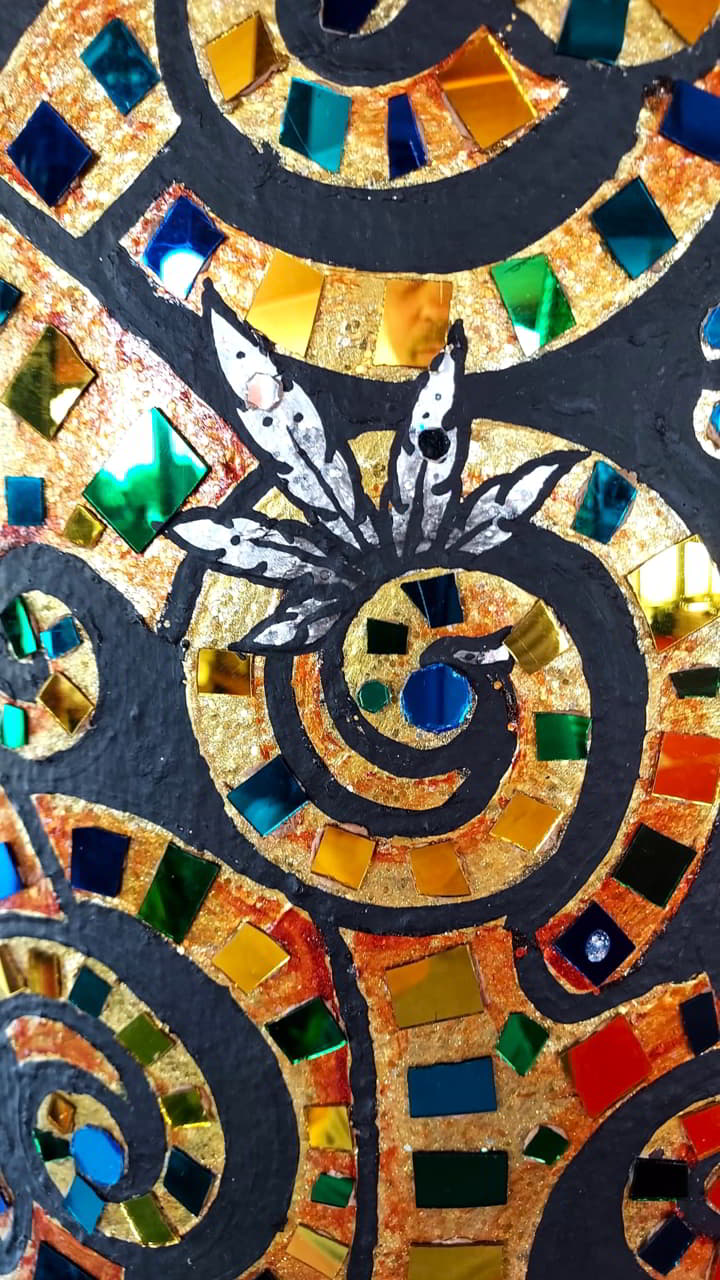
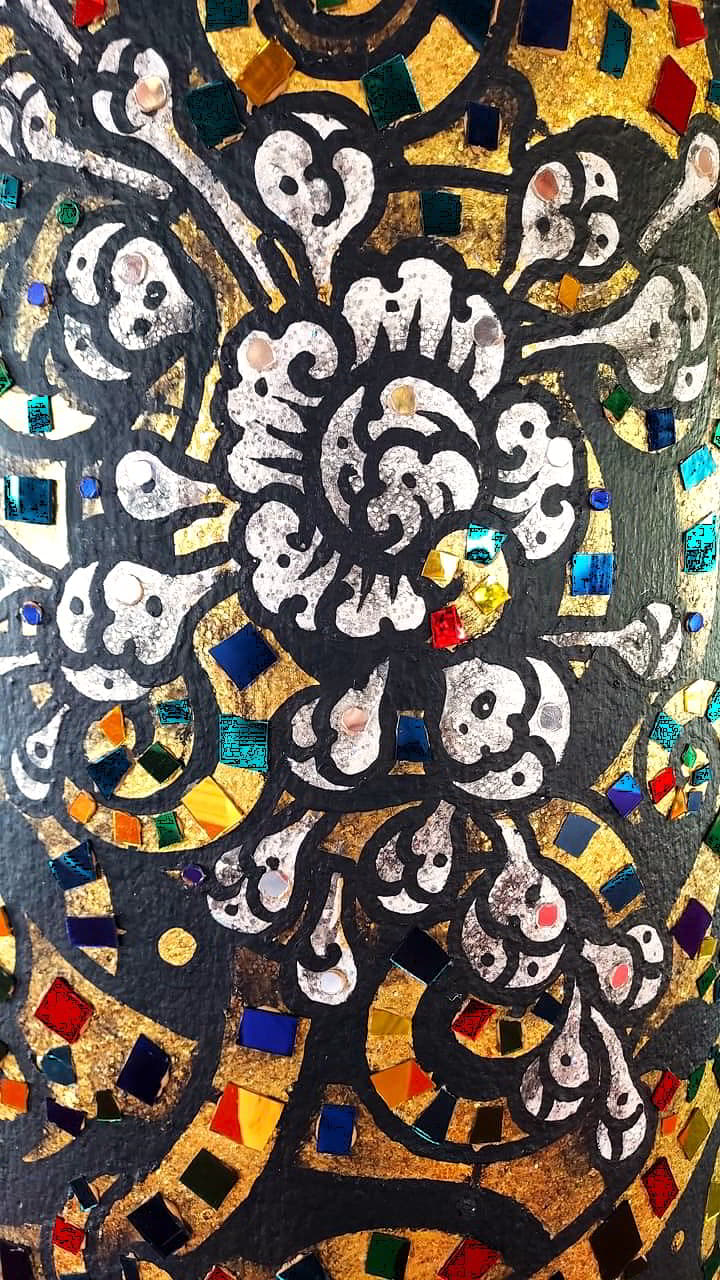
The temple is particularly interesting for photography because the visit offers several different subjects within a relatively small area.
During the day, the main building and its architectural details are the main subjects.
As sunset approaches, the landscape becomes more important.
After dark, the Tree of Life becomes the central subject.
The phosphorescent artwork is relatively subtle to the naked eye compared with an artificially illuminated attraction. A camera or smartphone using a night mode can therefore produce an image that looks quite different from what the visitor actually sees.
A tripod can also be useful for longer exposures.
It should not be forgotten, however, that Wat Sirindhorn Wararam remains a Buddhist place of worship. Photography should therefore respect religious activities and other visitors.
How to get to Wat Sirindhorn Wararam
From Ubon Ratchathani, the journey generally takes around one to one and a half hours by car, depending on your starting point, route and traffic.
Public transport options to the temple are more limited, so a rental car, motorbike or pre-arranged driver are generally the most practical solutions.
By public transport, vans and buses run from Ubon Ratchathani bus station to the border crossing. By asking the drivers, it may be possible to get off at the turn-off leading to the temple, but there is no transport available for the remaining distance. The options are walking or hitchhiking.
As the visit naturally extends into sunset and after dark, it is also important to plan your return journey in advance.
Wat Sirindhorn Wararam and discovering Ubon Ratchathani
Wat Sirindhorn Wararam makes more sense as part of a trip through eastern Ubon Ratchathani than as a simple excursion from the city centre.
This part of the province offers an experience very different from Thailand’s better-known tourist destinations.
The temple can notably be combined with a visit to Chong Mek, Khong Chiam, Pha Taem National Park, Sam Phan Bok and other sites along the Mekong.
This is also part of what makes Ubon Ratchathani interesting for travellers looking to move beyond Thailand’s more familiar tourist routes.
Is Wat Sirindhorn Wararam worth visiting?
Yes, particularly if you are exploring eastern Ubon Ratchathani.
It is important to understand that Wat Sirindhorn Wararam is not simply a temple that lights up at night.
Part of the interest lies in this gradual transformation: a traditional Buddhist temple during the day becomes, after sunset, a place where a phosphorescent artwork gradually takes shape in the darkness. For me, this can also be seen as a metaphor for Buddhism itself, as a light guiding the faithful through the darkness and uncertainties of existence.
Frequently asked questions
Is Wat Sirindhorn Wararam also called Wat Phu Prao?
Yes. Wat Sirindhorn Wararam Phu Prao is also commonly known as Wat Phu Prao or Phu Prao Temple.
Why does the Tree of Life glow at night?
The artwork uses a phosphorescent material that absorbs light during the day and releases it after sunset, creating a blue-green glow.
What is the best time of day to visit Wat Sirindhorn Wararam?
It is best to arrive before sunset so you can see the temple in daylight, enjoy the panoramic views and stay until the Tree of Life gradually appears in the darkness.
How far is Wat Sirindhorn Wararam from Ubon Ratchathani?
The temple is several dozen kilometres from Ubon Ratchathani. The journey from the city centre generally takes around one to one and a half hours by road.