


Thailand Discovers 400-Year-Old Ruins Hidden in a Remote Northern Forest
Written by the editors of theo-courant.com, your reference guide to Thailand and South-East Asia - based in Bangkok, at the heart of Thai culture.

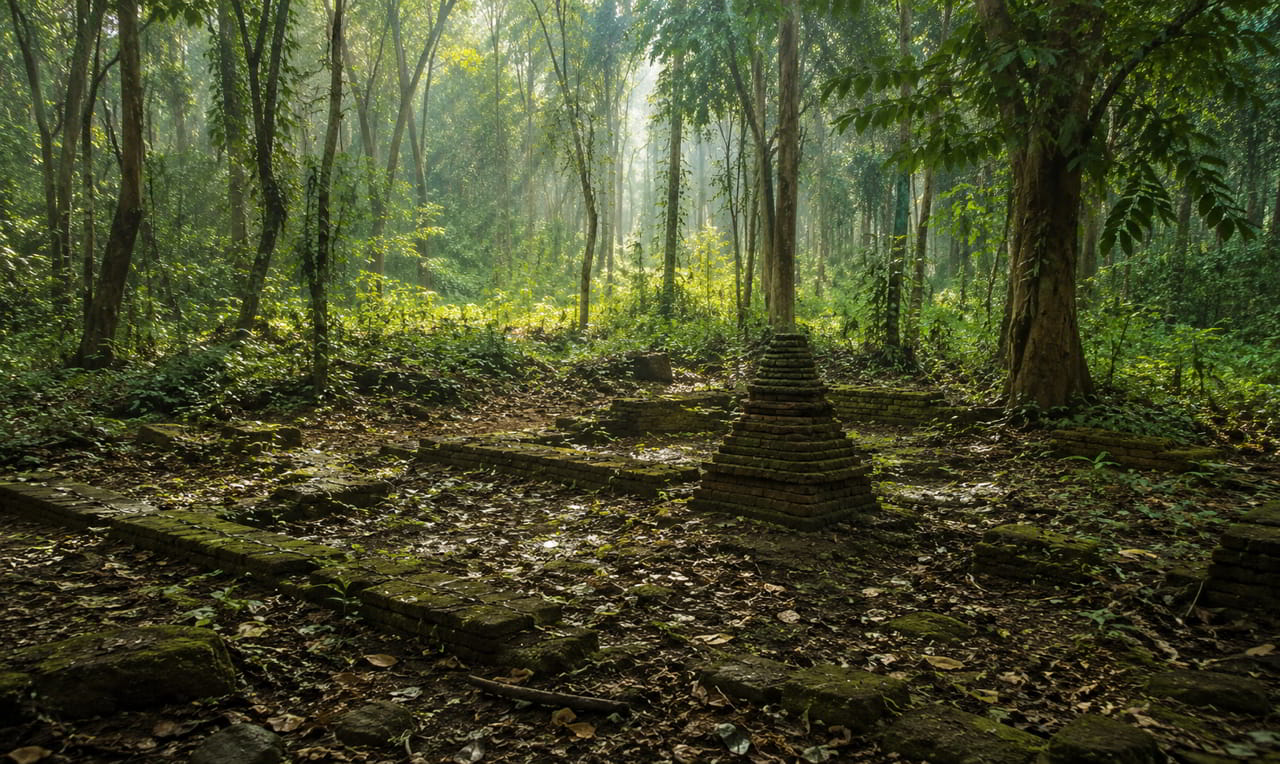
A major archaeological discovery has been reported in northern Thailand after ancient ruins believed to be more than 400 years old were found deep inside a remote forest in Mae Hong Son province, near the Myanmar border.
Thai authorities say the structures are likely connected to the Lanna Kingdom, an ancient kingdom that once ruled much of present-day northern Thailand. The site includes two old stupas and traces of additional buildings scattered across the forested area.
The discovery is already attracting attention from historians and archaeologists because Mae Hong Son remains one of the least explored regions of Thailand from a historical perspective. Researchers believe the ruins could help shed new light on forgotten settlements and trade routes that once crossed the mountainous northwest of the country.
Ancient ruins discovered in a remote area of northern Thailand
The ruins were found in a mountainous forest area located between Mueang Mae Hong Son and Khun Yuam districts.
According to local reports, the discovery first gained attention after residents shared photographs and information online. Provincial authorities later inspected the site alongside local officials and community representatives.
Initial surveys revealed several ancient structures that remain surprisingly visible despite centuries of tropical weather and dense vegetation.
Mae Hong Son province is known for its rugged mountains, thick forests and relative isolation. Some parts of the province remain difficult to access, which may explain why the ruins had not previously been documented by archaeologists.
What was the Lanna Kingdom?
The ruins are believed to date back to the era of the Lanna Kingdom, a powerful northern Thai kingdom founded in the 13th century around Chiang Mai.
For several centuries, Lanna controlled large parts of what is now northern Thailand. Its cultural influence can still be seen today through northern temples, Buddhist traditions, architecture and regional festivals.
While cities such as Chiang Mai and Lamphun have long been studied for their historical importance, Mae Hong Son has remained less explored due to its mountainous geography and lower population density.
The newly discovered site may therefore provide important evidence about how communities expanded into remote northern territories centuries ago.
Why historians are interested in the discovery
Researchers believe the ruins could reveal valuable information about historical movement and settlement patterns near the modern Thai-Myanmar border.
Mae Hong Son historically served as a corridor between different ethnic groups and trading communities moving through the mountains of mainland Southeast Asia. Archaeologists suspect that additional undocumented sites may still exist in nearby forests.
The presence of religious structures such as stupas also suggests that the area may once have supported a stable community or acted as a regional spiritual center.
Thai authorities have not ruled out the possibility of further discoveries in surrounding areas.
Thai authorities begin archaeological investigations
Following the discovery, provincial officials requested assistance from Thailand’s Fine Arts Department, the government agency responsible for protecting historical heritage sites.
Specialists are expected to conduct further studies to determine:
- the exact age of the structures;
- the size of the settlement;
- whether additional ruins remain buried nearby;
- how the site should be preserved.
Officials are also trying to prevent damage to the area before formal archaeological work is completed.
Mae Hong Son gains new cultural attention
The discovery is also drawing renewed attention to Mae Hong Son itself, a province often overlooked by international travelers compared to Chiang Mai or Phuket.
Located in Thailand’s mountainous northwest, Mae Hong Son is known for its scenic roads, ethnic minority villages, forests and traditional northern temples. Tourism remains relatively limited, although the region has become increasingly popular among travelers seeking quieter and less commercial destinations in Thailand.
The newly discovered ruins could strengthen the province’s cultural tourism appeal in the coming years.
A discovery that may reshape local history
For Thai historians, the discovery highlights how many parts of northern Thailand still remain poorly documented from an archaeological perspective.
Further excavations could eventually provide a clearer understanding of how ancient communities lived, traveled and traded across the mountains of the old Lanna territories.
Authorities will now face the challenge of balancing archaeological preservation with growing public interest in the site.
FAQ – Ancient Ruins Found in Mae Hong Son
Where were the ruins discovered?
The ruins were found in a forested mountainous area in Mae Hong Son province in northwestern Thailand.
How old are the ruins believed to be?
Thai authorities estimate the structures could be around 400 years old. (khaosodenglish.com)
What civilization are the ruins linked to?
The site is believed to date back to the Lanna Kingdom, an ancient northern Thai kingdom centered around Chiang Mai.
Why is the discovery important?
The ruins may help historians better understand ancient settlements and trade routes in the mountainous border regions of northern Thailand.
Can tourists visit the site?
No official public access has been announced yet as archaeological studies are still ongoing.
Is Mae Hong Son a popular tourist destination?
Mae Hong Son is less visited than Chiang Mai but is known for its mountains, forests, ethnic villages and scenic northern landscapes.