


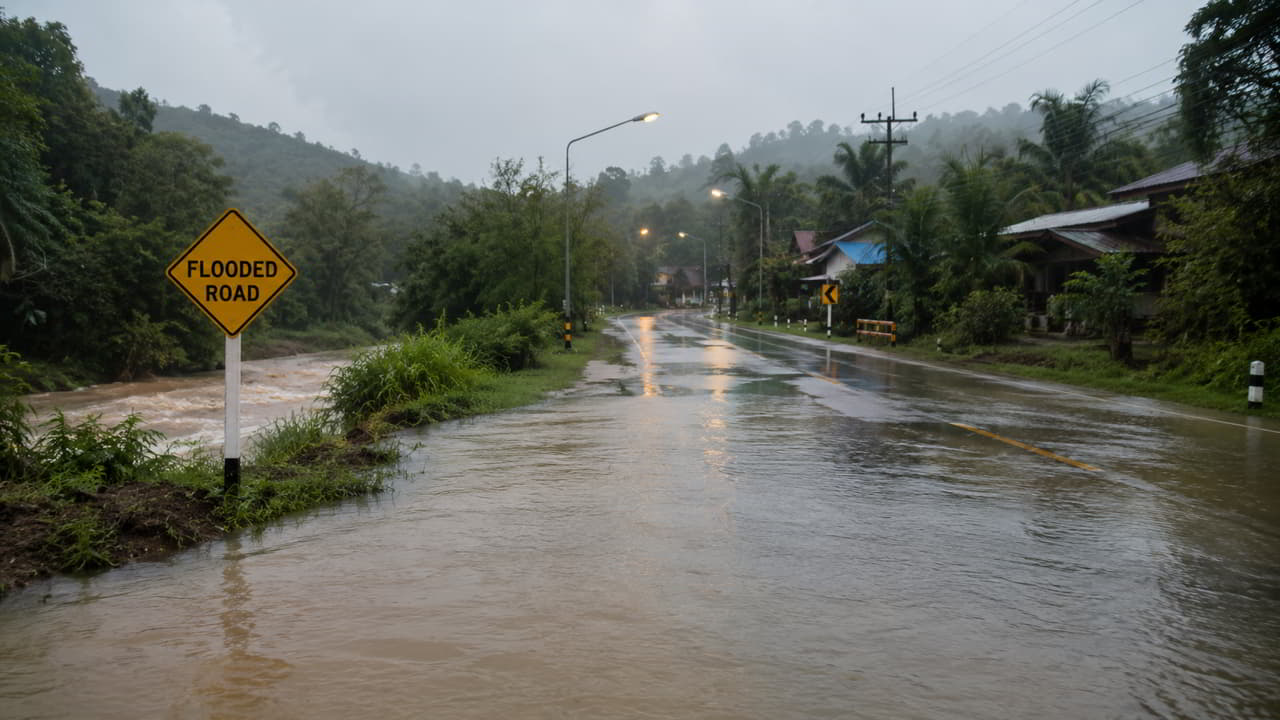
Thailand Weather: Heavy Rain and Flood Risks Across Several Regions
Written by the editors of theo-courant.com, your reference guide to Thailand and South-East Asia - based in Bangkok, at the heart of Thai culture.

Heavy rain is affecting several parts of Thailand, causing local flooding and travel disruptions. The Thai Meteorological Department (TMD) is warning of continued heavy rain, flash floods and runoff in several regions through August 16. Travellers should check local weather and road conditions before setting out.
Heavy Rain Affects Several Regions of Thailand
Thailand is currently experiencing a period of heavy rainfall linked to the monsoon trough over northern Thailand and Laos, combined with a relatively strong southwest monsoon over the Andaman Sea, Thailand and the Gulf of Thailand.
According to the latest forecast issued by the Thai Meteorological Department (TMD) on August 10, thunderstorms and isolated heavy rain remain possible across several parts of the country over the coming days.
The authorities are particularly warning of flash floods and runoff, especially near rivers, low-lying areas, hillsides and places where significant amounts of rain have accumulated.
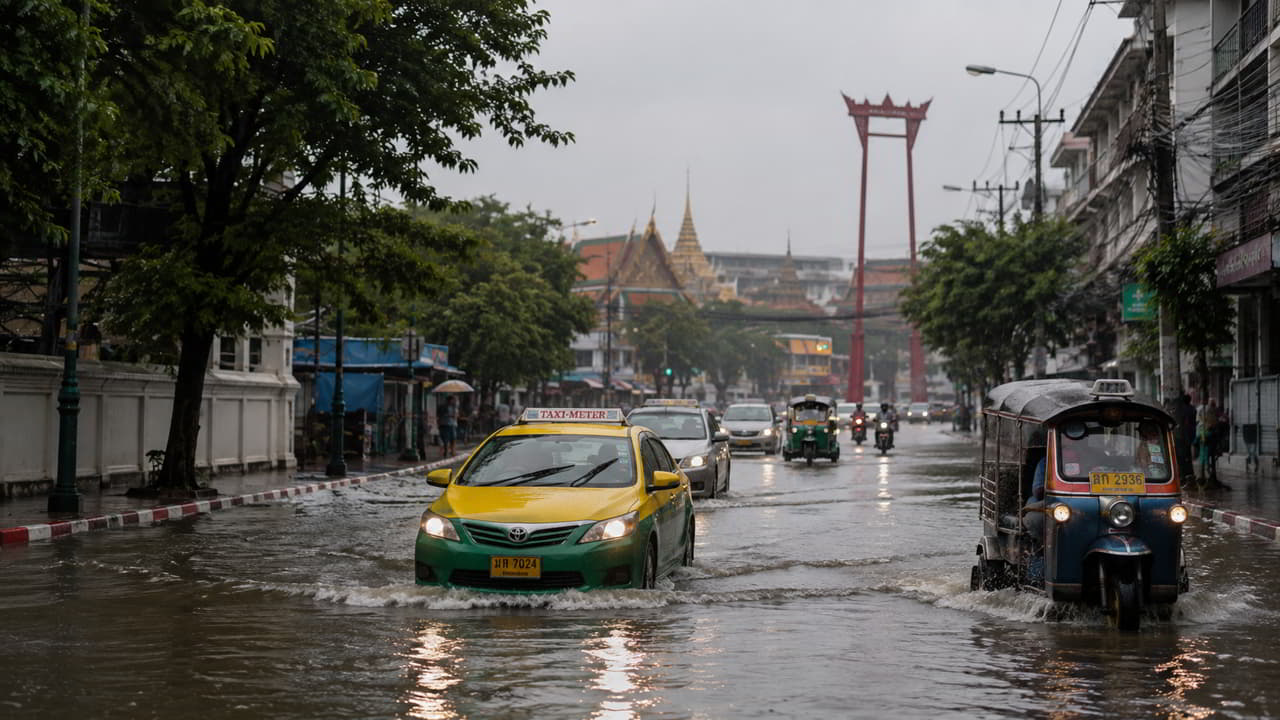
Mae Hong Son and Northern Thailand Among the Most Affected Areas
Northern Thailand is one of the regions currently facing the highest risk of heavy rainfall.
On August 10, thunderstorms are forecast across around 70% of the northern region, with heavy rain possible in Mae Hong Son, Chiang Mai, Chiang Rai, Lampang, Phayao, Nan, Uttaradit, Tak, Phitsanulok and Phetchabun.
Mae Hong Son has already experienced problems linked to rising water levels, flooding and landslides.
The Route 1095, an important road connecting Mae Hong Son with Pai and Chiang Mai, may be affected by landslides and fallen trees.
Travellers planning to drive or ride a motorbike through the area should therefore check local conditions before setting off.
Increased Risk Near Rivers and Mountain Areas
The TMD warns that accumulated rainfall may trigger flash floods and runoff, particularly near rivers, steep slopes and low-lying areas.
This is particularly relevant in northern Thailand, where mountainous terrain can cause water levels to rise rapidly following intense rainfall.
Northeastern Thailand Also Under Close Watch
Northeastern Thailand is also experiencing significant thunderstorm activity.
On August 10, thunderstorms are expected across around 70% of the region, with isolated heavy rain possible in provinces including Nong Khai, Bueng Kan, Udon Thani, Sakon Nakhon, Nakhon Phanom, Yasothon, Mukdahan, Amnat Charoen, Nakhon Ratchasima, Si Sa Ket and Ubon Ratchathani.
The situation deserves particular attention along the Mekong, where rising water levels can affect low-lying communities and local travel.
Bangkok Can Also Expect Heavy Showers
Bangkok is not escaping the current weather pattern.
The TMD forecasts thunderstorms in Bangkok and surrounding areas. Showers are expected on August 10 and 11, followed by more scattered rainfall between August 12 and 16.
Temperatures are expected to remain around 32–35°C during the day.
For travellers, this does not mean that Bangkok is inaccessible. However, intense rainfall can cause localised flooding, traffic congestion and temporary travel disruption, particularly after heavy downpours.
Central and Eastern Thailand Also Affected
Central Thailand is also experiencing periods of thunderstorms.
The forecast includes isolated heavy rain in parts of the central region, including areas of Lopburi, Saraburi and Kanchanaburi.
In eastern Thailand, thunderstorms could affect around 70% of the region on August 10, with heavy rain possible in Nakhon Nayok, Prachin Buri, Chanthaburi and Trat.
Travellers heading towards eastern Thailand should also monitor road conditions and local weather warnings.
Rough Seas and Disrupted Boat Trips
The current weather situation also affects travellers planning island trips and boat excursions.
In parts of the upper Andaman Sea and the Gulf of Thailand, waves may reach 2 to 3 metres, with higher waves possible during thunderstorms.
The TMD advises vessels to navigate with caution and avoid areas affected by thunderstorms. Small boats in the upper Andaman Sea are advised to remain ashore until August 16. A similar recommendation applies to small boats in the upper Gulf of Thailand until August 11.
Along the Andaman coast from Phuket northwards, waves may reach 2 to 3 metres and exceed 3 metres during thunderstorms.
Phuket, Krabi and Phang Nga: Check Sea Conditions Before Leaving
Rain does not mean that Thailand’s Andaman coast is closed to visitors.
However, boat excursions can be postponed, modified or cancelled depending on local sea conditions.
Travellers who have booked island tours should therefore check with their operator before leaving, particularly when thunderstorms or strong winds are forecast.
Thailand Weather Forecast Through August 16
The TMD’s seven-day forecast indicates that the wet weather pattern will continue.
Between August 11 and 14, the monsoon trough is expected to remain around Myanmar, northern Thailand and Laos, while the southwest monsoon remains relatively strong.
Isolated heavy rain is therefore still possible across several parts of Thailand.
Between August 15 and 16, isolated heavy rain remains possible in northern, northeastern, central and eastern Thailand, as well as along parts of the western coast of southern Thailand.
The TMD continues to advise caution because accumulated rainfall can lead to flash floods, runoff and overflowing waterways.
Will Typhoon Dolphin Affect Thailand?
No direct impact on Thailand is currently expected.
Typhoon Dolphin is forecast to affect China’s Zhejiang province rather than move towards Thailand.
The heavy rain currently affecting Thailand is primarily associated with the country’s monsoon weather pattern rather than a direct impact from Typhoon Dolphin.
What Should Travellers Do During Heavy Rain in Thailand?
The current weather situation does not mean that travellers need to automatically cancel their trip to Thailand.
However, travel plans should be adapted to local conditions.
Before Travelling to Another Area
Check:
- the latest weather forecast;
- road conditions if travelling in northern or mountainous areas;
- local warnings;
- sea conditions before taking a boat;
- possible changes to flights, trains, buses or excursions.
The TMD recommends checking weather conditions for the specific area you are visiting before travelling.
During Heavy Rain
Whenever possible, avoid:
- walking through flooded roads or fast-moving water;
- driving onto roads covered by floodwater;
- approaching swollen rivers;
- travelling on mountain roads during intense rainfall;
- taking a boat when operators or authorities advise against it.
A road that was perfectly passable a few hours earlier can become difficult or unsafe after intense rainfall.
Should You Cancel a Trip to Thailand Because of the Rain?
Not necessarily.
The rainy season is a normal part of Thailand’s climate, and rainfall can vary considerably from one region to another.
The current situation is particularly relevant to travellers visiting areas affected by heavy rain, mountainous roads or flash-flood risks.
For visitors staying in Bangkok or other major tourist destinations, it is often possible to continue with a planned trip while adapting daily activities to the weather.
The most important point is not to treat a national forecast as if conditions were identical everywhere.
Weather conditions can be very different in Bangkok, Chiang Mai, Mae Hong Son, Phuket, Koh Samui and northeastern Thailand on the same day.
Thailand Rainy Season: What Travellers Should Know
Thailand’s rainy season does not necessarily mean continuous rain throughout the day.
In many destinations, rainfall can arrive as intense thunderstorms followed by several hours of drier weather.
However, during stronger monsoon periods, several consecutive days of heavy rainfall can increase the risk of flooding, landslides and difficult road conditions.
For travellers, flexibility is therefore particularly useful during this time of year.
Allow extra time for road journeys, keep an eye on local forecasts and avoid planning every activity around a fixed outdoor schedule.
Key Points
Thailand is currently experiencing a period of heavy monsoon rainfall, with flash-flood and runoff risks in several regions.
Northern and northeastern Thailand are among the areas being closely monitored, while Bangkok, central Thailand, eastern provinces and parts of southern Thailand can also experience heavy showers and thunderstorms.
The wet weather pattern is expected to continue through August 16, with isolated heavy rain remaining possible in several regions.
For travellers, the most important advice is simple:
Check local weather and travel conditions before every journey, particularly when travelling through mountainous areas or planning boat trips.
FAQ – Thailand Weather and Flood Risks
Which parts of Thailand are affected by heavy rain?
Northern and northeastern Thailand are among the regions most affected, but heavy rain can also occur in central and eastern Thailand, Bangkok and parts of southern Thailand.
Is Thailand currently experiencing flooding?
Flooding and water-related problems have been reported in some areas following heavy rainfall. The TMD is also warning of flash floods, runoff and overflowing waterways in areas receiving significant amounts of rain.
Is it raining in Bangkok?
Thunderstorms and showers are forecast in Bangkok. The current forecast calls for showers on August 10 and 11, followed by more scattered rainfall through August 16.
Can I still travel to Thailand during heavy rain?
Yes. Heavy rain does not affect every part of the country in the same way. Travellers should monitor local conditions and adjust their plans when necessary.
Can I visit Phuket and Krabi during the rainy season?
Yes, but sea conditions should be checked before booking or taking a boat trip. The Andaman Sea can become rough, with waves reaching 2 to 3 metres and higher waves possible during thunderstorms.
Are boat trips cancelled during heavy rain?
They can be. Boat operators may postpone or cancel excursions depending on sea and weather conditions. Always check with your operator before departure.
Will Typhoon Dolphin hit Thailand?
No direct impact on Thailand is currently expected. Typhoon Dolphin is forecast to affect eastern China rather than move towards Thailand.
How long will the heavy rain last?
The TMD forecasts isolated heavy rain in several parts of Thailand through August 16, although conditions can change quickly during the monsoon season.
Where can I check the latest Thailand weather forecast?
The Thai Meteorological Department (TMD) is the official source for Thailand’s weather forecasts and warnings. Travellers should check the latest local forecast before setting out.
Last updated: August 10, 2026. Weather conditions and local warnings can change quickly during the rainy season. Check the latest forecast before travelling.