

Thailand Summer 2026: Extreme Heat Up to 42°C and Lower Rainfall
Written by the editors of theo-courant.com, your reference guide to Thailand and South-East Asia - based in Bangkok, at the heart of Thai culture.

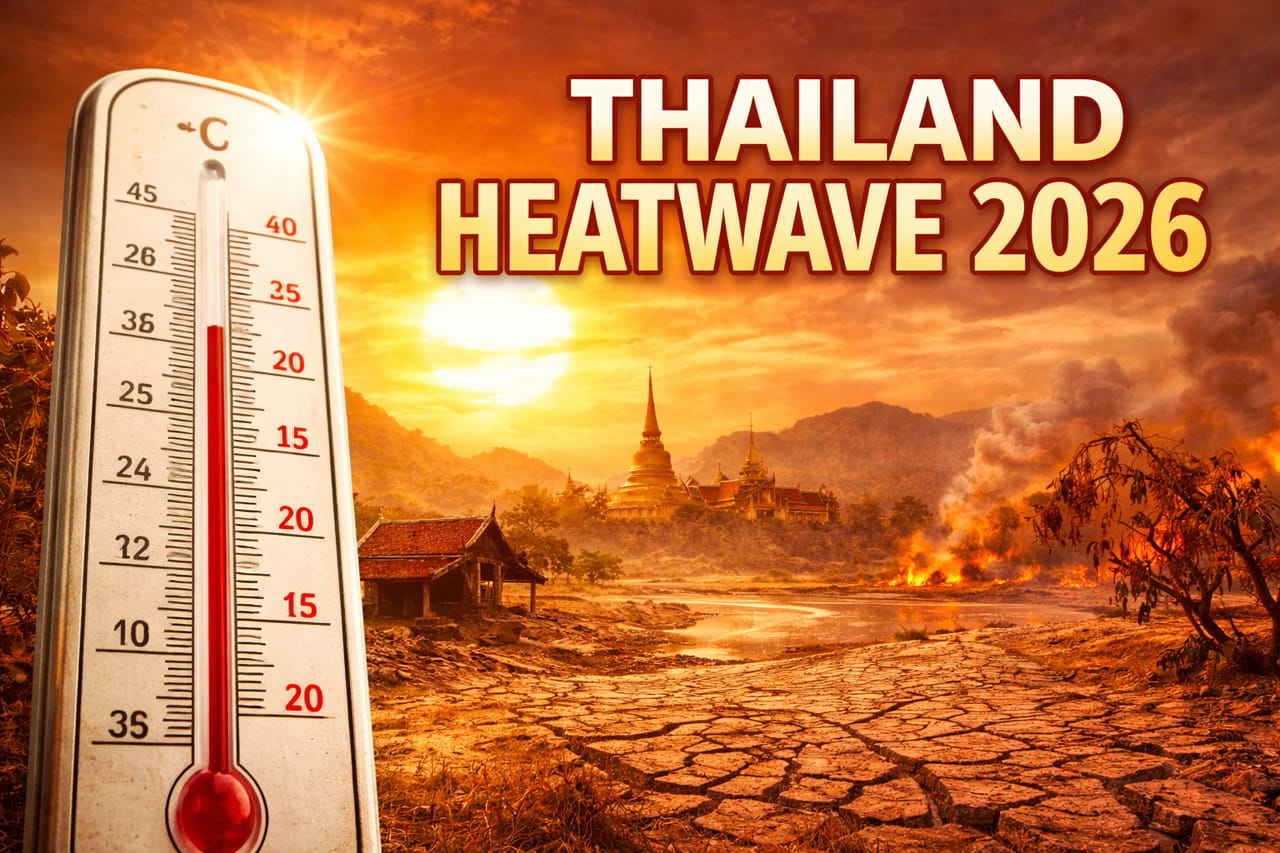
Thailand’s summer 2026 is forecast to be hotter than last year, with temperatures exceeding 42°C in some northern provinces and rainfall expected to drop 30–40% below normal levels. For expatriates living in the country and travelers planning trips between March and May, this is more than a weather update — it directly affects health, transport, air quality and daily life.
According to the Thai Meteorological Department (TMD), the hot season will begin in late February — slightly later than usual — and last until mid-May, with peak heat expected in April and May.
Hotter Than Average: What the 2026 Forecast Means
Northern Thailand is expected to record average maximum temperatures of 36–37°C, compared with the long-term average of 35.4°C. In 2025, the average maximum stood at 35.8°C. The numerical difference may appear small, but prolonged exposure over several weeks significantly increases cumulative heat stress.
Provinces likely to exceed 42°C include: Mae Hong Son, Lampang and Tak, with isolated peaks reaching 43°C during April.
For comparison:
- Southern Europe heatwaves occasionally exceed 45°C, but often for shorter durations.
- Mainland Southeast Asia experiences sustained high humidity, pushing the heat index (real-feel temperature) above 50°C in urban areas.
This combination of temperature and humidity places Thailand among the most heat-exposed travel destinations during April.
Rainfall 30–40% Below Normal: Drought Signals
Total rainfall during the summer period is forecast to be 30–40% below seasonal averages. This has several implications:
- Increased wildfire and haze risks in the North
- Lower reservoir levels in agricultural areas
- Higher electricity demand due to air-conditioning use
For visitors, fewer rain showers may seem attractive, but dry heat combined with strong UV radiation increases dehydration risks.
March to Mid-April: Escalating Heat and Summer Storms
Temperatures will gradually rise in March. Northern and northeastern regions may still experience relatively cool mornings due to lingering high-pressure systems from China.
By late March, heat-induced low-pressure systems dominate. Expect:
- Daytime extreme heat
- Short but intense summer storms
- Thunder, gusty winds, occasional hail
These storms bring temporary relief but can disrupt domestic flights and ferry services.
Late April to Mid-May: Transition to the Southwest Monsoon
By mid-May, moisture-laden winds from the Gulf of Thailand shift toward the southwest monsoon pattern. Rainfall increases, especially in southern provinces along the Andaman coast.
For expatriates based in Phuket or coastal areas, this marks the start of rougher seas and occasional boat cancellations.
What Most Travel Articles Don’t Mention
1. Extreme UV Index
Thailand’s UV index regularly reaches level 11+ (extreme) in April. Unprotected skin can burn in under 15 minutes. Sunscreen alone is not sufficient; protective clothing and timing outdoor activities are essential.
2. Air Quality in Northern Thailand
During dry months, air quality in cities such as Chiang Mai can exceed WHO particulate matter recommendations due to agricultural burning. Travelers sensitive to pollution should monitor daily AQI levels before planning outdoor excursions.
Practical Advice for Expats and Visitors
Living or traveling in Thailand during peak heat requires adjustment:
- Avoid outdoor activities between 11am and 4pm
- Increase water intake beyond usual hydration habits
- Ensure reliable air conditioning in accommodation
- Monitor local heat advisories and AQI reports
- Consider travel insurance covering heat-related incidents
April also coincides with Songkran, Thailand’s water festival. While festive and refreshing, high temperatures persist outside celebration zones.
Is April 2026 a Bad Time to Visit Thailand?
Not necessarily. It depends on tolerance to heat. Beach destinations remain popular, and hotel rates outside peak holiday weeks can be competitive. However, elderly travelers, young children, and those with cardiovascular conditions should exercise caution.
For long-term expatriates, this summer reinforces a broader regional warming trend affecting Southeast Asia.
FAQ – Thailand Summer 2026 Forecast
When does Thailand’s summer 2026 officially begin?
Late February 2026, lasting until mid-May.
Where will temperatures exceed 42°C?
Primarily in northern provinces such as Mae Hong Son, Lampang and Tak.
Will there be heavy rain?
Rainfall is forecast 30–40% below normal until the monsoon transition in mid-May.
Is the heat dangerous for travelers?
Yes, without precautions. Dehydration and heatstroke are the main risks.
When does the monsoon start in 2026?
The southwest monsoon is expected to establish around mid-May.
Thailand’s 2026 summer confirms a steady warming pattern. For travelers and expatriates, preparation — not avoidance — is the key to navigating extreme heat safely.