


Thailand’s New Tourism Bet Faces Overtourism and Climate Challenges
Written by the editors of theo-courant.com, your reference guide to Thailand and South-East Asia - based in Bangkok, at the heart of Thai culture.

Thailand is changing the way it measures tourism success, placing greater emphasis on the value generated by visitors rather than arrivals alone. But the strategy faces forces Thailand cannot fully control, from climate change and environmental pressure to changing traveller expectations and intensifying competition across Southeast Asia.
Thailand is shifting from tourism volume to tourism value
For decades, the number of international arrivals has been one of the main measures of Thailand’s tourism performance.
That approach is now being challenged.
The Tourism Authority of Thailand (TAT) is placing greater emphasis on the economic value generated by visitors, including their spending, length of stay and participation in higher-value tourism activities.
The strategy focuses on sectors in which Thailand already has an established international presence, including wellness, gastronomy, culture, sports, international events and local experiences.
The objective is therefore not to close the door to mass tourism. Rather, Thailand is trying to reduce its dependence on visitor numbers as the main measure of tourism success.
A new strategy does not mean fewer tourists
This distinction matters.
Thailand continues to set ambitious targets for international arrivals. The Value over Volume approach does not amount to a policy designed to deliberately reduce the overall number of visitors.
Instead, it changes the way their contribution to the economy is assessed.
A visitor who stays longer, spends more on local services, travels across several regions or chooses higher-value experiences can generate greater economic benefits than a simple arrival count suggests.
Thailand is also seeking to spread tourism more evenly throughout the year and across the country, including through its Thailand 365 Days strategy.
The idea is to promote Thailand as a year-round destination while encouraging travellers to look beyond the busiest destinations and peak periods.
But this raises an important question: can Thailand genuinely change the profile of its tourism without reducing the pressure on its most popular destinations?
Overtourism remains a contradiction within the model
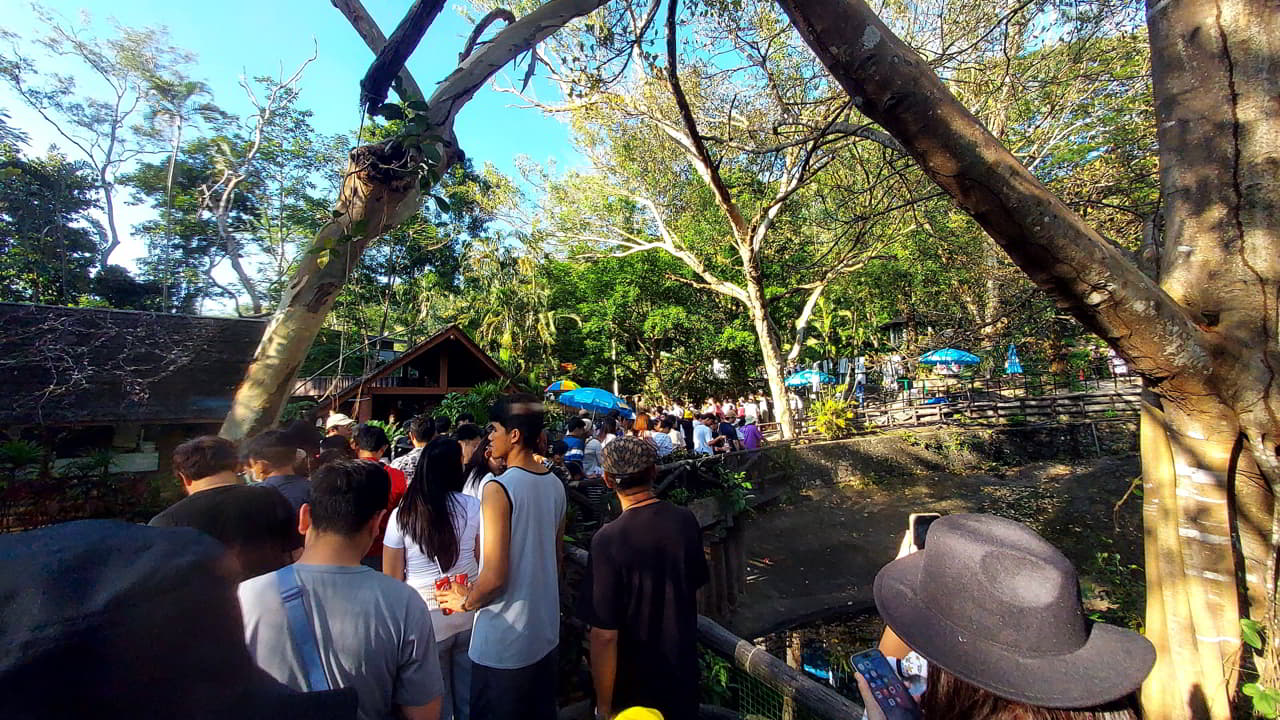
Tourism generates revenue and employment, but it also puts pressure on infrastructure and natural resources.
In some Thai destinations, the concentration of visitors is already a recognised challenge. Beaches, islands, national parks, historic areas and major tourist districts can face congestion, waste, water consumption and environmental degradation.
The issue is therefore not simply how many tourists Thailand receives overall.
It is also where they go and when they go there.
One hundred thousand visitors spread across several destinations and several months do not necessarily create the same pressure as 100,000 visitors concentrated in the same place during a few weeks.
This is why the question of destination carrying capacity is becoming increasingly important. The OECD has called for Thailand to strengthen tools for assessing carrying capacity, while also improving climate adaptation and environmental protection.
A shift towards higher-value tourism therefore does not automatically solve the problem of overtourism.
A visitor who spends more may generate more revenue, but still consumes water, energy, transport capacity and physical space.
Climate change is becoming a tourism issue
Climate change is another variable that Thailand’s tourism strategy cannot control.
Thailand is exposed to several phenomena that can affect travel conditions, including extreme heat, heavy rainfall, flooding, drought and changing marine conditions.
The issue goes beyond environmental protection.
When climatic conditions become more difficult, they can affect infrastructure, outdoor activities, beaches, national parks and the periods during which certain destinations are most attractive.
Climate change may also gradually influence traveller behaviour.
International surveys already show that sustainability considerations are becoming increasingly relevant to travel decisions. This does not mean that travellers will abandon long-haul destinations, or that Europeans are about to stop travelling to Thailand.
It does mean, however, that the criteria travellers use when choosing destinations can change.
Thailand can decide which forms of tourism it wants to promote. It cannot decide how future travellers will assess destinations.
Thailand’s regional competitors are not standing still
Thailand must also operate in an increasingly competitive Southeast Asian tourism market.
Vietnam is perhaps the clearest example. The country has experienced strong growth in international arrivals while rapidly expanding its tourism infrastructure and offer.
Indonesia, Malaysia and the Philippines are also developing their international tourism markets and seeking to attract higher-value visitors.
For travellers looking for beaches, food, culture, wellness or local experiences in Southeast Asia, Thailand is therefore no longer the only highly developed option.
This does not mean that Thailand is automatically losing its position.
It simply means that other destinations are not waiting for Thailand to make its next move.
The country will therefore need to keep renewing its tourism offer if it wants to remain attractive to international travellers.
Can Thailand still sell the promise of discovery?
This may be one of the most difficult paradoxes facing the destination.
Thailand has enormous international recognition. Bangkok, Phuket, Pattaya, Chiang Mai, Krabi and Koh Samui are now familiar names well beyond Asia.
That recognition is an obvious commercial advantage.
But it can also weaken the sense of discovery sought by some travellers.
The success of tourism can gradually transform the places that initially attracted visitors because of their distinctive character. A heavily visited beach, a neighbourhood transformed by tourism or a natural site under intense pressure can lose part of the experience that helped make it famous.
It would nevertheless be excessive to describe Thailand as an entirely saturated destination.
The country still has considerable geographical and cultural diversity, as well as many regions that receive far fewer international visitors.
The real challenge is whether Thailand can spread tourism more widely without simply reproducing the problems already experienced by its most popular destinations elsewhere in the country.
Higher-value tourism must also account for its environmental cost
The concept of value can easily become synonymous with tourist spending.
But tourism value should not be measured only in financial terms.
A destination can generate more revenue while simultaneously increasing pressure on its natural resources and infrastructure.
This is one of the limits facing Thailand’s new tourism strategy.
If the shift from volume to value is to be genuinely sustainable, the country will need to measure both the economic benefits of tourism and its environmental and social costs.
Water consumption, waste, transport, energy use, protection of natural areas and destination carrying capacity therefore become just as relevant as visitor spending.
That represents a significant change in perspective.
A tourism bet whose outcome does not depend on Thailand alone
Thailand’s new tourism strategy is real, but its results will depend on several factors.
The government can change its marketing, develop new tourism products, promote less-visited destinations and target specific visitor segments.
It cannot, however, control climate change, the strategies of competing destinations, changing traveller expectations or the international perception of Thailand.
That is what makes the tourism value strategy particularly significant.
The question is not whether Thailand will continue to receive large numbers of tourists. Tourism is likely to remain a major part of the country’s economy.
The more important question is how much economic value Thailand can generate from tourism without increasing pressure on its territories and resources at the same rate.
And if Thailand wants to sell a more sophisticated tourism experience in the future, it will also need to preserve what visitors come for today: landscapes, culture, biodiversity and experiences that remain attractive enough to justify the journey.
FAQ – Thailand’s Tourism Strategy
Does Thailand want fewer tourists?
No. The “Value over Volume” strategy does not mean that Thailand intends to reduce the overall number of visitors. The objective is to increase the economic value generated by tourism and distribute tourism activity more effectively.
What does high-value tourism mean in Thailand?
It refers to an approach that places greater emphasis on tourist spending, length of stay, higher-value experiences and economic benefits for local communities and destinations rather than simply counting arrivals.
Is overtourism a problem in Thailand?
Tourism pressure is particularly significant in certain destinations and during peak periods. The issue is therefore less about Thailand’s overall capacity than about the ability of individual destinations to accommodate visitors without placing excessive pressure on infrastructure and resources.
Can climate change affect tourism in Thailand?
Yes. Extreme heat, heavy rainfall, flooding, drought and other climate-related events can affect infrastructure and tourism activities. Climate change is therefore also an increasingly important issue for the future of Thailand’s tourism industry.
Is Vietnam becoming a competitor to Thailand?
Vietnam has recorded strong growth in international tourism and is rapidly developing its tourism infrastructure and offer. Like Indonesia, Malaysia and the Philippines, it is therefore an increasingly important regional competitor for international travellers. This does not mean that Thailand has lost its position as a leading Southeast Asian destination.
Can Thailand still offer less-visited destinations?
Yes. Despite the heavy concentration of tourism in some areas, Thailand still has many regions and destinations that receive far fewer international visitors. The “Thailand 365 Days” approach is partly intended to spread tourism more evenly across the country and throughout the year.
What is the main challenge facing Thailand’s new tourism strategy?
The central challenge is to increase the economic value of tourism while controlling its impact on the environment, resources and local destinations. The success of the strategy will therefore depend not only on attracting visitors, but also on protecting the places and resources that attract them in the first place.