Qingming in Thailand: the Chinese Festival of the Dead explained for travelers
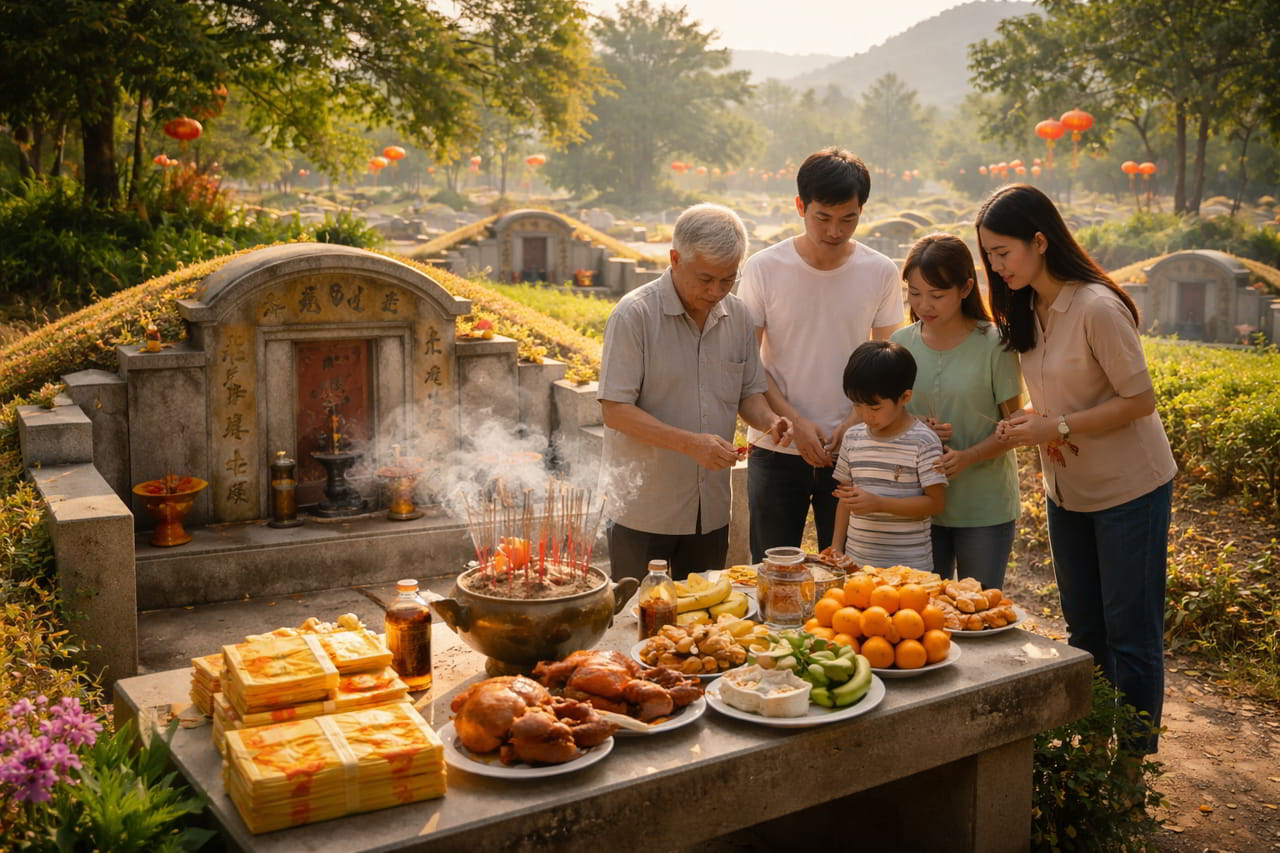
At the beginning of April, under already heavy heat, families gather around tombs sometimes overgrown with grass. They clean, arrange oranges, and light incense. This festival of the dead, known as Qingming, marks an essential moment in family life in Thailand.
Qingming in Thailand: a discreet yet essential festival of the dead
Every year on April 4 or 5, Qingming brings together families of Chinese descent across Thailand. Also known as Tomb-Sweeping Day, this festival remains deeply rooted in Thai society.
Although largely unnoticed by travelers, this festival of the dead is expressed through simple and respectful gestures: returning to graves, cleaning burial sites, honoring ancestors, and sharing a family meal.
It is not a spectacular celebration, but a quiet moment of continuity.
Qingming: Thailand’s festival of the dead?
A role similar to All Saints’ Day
In Europe, All Saints’ Day and the Day of the Dead are the closest equivalents to Qingming. In both cases, families visit graves, maintain burial sites, and take time to remember the deceased.
It is both a moment of remembrance and a way to pass traditions between generations.
Key cultural differences
However, while the function is similar, the practices differ:
- In terms of religion: Christian in Europe, Confucian and Taoist in China
- In terms of timing: November versus early April — one marks the start of winter, the other the beginning of spring
- In terms of rituals: flowers and candles on one side, food and offerings on the other
In Asia, the dead are not only remembered — they remain part of the everyday life of the living.
Qingming rituals: a tangible connection with ancestors
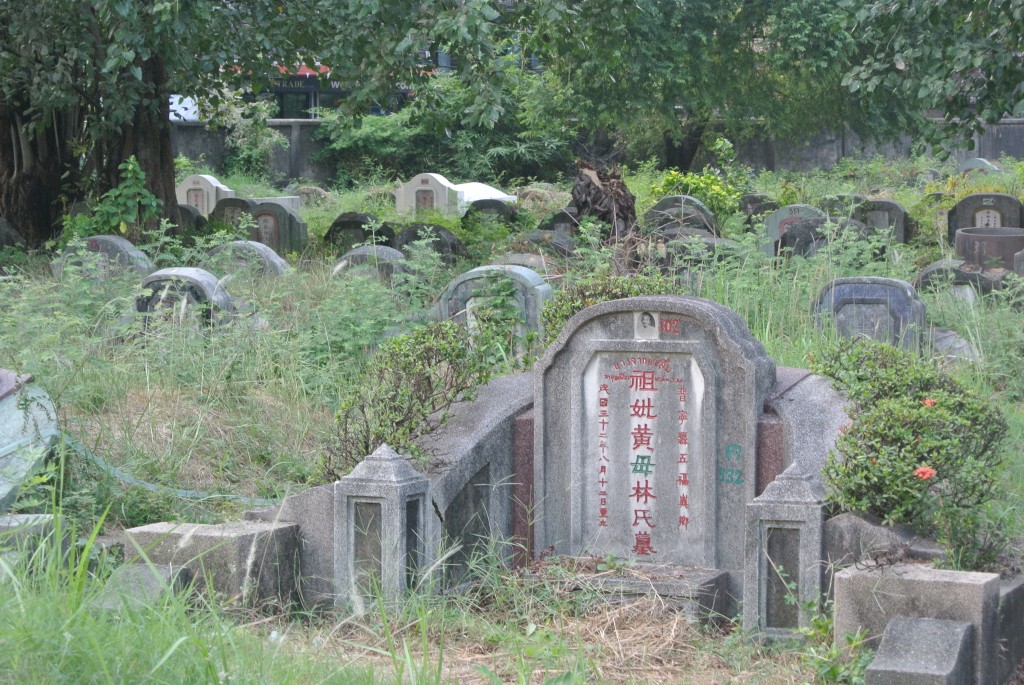
The ritual begins with cleaning. Families cut back weeds, restore order, and sometimes repaint faded inscriptions. This act is seen as a way to remove obstacles from the lives of descendants.
Then come the offerings.
On the tombs, you will often find:
- meats (pork, chicken, duck),
- fruits, especially oranges symbolizing prosperity,
- traditional cakes,
- tea or alcohol poured to the brim,
- joss paper burned to accompany ancestors in the afterlife.
Family members then take turns according to seniority, from the eldest to the youngest.
Rules to follow during this festival of the dead
Qingming follows a set of often unspoken rules.
It is recommended to:
- wear simple, subdued clothing (white, cream, light green),
- avoid loud or inappropriate behavior,
- never step on graves,
- visit preferably in the morning, between 7am and 11am.
Some families also discourage pregnant women from attending, based on both beliefs and practical considerations.
Practical advice for travelers
For outsiders, attending Qingming is possible, but it requires sensitivity.
This is not a festival to visit — it is a private, family moment. Visitors should remain discreet and observe before acting. Photography should be done carefully and only with permission.
Where to observe Qingming, the festival of the dead in Thailand
Qingming takes place across the country, but some locations offer clearer insight into the tradition.
Bangkok
Chinese cemeteries and Sino-Thai temples host many ceremonies, especially at the Teochew Cemetery.
 !
!
Other regions
The Chinese community is present throughout Thailand, but is particularly strong in:
- Phuket
- Chiang Mai
- Chon Buri
- Suphan Buri
- Nakhon Sawan
Families often gather during the weekend closest to the official date.
What this festival of the dead reveals about Thai society
Qingming goes beyond ritual.
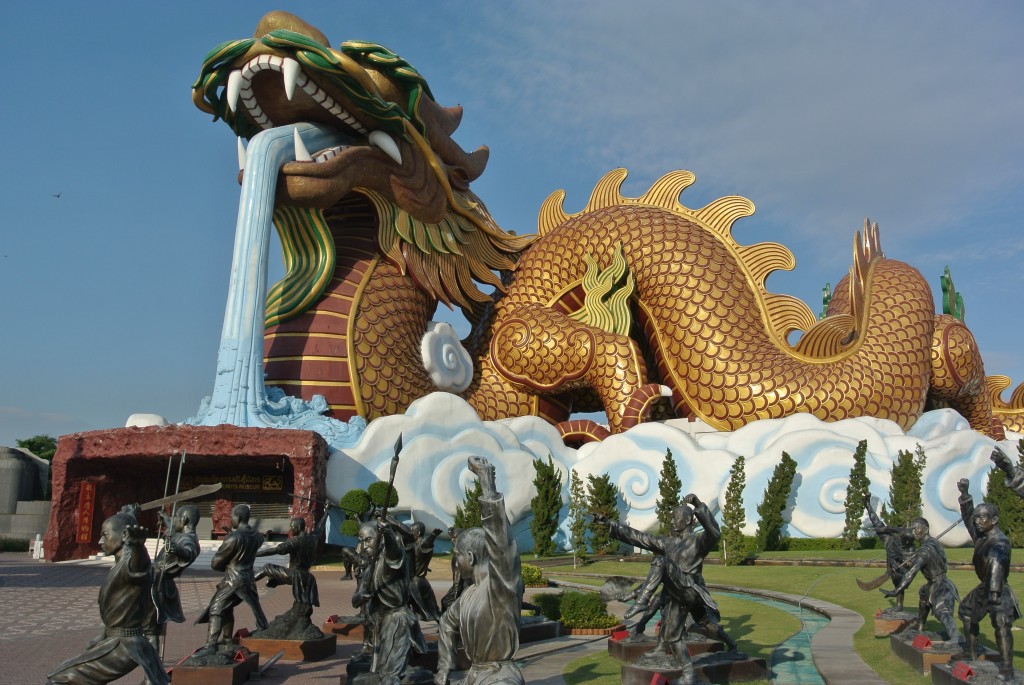
It highlights the importance of Chinese heritage in Thailand, visible for example in Suphan Buri at the Dragon Descendants Museum. It also reflects the central role of family and the enduring relationship with ancestors.
The dead are not absent — they remain part of the family balance.
FAQ: festival of the dead in Thailand
What is the festival of the dead in Thailand?
For the Thai-Chinese community, Qingming is the main festival dedicated to honoring ancestors.
Is Qingming similar to All Saints’ Day?
Yes in function, but the beliefs and rituals are different.
Can tourists attend Qingming?
Yes, as long as they remain respectful and discreet.
When is Qingming celebrated?
On April 4 or 5, with an extended period around these dates.
Conclusion
Qingming in Thailand is a discreet yet essential festival of the dead for the Chinese community. For Western visitors, especially those familiar with All Saints’ Day, the comparison helps provide context. But it is ultimately the gestures and traditions that reveal its deeper meaning.