Counterfeit goods in Thailand: laws, risks and essential advice for travelers
Is buying counterfeit goods in Thailand really risk-free? Between local laws, stricter enforcement and customs checks back home, the consequences often catch travelers off guard.
Buying a designer-style bag at a fraction of the price or a watch inspired by a luxury brand remains a common temptation when traveling in Thailand. In markets, shopping malls and tourist areas, these products still circulate, sometimes discreetly. Yet behind what seems like a harmless purchase lies a clear legal framework and real risks. From Thai law to customs enforcement in Europe, the United States and Australia, counterfeit goods are an issue every traveler should understand before buying.
Counterfeit goods in Thailand: still present but increasingly controlled
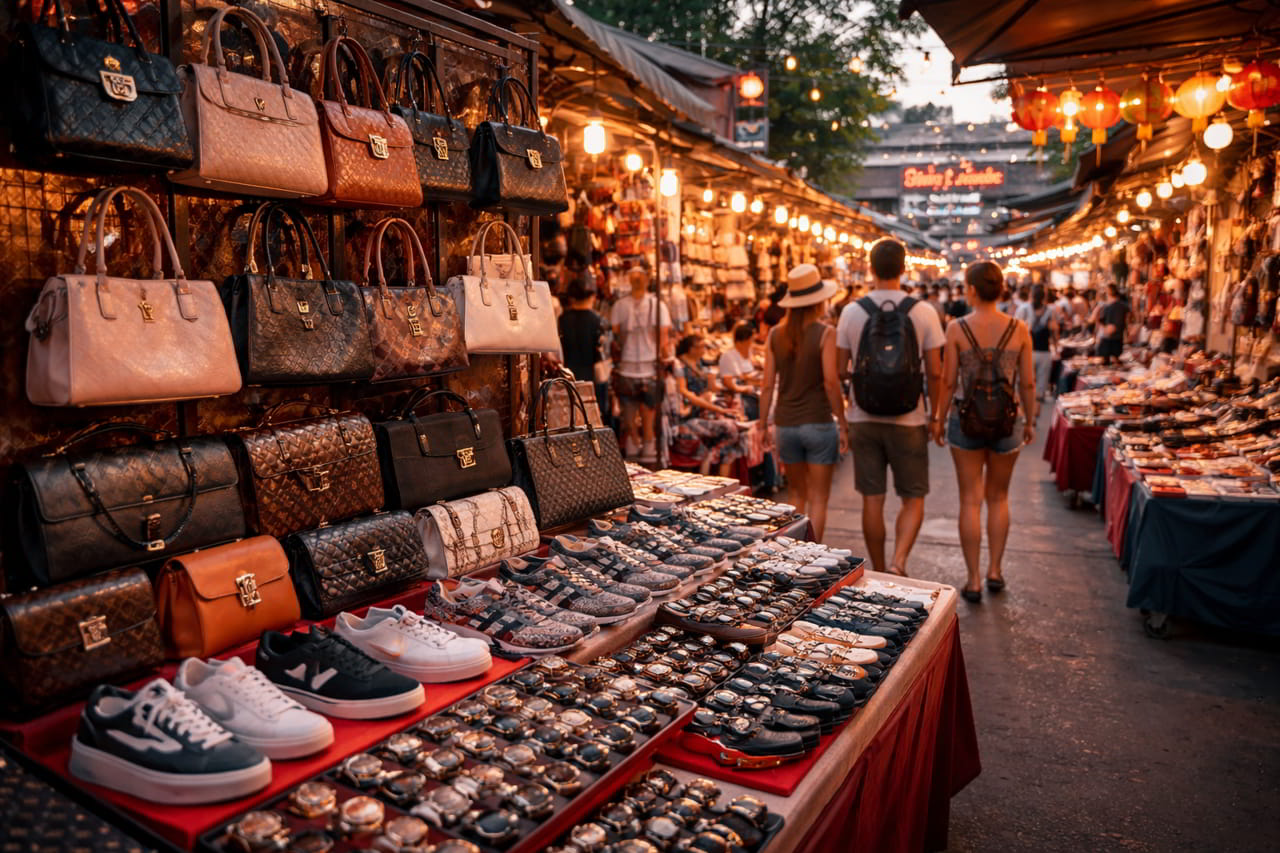
Thailand remains a destination where counterfeit goods can still be found, although they are less visible than in the past. In well-known areas of Bangkok, as well as night markets and busy tourist zones in Phuket or Pattaya, travelers may still encounter imitations of major international brands.
This presence does not mean the practice is tolerated. Thai authorities have stepped up enforcement in recent years, carrying out regular operations to seize goods and prosecute sellers. The situation in places like MBK in Bangkok illustrates this shift: what was once openly displayed is now more discreet or hidden.
For travelers, the environment has changed. What used to feel informal and risk-free is now increasingly regulated and monitored.
Thai law: what the rules actually say
Under Thai law, the production, distribution and sale of counterfeit goods are illegal. These offenses fall under intellectual property law and can lead to legal action.
In practice, enforcement primarily targets sellers and supply networks. However, buyers are not entirely exempt from risk. During inspections, counterfeit items can be confiscated immediately, and fines are possible depending on the situation.
While tourists are rarely prosecuted heavily, this should not be mistaken for legality. The law is clear, and enforcement is becoming more consistent, particularly in high-traffic tourist areas.
The real risk for travelers: customs in Europe, the US and Australia
For many travelers, the biggest risk does not occur in Thailand, but upon returning home.
In the European Union, importing counterfeit goods is prohibited, even for personal use. Customs authorities can seize items at the airport, destroy them and impose fines. In some cases, especially involving luxury goods, legal action may be initiated.
In the United States, Customs and Border Protection (CBP) enforces strict intellectual property rules. Counterfeit items can be seized, and travelers may face penalties depending on the circumstances.
In Australia, the Australian Border Force applies similar regulations. Goods suspected of infringing intellectual property rights can be confiscated, and travelers may be contacted by rights holders or face legal consequences.
This gap between perception and reality explains why many travelers only discover the risks once it is too late.
Why buying counterfeit goods is rarely worth it
Beyond legal concerns, counterfeit products often fail to deliver on quality. Materials are typically inferior, finishes are inconsistent, and durability is limited. What appears to be a bargain quickly becomes a disposable item.
In some cases, particularly with cosmetics or electronic devices, there may also be safety concerns due to the lack of regulation and quality control.
More broadly, counterfeit goods are part of an informal economy that operates outside standard legal and economic frameworks. For Thailand, reducing this sector is also about maintaining its international reputation.
How to spot counterfeit goods in Thailand
For most travelers, the signs are relatively easy to identify. A product sold at a price far below its typical market value is almost always an imitation. Sellers may create ambiguity, but certain details are revealing.
Logos that look slightly off, poor stitching, missing documentation or an unusually rushed sales approach are common indicators. Some vendors may even offer to show “hidden” items, which is another clear signal.
When in doubt, caution is always the safer choice.
Where counterfeit goods are still found in Thailand
Despite stricter controls, certain locations remain historically associated with counterfeit goods. Travelers should not necessarily avoid these places, but understanding the context helps set expectations.
In Bangkok, areas such as MBK Center or some night markets, including those around Patpong, are often mentioned. While enforcement has reduced visibility, imitation goods may still appear in a more discreet manner.
In destinations like Phuket and Pattaya, the pattern is similar. Night markets, temporary stalls and busy tourist streets may still host informal sales of counterfeit items, usually outside official retail channels.
What has changed is not the complete disappearance of counterfeit goods, but their visibility. They are less openly displayed and more opportunistic, which can make the experience less obvious for visitors.
In all cases, the same principle applies: if a branded product is offered at a dramatically reduced price, it is almost certainly not genuine.
Shopping safely in Thailand
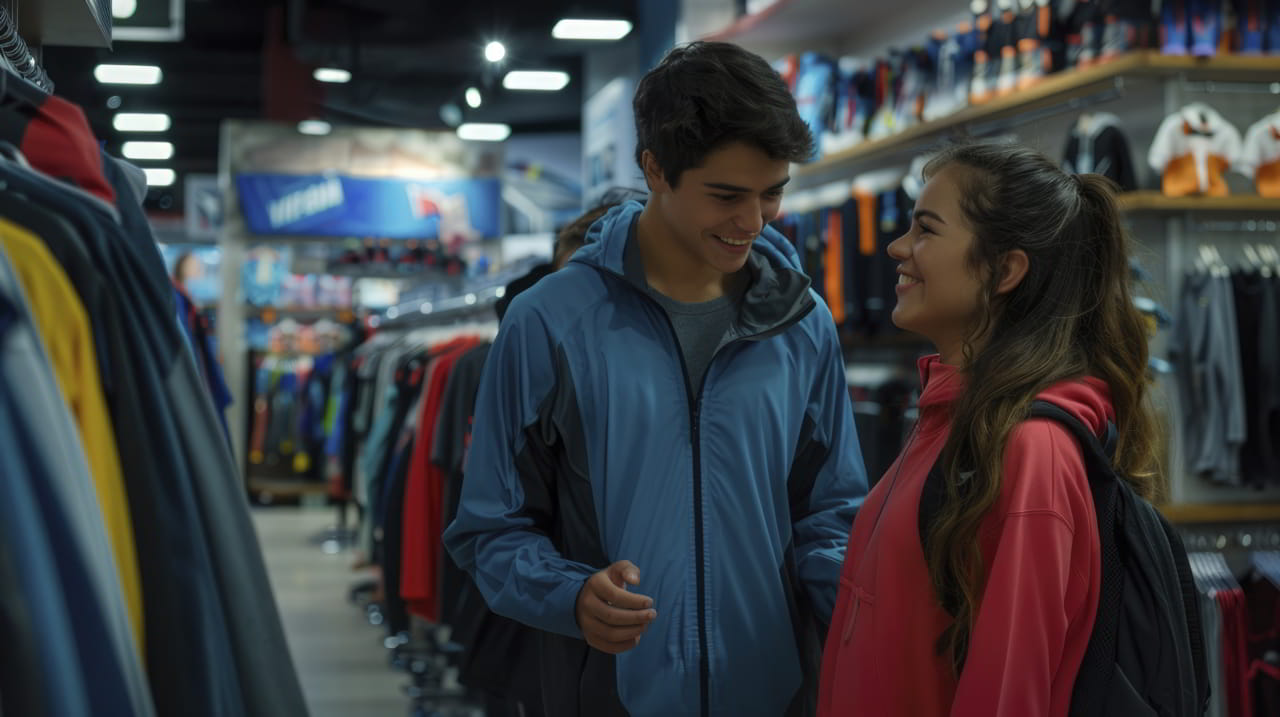
Thailand remains one of Asia’s most rewarding shopping destinations. Modern shopping malls in Bangkok, Chiang Mai and Phuket offer official brand stores with authentic products and clear pricing.
These environments provide a more transparent and reliable shopping experience, allowing travelers to enjoy retail without legal uncertainty.
Bringing counterfeit goods home: what you really risk
Customs checks are where consequences become tangible. Even a single counterfeit item can be enough to trigger confiscation. Goods are typically seized and destroyed without compensation.
Fines may apply depending on the country, and in some cases, especially involving high-end brands, further legal steps can be taken.
Items most commonly targeted include bags, watches, clothing and footwear, which are subject to closer inspection.
Should you still buy counterfeit goods while traveling?
For many travelers, the appeal remains understandable. The idea of a cheap “souvenir” can seem harmless. However, the reality has changed.
Today, buying counterfeit goods in Thailand involves unnecessary risk. Between local enforcement, customs controls and poor product quality, the downsides clearly outweigh the benefits.
Choosing authentic products, local crafts or legitimate goods remains the safer and more rewarding option.
FAQ: counterfeit goods in Thailand
Is it legal to buy counterfeit goods in Thailand?
No. The sale and distribution of counterfeit goods are illegal, and items may be confiscated during inspections.
Can I bring counterfeit goods home for personal use?
No. In many countries, including EU member states, the US and Australia, importing counterfeit goods is prohibited.
Are checks frequent?
Enforcement has increased, particularly in tourist areas and well-known shopping zones.
What happens at the airport if I am caught?
The item is usually confiscated and destroyed. Fines or additional legal steps may follow depending on the country.