Chinese New Year in Bangkok: What to Eat in Chinatown? Traditional Dishes and Specialties
If you are wondering what to eat in Chinatown Bangkok during Chinese New Year, here are the must-try specialties. A closer look at the dishes and street food you can find in Chinatown (Yaowarat) during the celebrations. Chinese and Thai specialties, festive desserts and symbolic foods: a culinary walk through one of Bangkok’s liveliest festivals.
Chinese New Year in Thailand: Sino-Thai Heritage
In Thailand, Chinese New Year — also known as Lunar New Year or the Spring Festival — is widely celebrated by the Sino-Thai community, especially in Bangkok. Chinatown, around Yaowarat Road, becomes one of the main celebration hubs. Over time, the festival has become part of Thailand’s cultural calendar, blending Chinese traditions with local Thai gastronomy. Food plays a central role, symbolizing prosperity, abundance and renewal.
Each year between late January and mid-February, depending on the lunar calendar, Chinese New Year transforms Chinatown into a vast festive stage. Parades, dragon and lion dances, and religious ceremonies attract dense crowds along Yaowarat.
Chinese New Year in Bangkok is the main celebration of the Sino-Thai community and one of the capital’s largest food festivals.
Roasted Chestnuts – Iconic Festive Snack
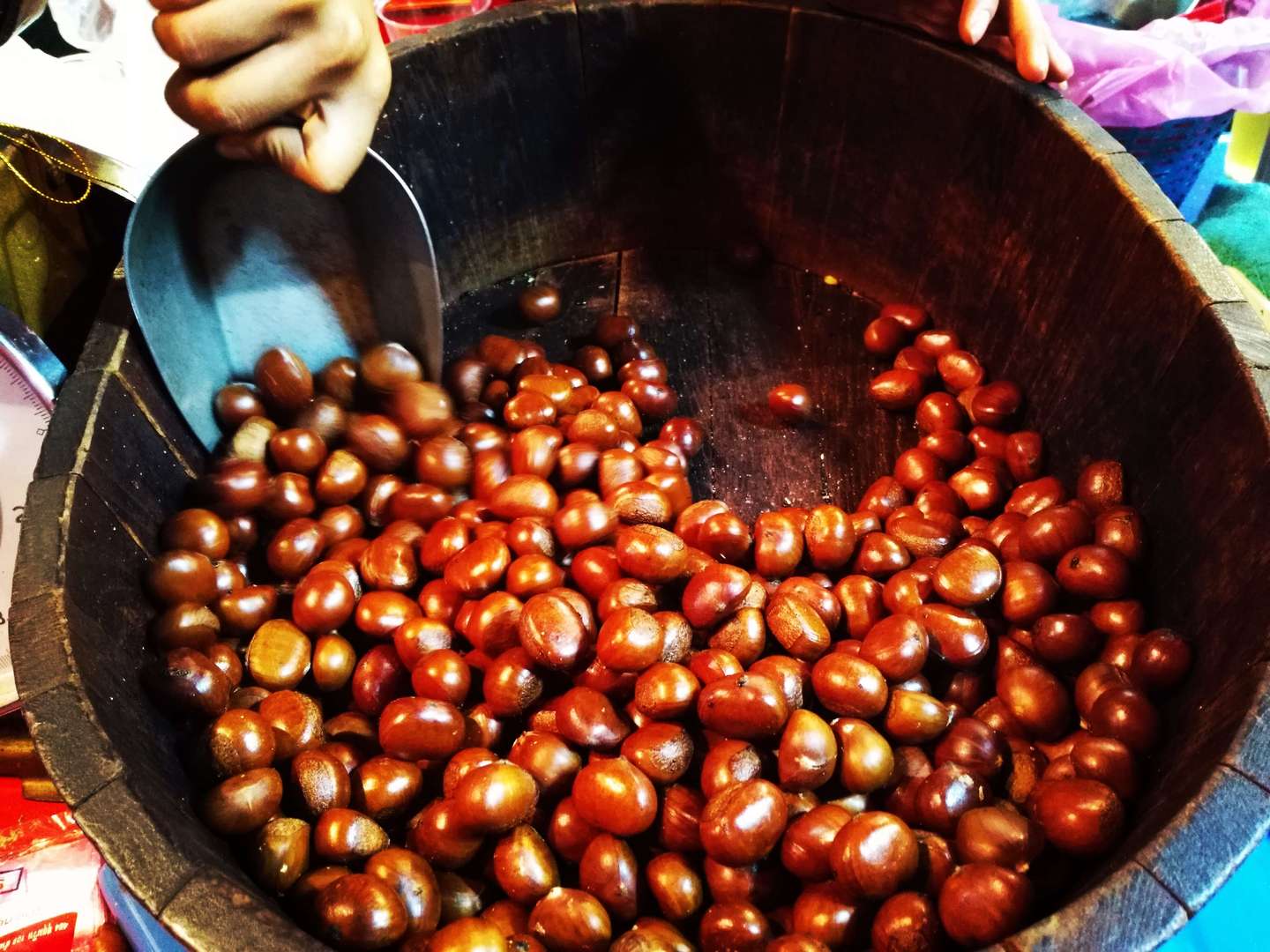
Sold in large rotating drums, roasted chestnuts are a winter festival classic. Their warm, sweet aroma fills the streets of Chinatown during the celebrations.
Scorpions and Fried Insects – Street Food Curiosities
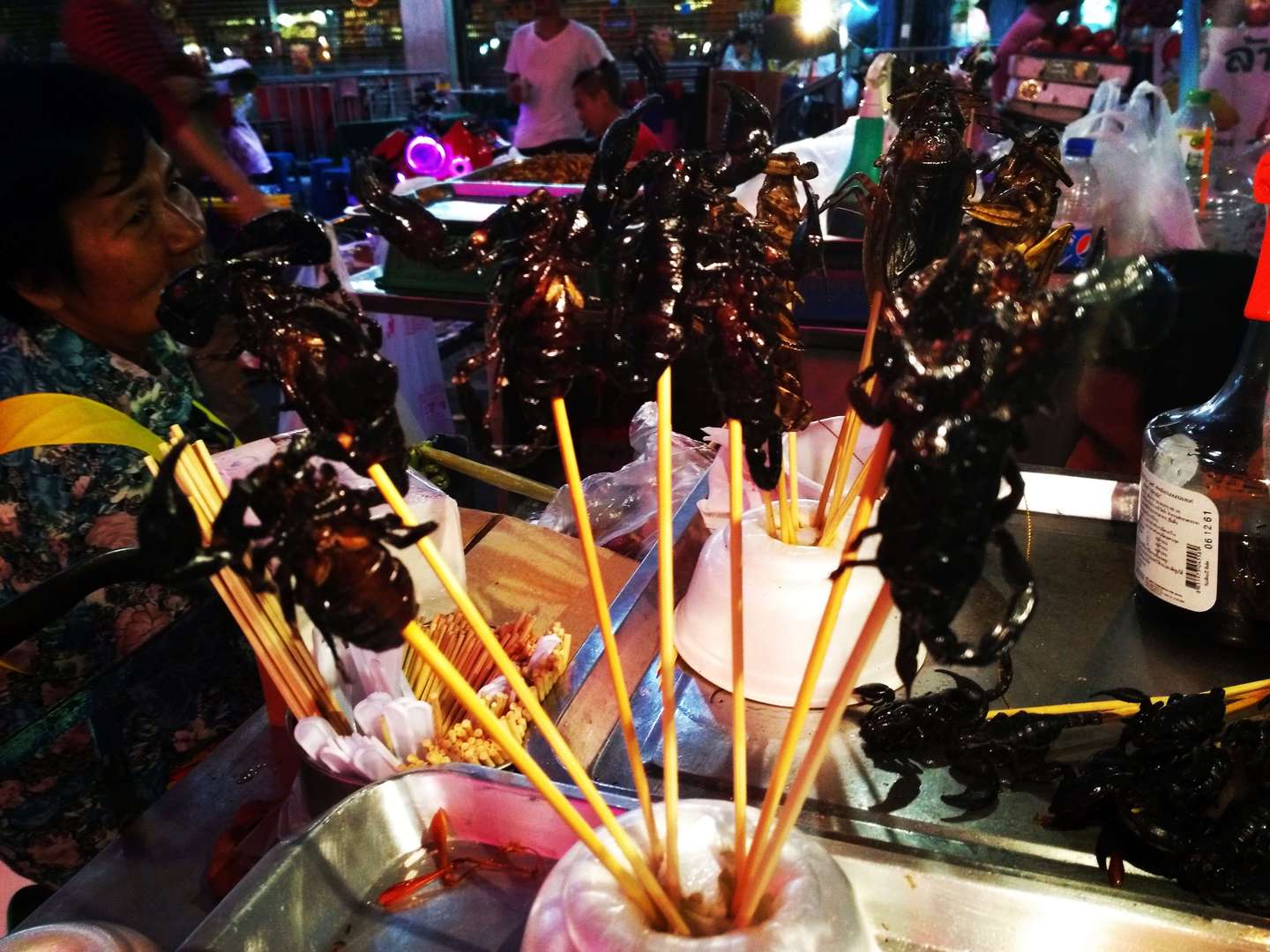
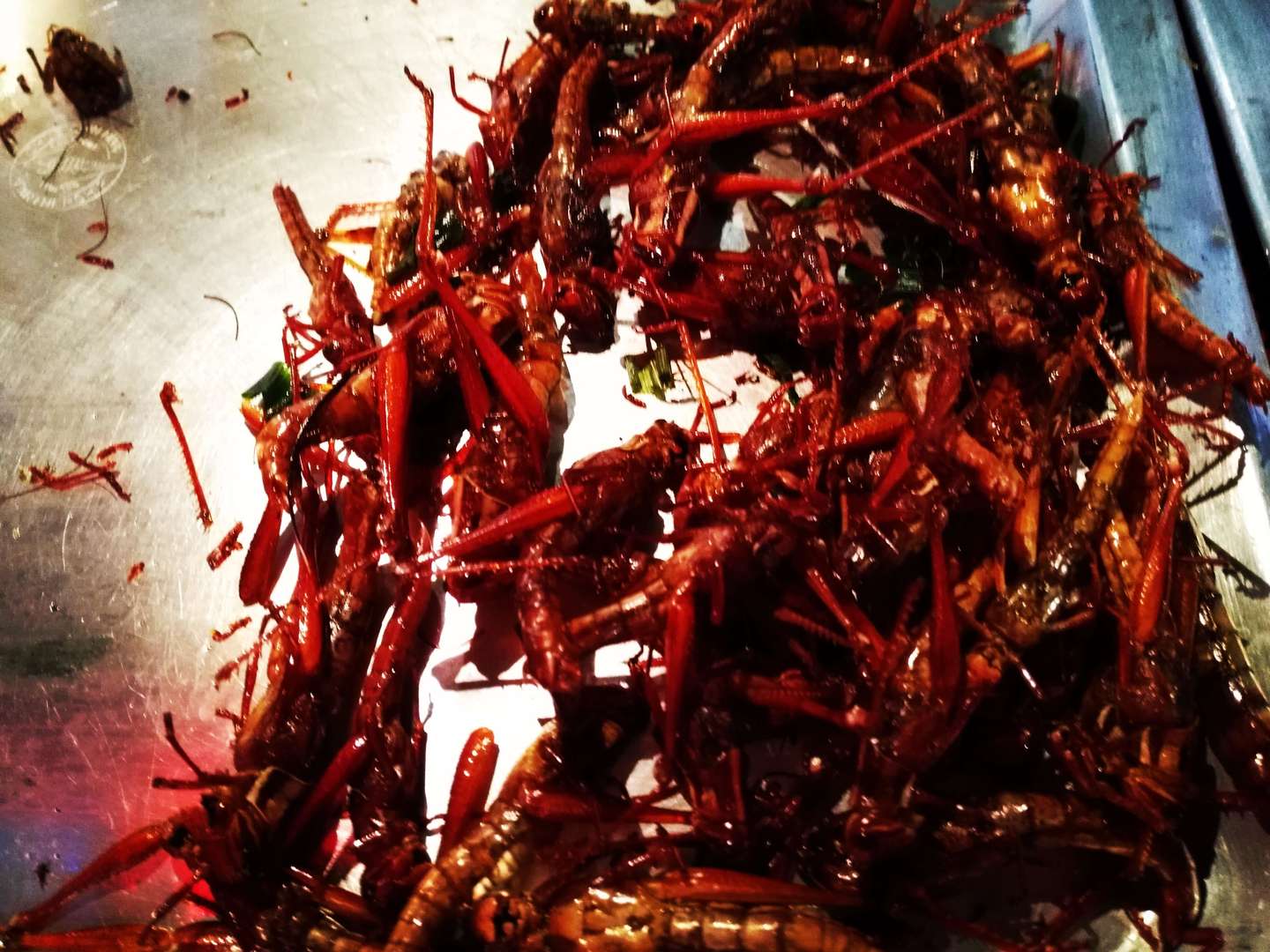
Grasshoppers, scorpions and fried worms attract attention. While more typical of Thai street food than Chinese tradition, they remain highly visible during large festive gatherings.
Pad Thai – Thailand’s Classic Noodle Dish
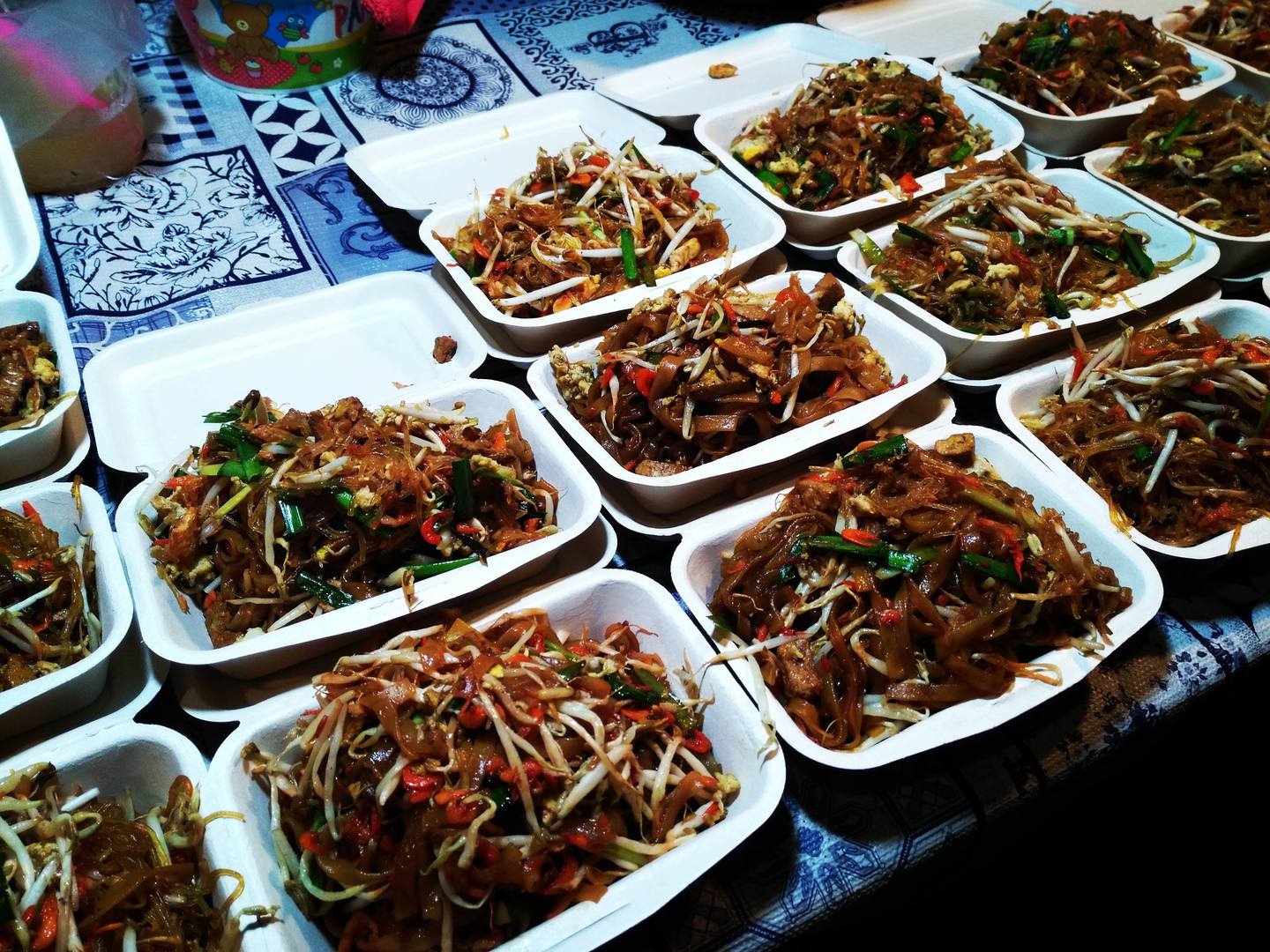
Thailand’s national dish — stir-fried rice noodles with eggs, tofu, shrimp or chicken — remains a staple even during Chinese New Year.
Seafood Pad Thai
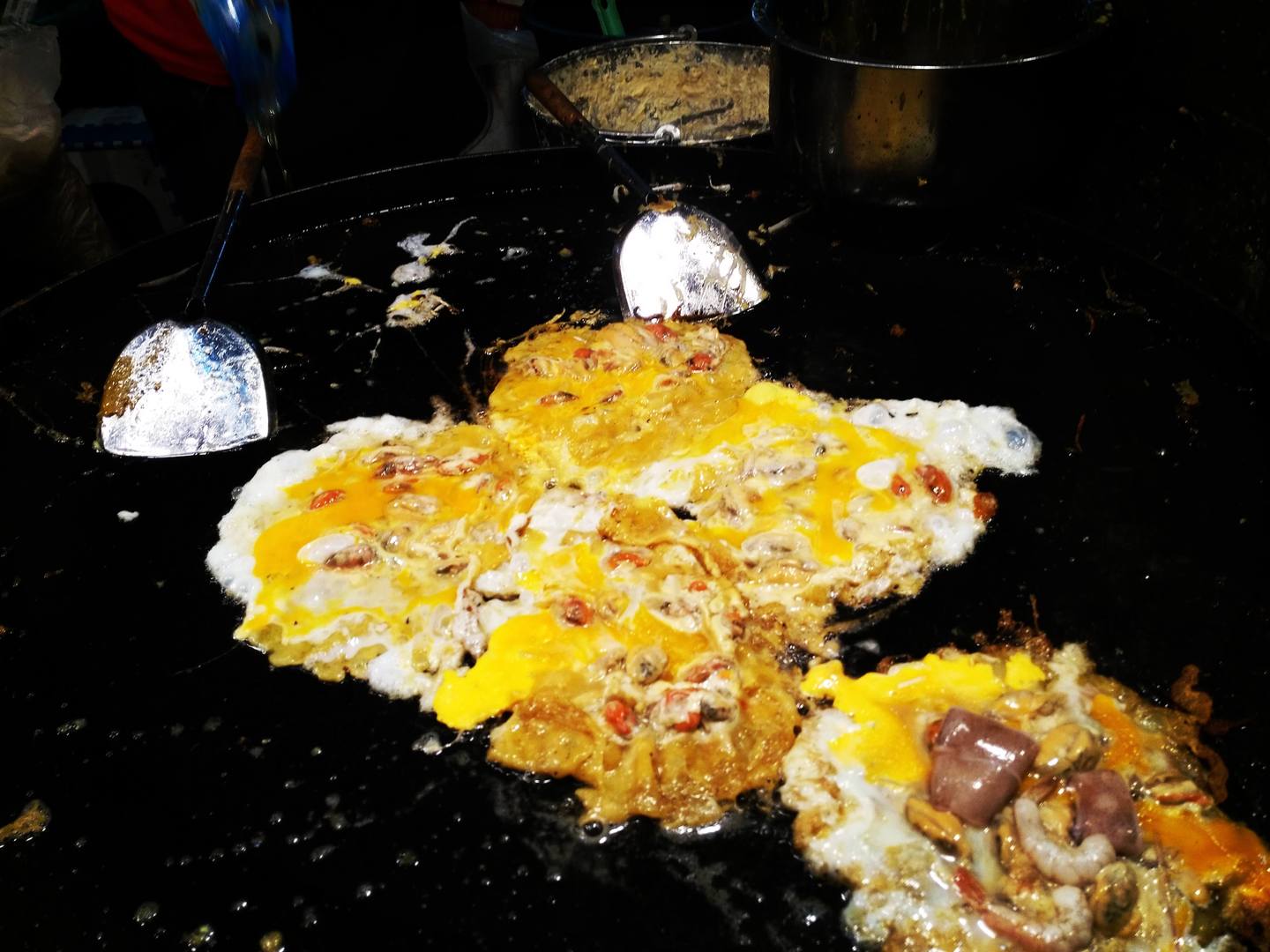
A richer festive version featuring shrimp and squid, especially popular in busy districts like Chinatown.
Pla Krob – Crispy Whole Fish
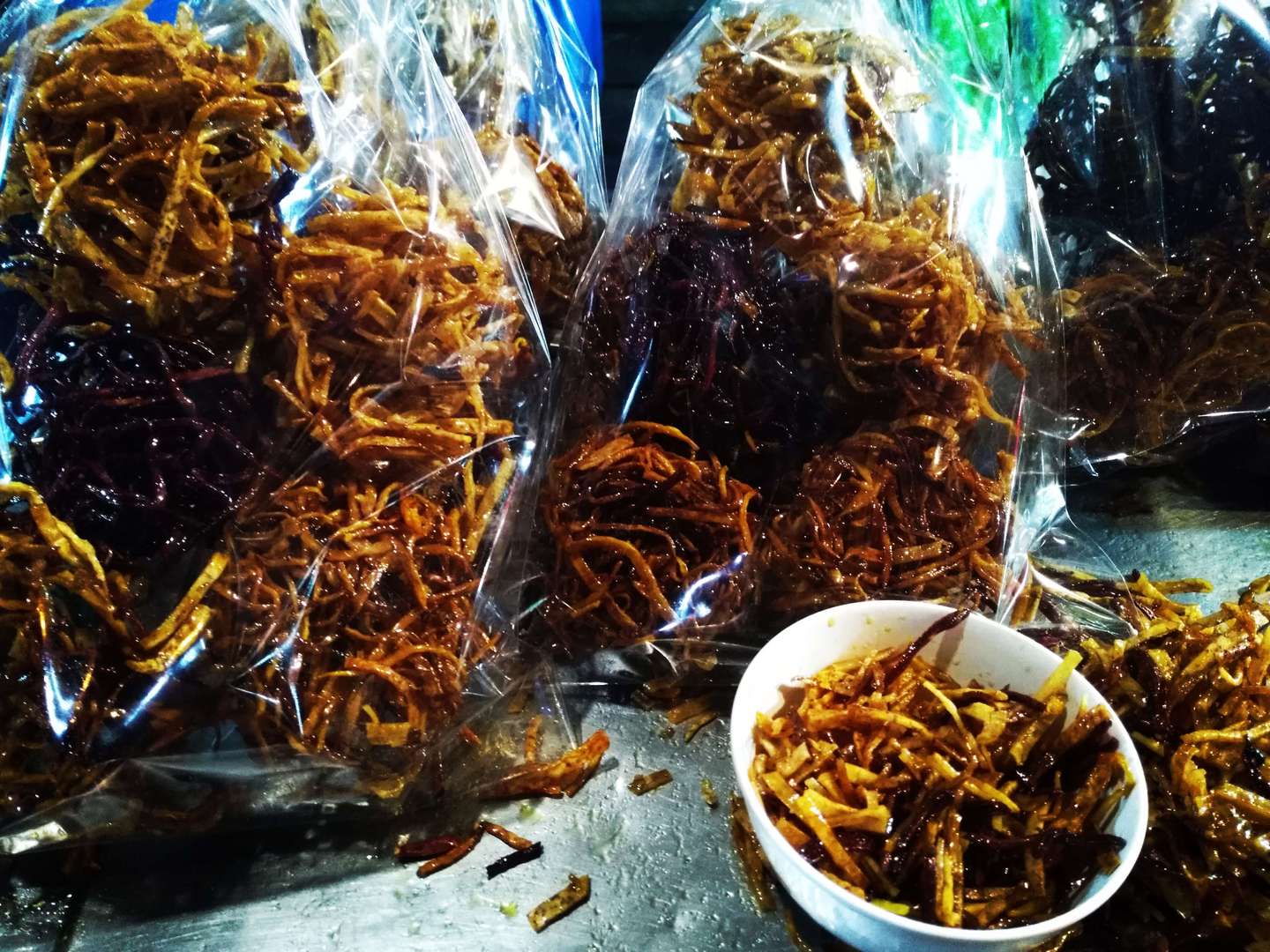
Whole grilled or fried fish symbolizes abundance and prosperity in Chinese culture. Its presence during Chinese New Year carries strong symbolic value.
Mu Yo – Vietnamese-Style Sausage Popular in Thailand

Mu Yo is a steamed pork sausage of Vietnamese origin, widely eaten in Thailand and often sliced and served at street stalls.
Sweet Mini Pancakes – Festive Dessert
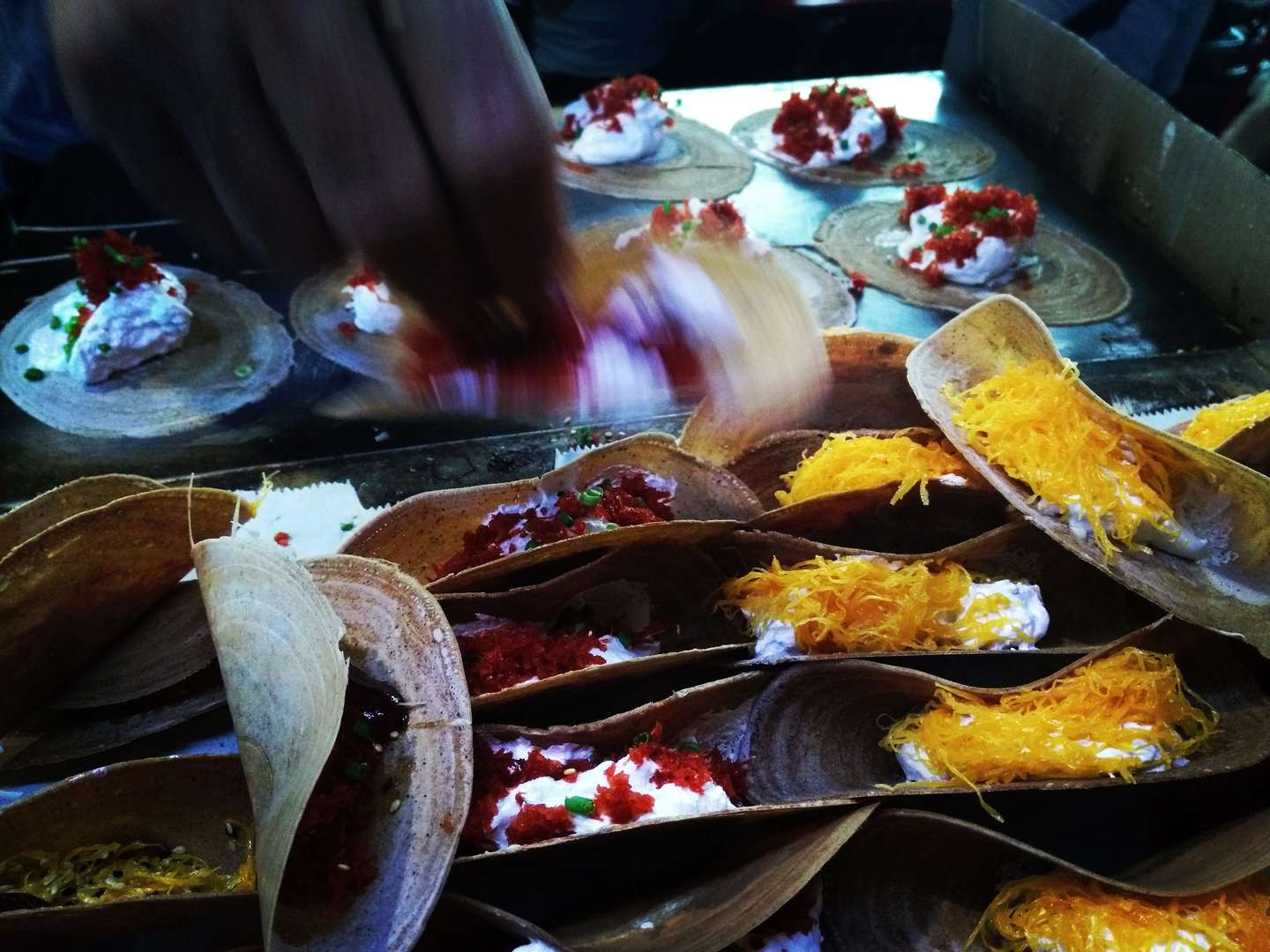
Light pancakes filled with sweet meringue are a favorite quick dessert enjoyed while walking through Yaowarat.
Saku Sai Mu – Tapioca Pork Dumplings
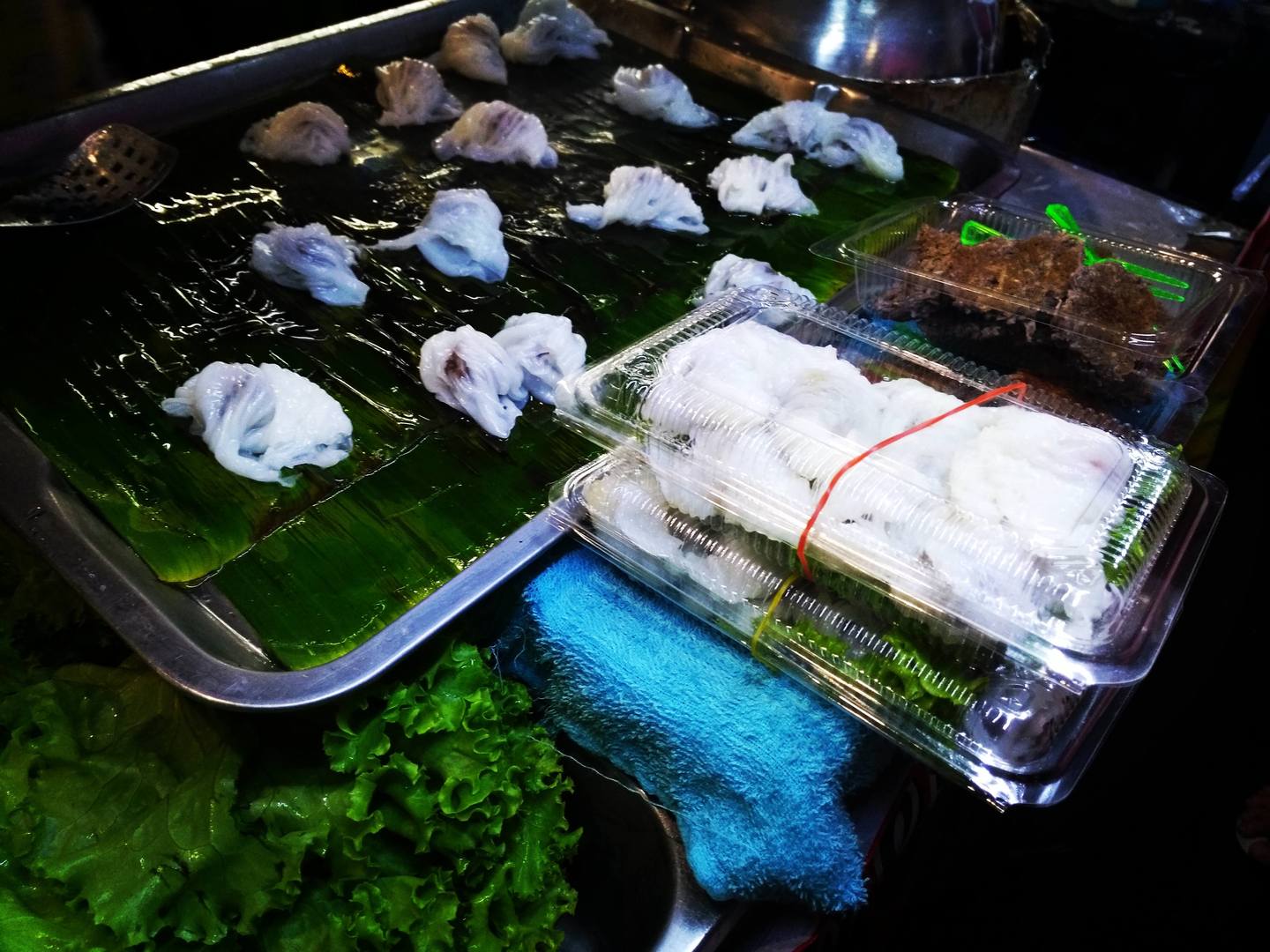
Made from tapioca pearls stuffed with seasoned pork and peanuts, Saku Sai Mu is a popular Thai festival snack.
Kanom Biscuit – Hong Kong Style
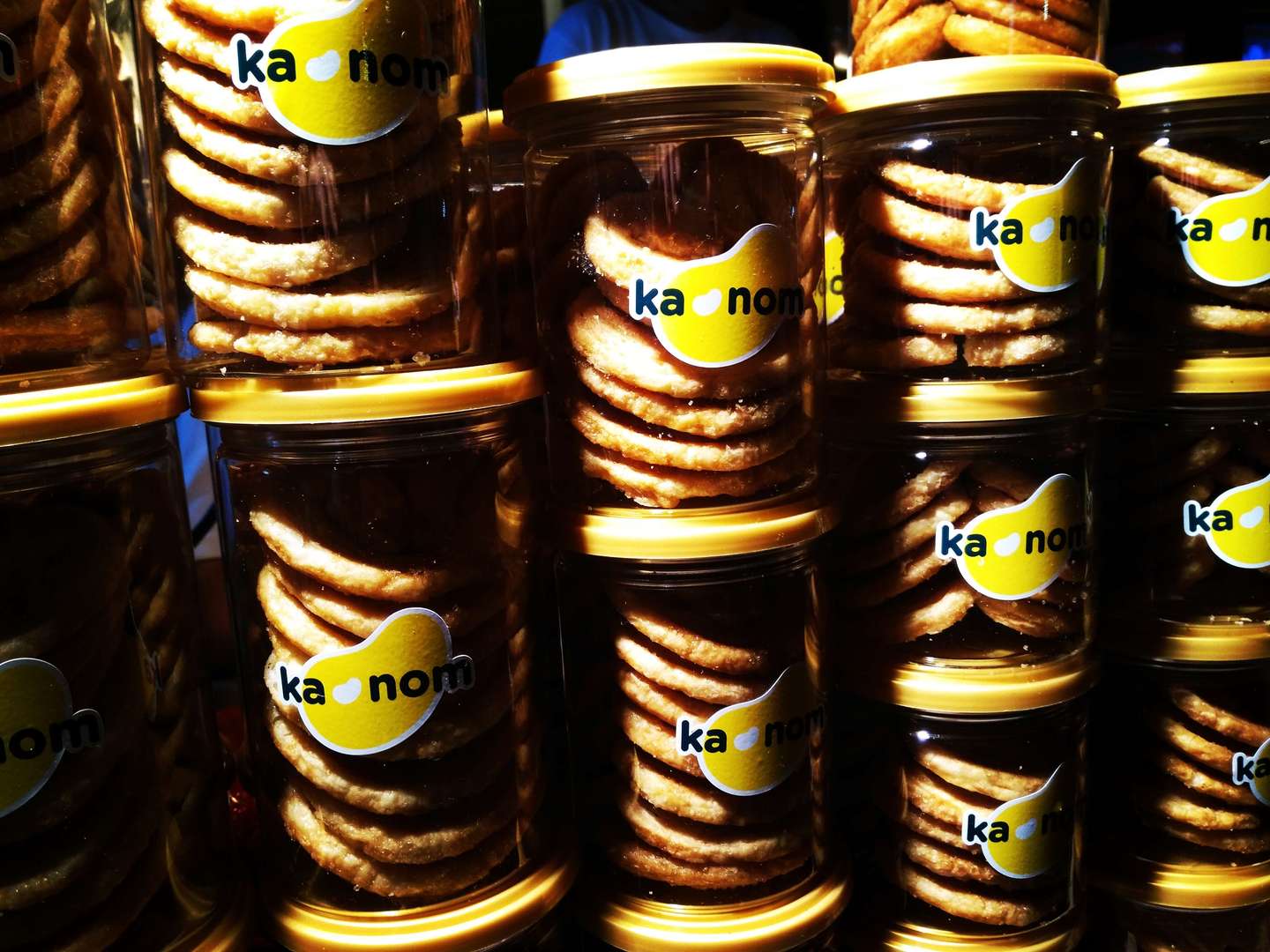
Sweet Hong Kong–inspired biscuits are often shared or offered during Chinese New Year celebrations.
Kao Na Kai – Chicken on Rice
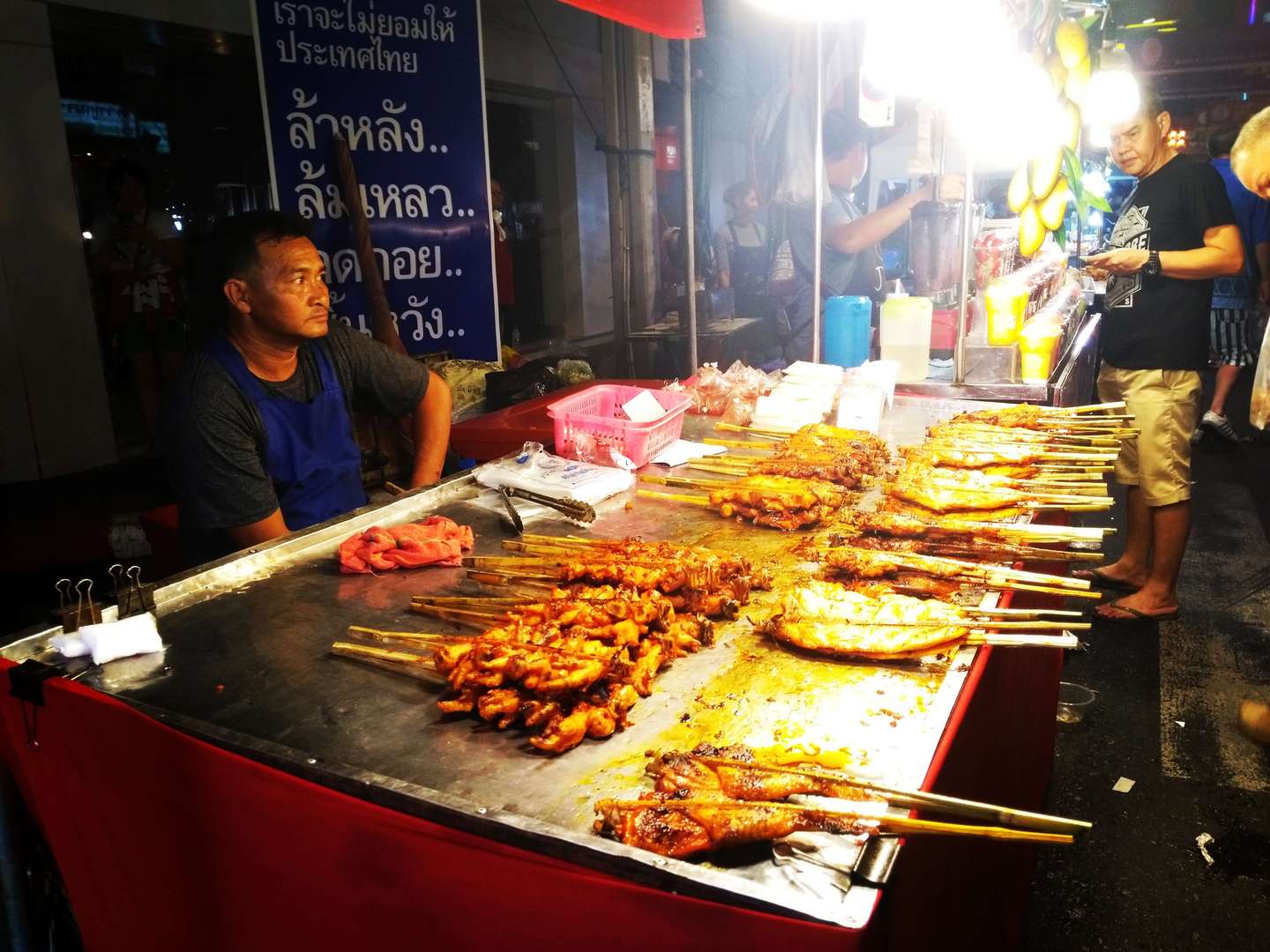
A simple and popular Thai dish combining white rice and chicken in sauce, common in Bangkok street food.
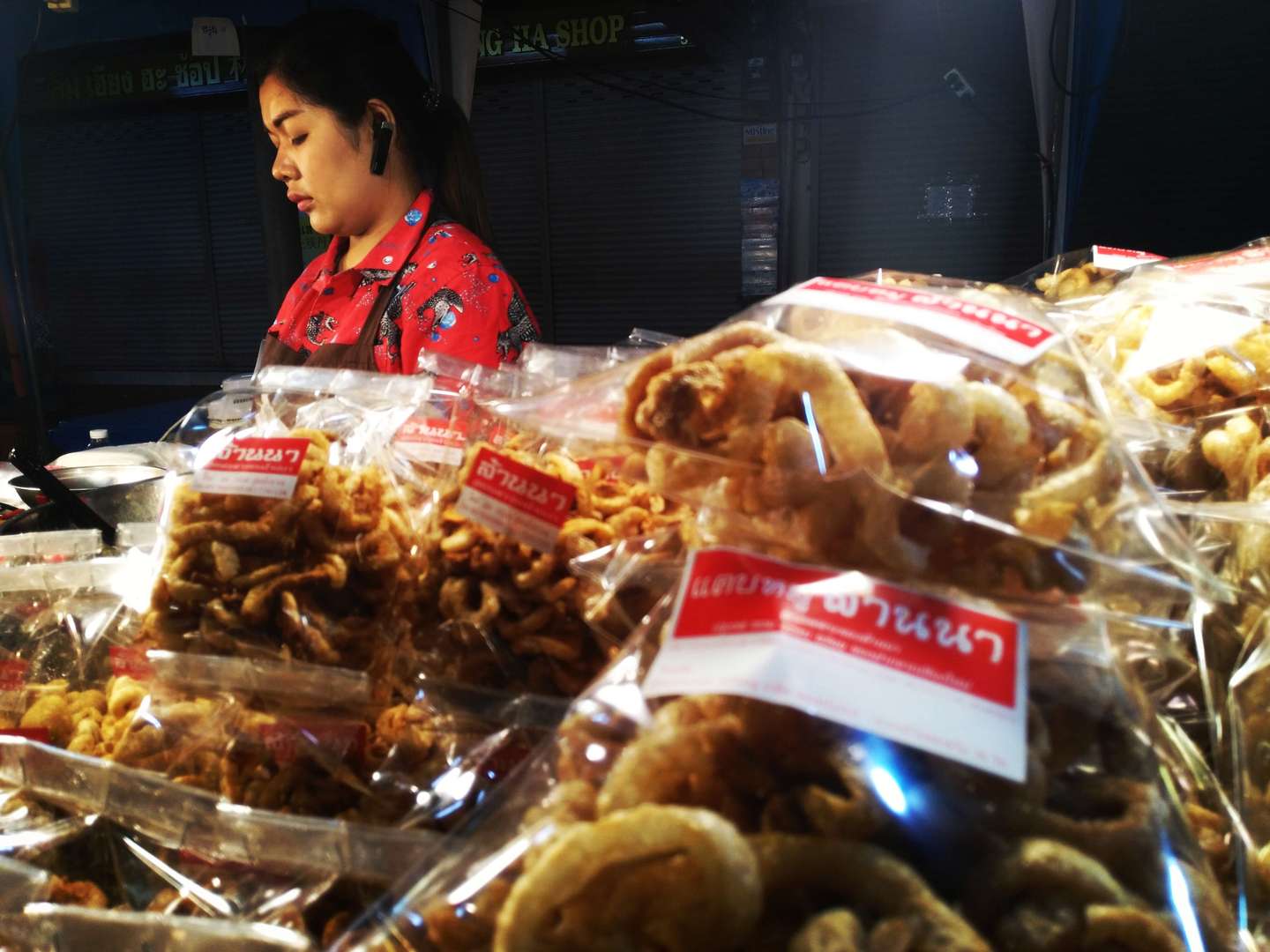
Kaeb Moo – Crispy Pork Skin
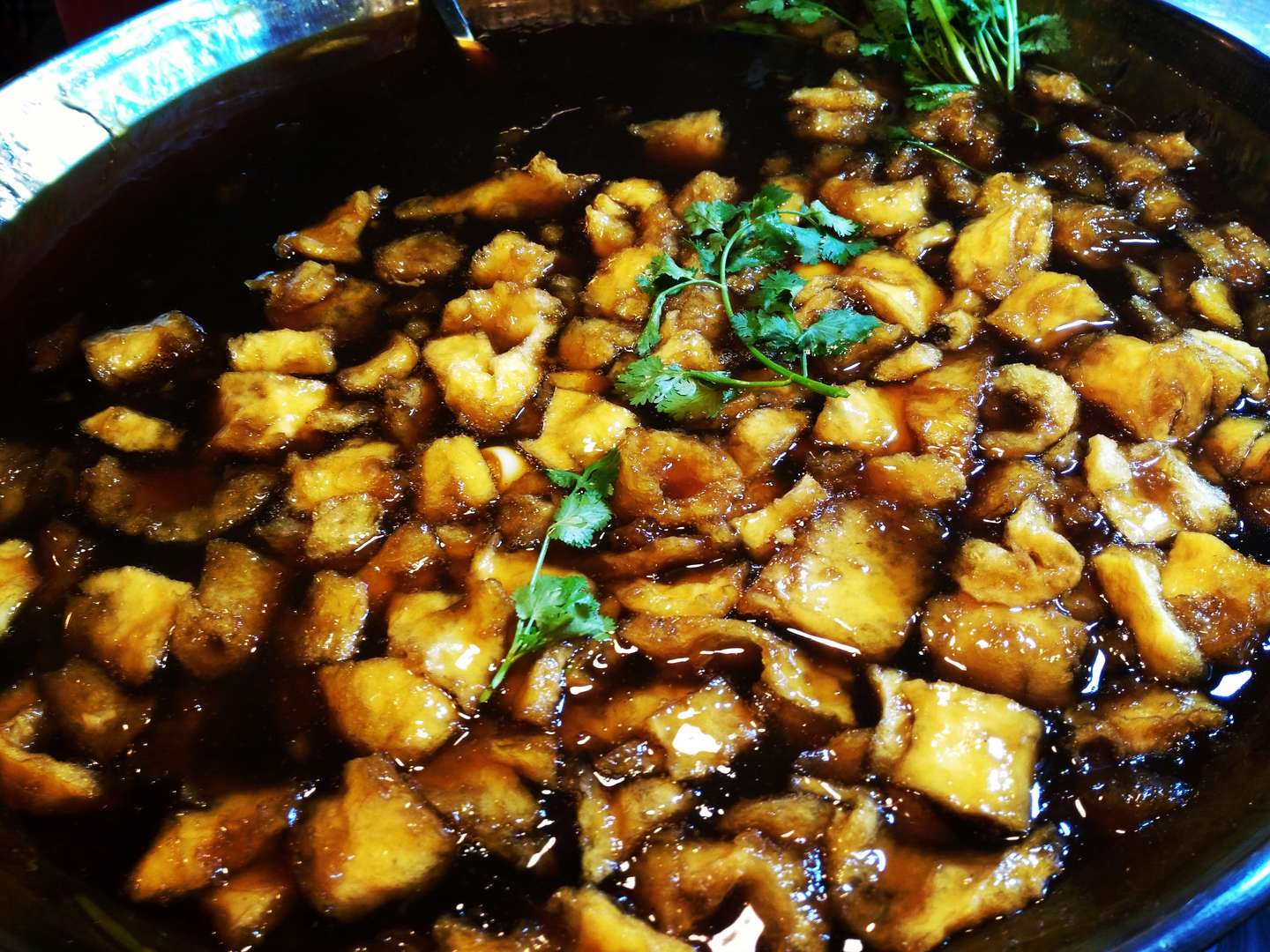
A northern Thai specialty made from fried pork skin, typically eaten as a savory snack.
Stir-Fried Seafood
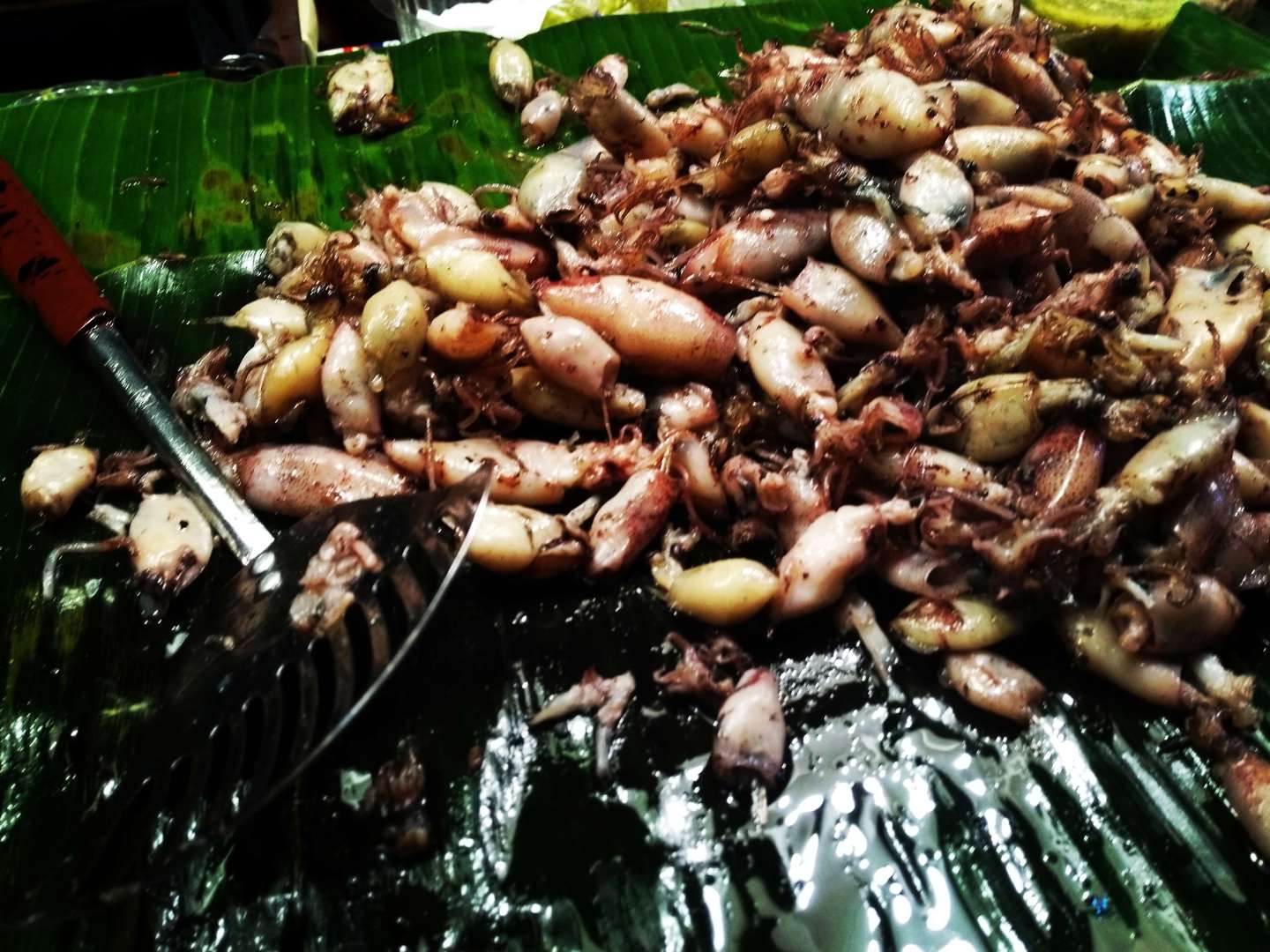
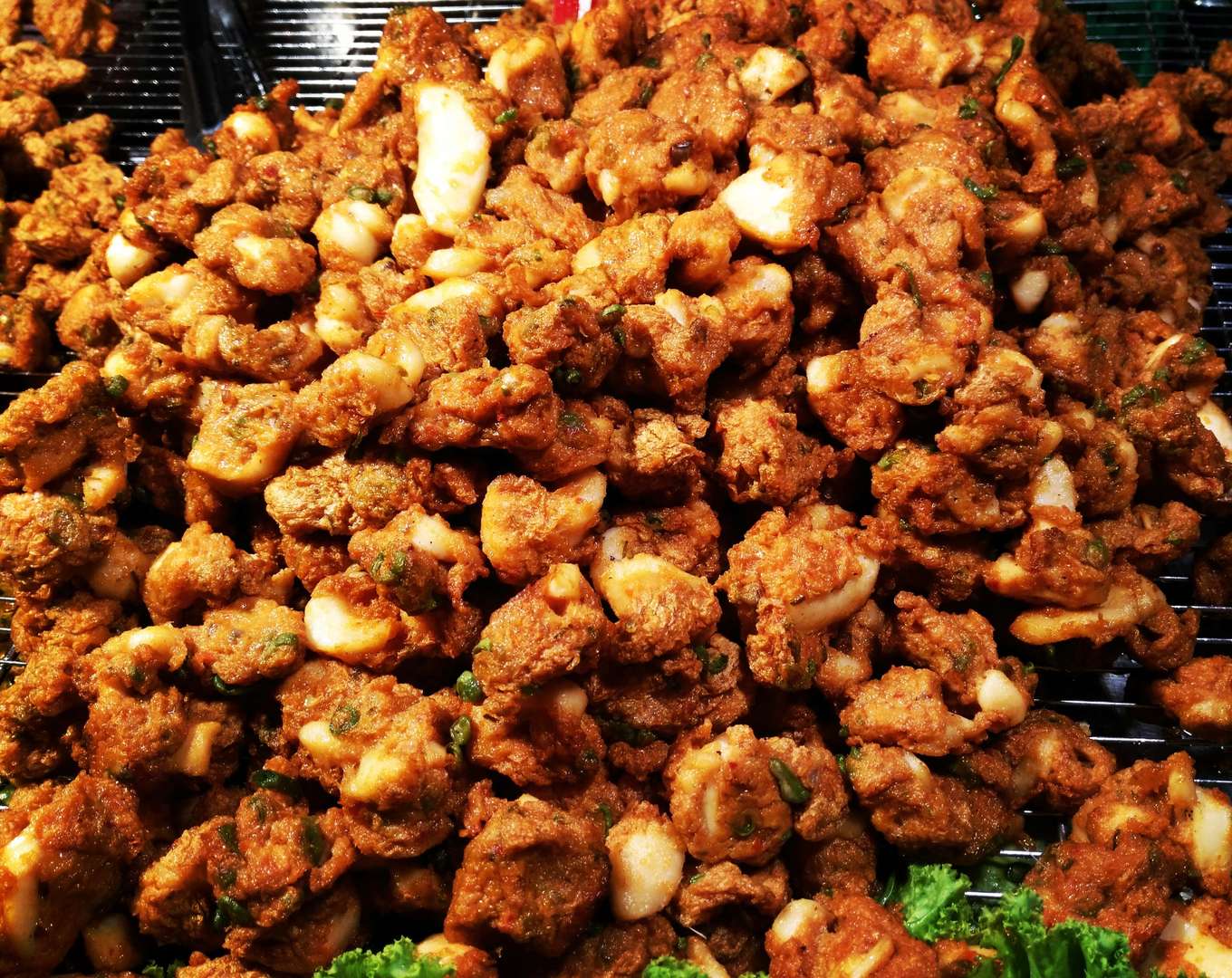
Squid, shrimp and shellfish cooked in a wok are among the most sought-after dishes during the festivities.
Makarn Che-im – Sweet Preserved Fruits
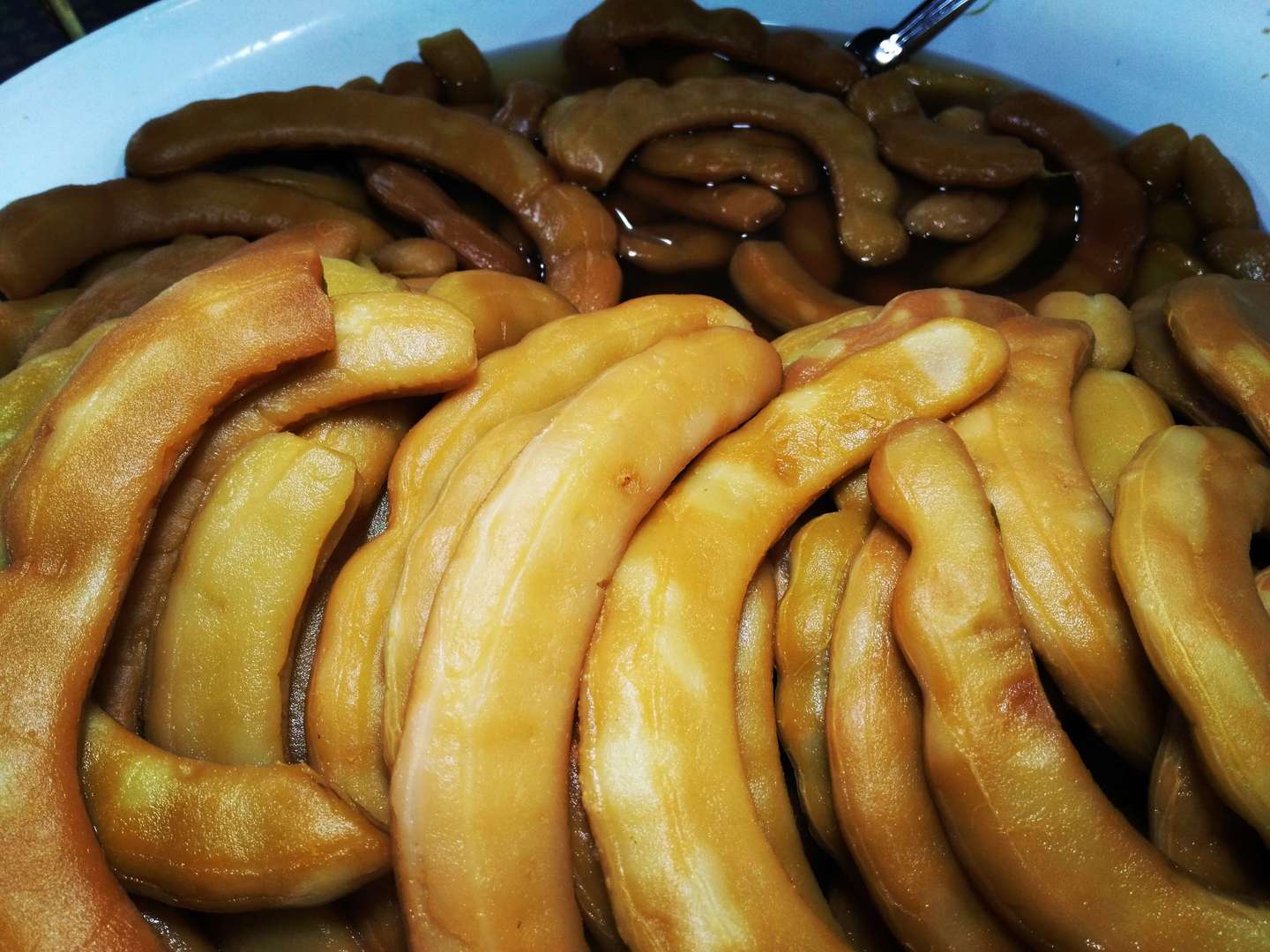
Candied or sweet preserved fruits are popular festive snacks.
Phuket Specialty – Garlic Butter Bread
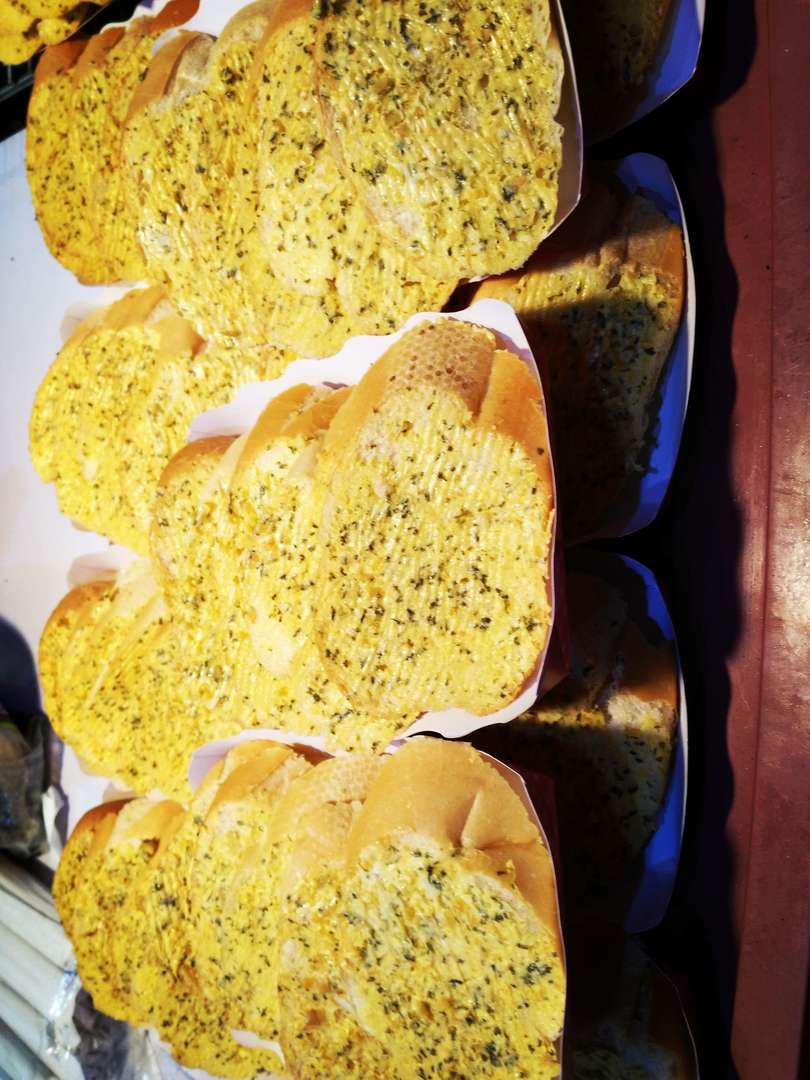
Influenced by Phuket’s Sino-Portuguese heritage, this garlic bread reflects historical exchanges between Chinese and Thai communities.
Mamvang Nam Plawan – Green Mango with Sweet-Salty Sauce
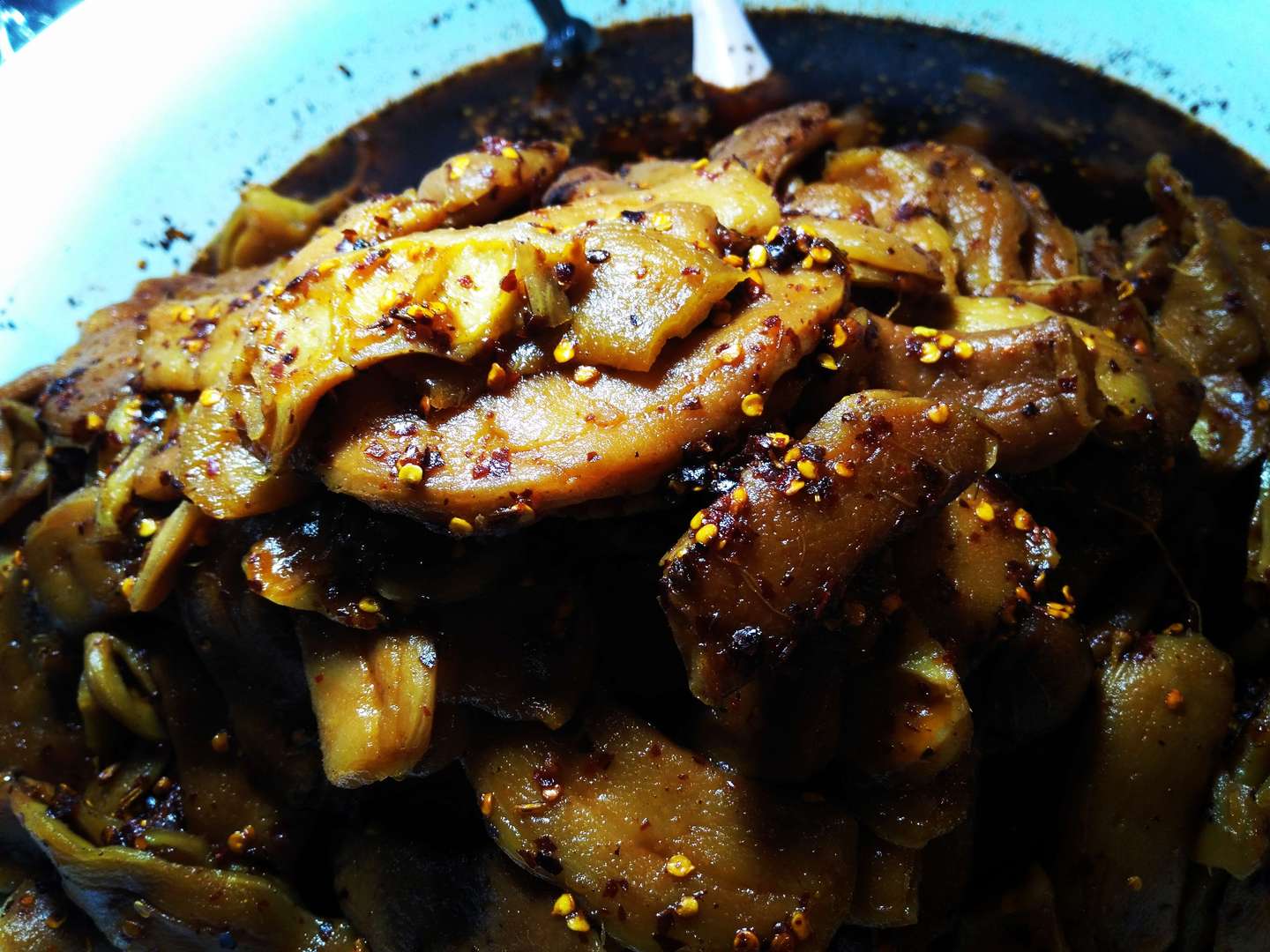
Green mango dipped in sweet-salty shrimp sauce is a Thai market classic.
Kanomjeap – Steamed Dumplings
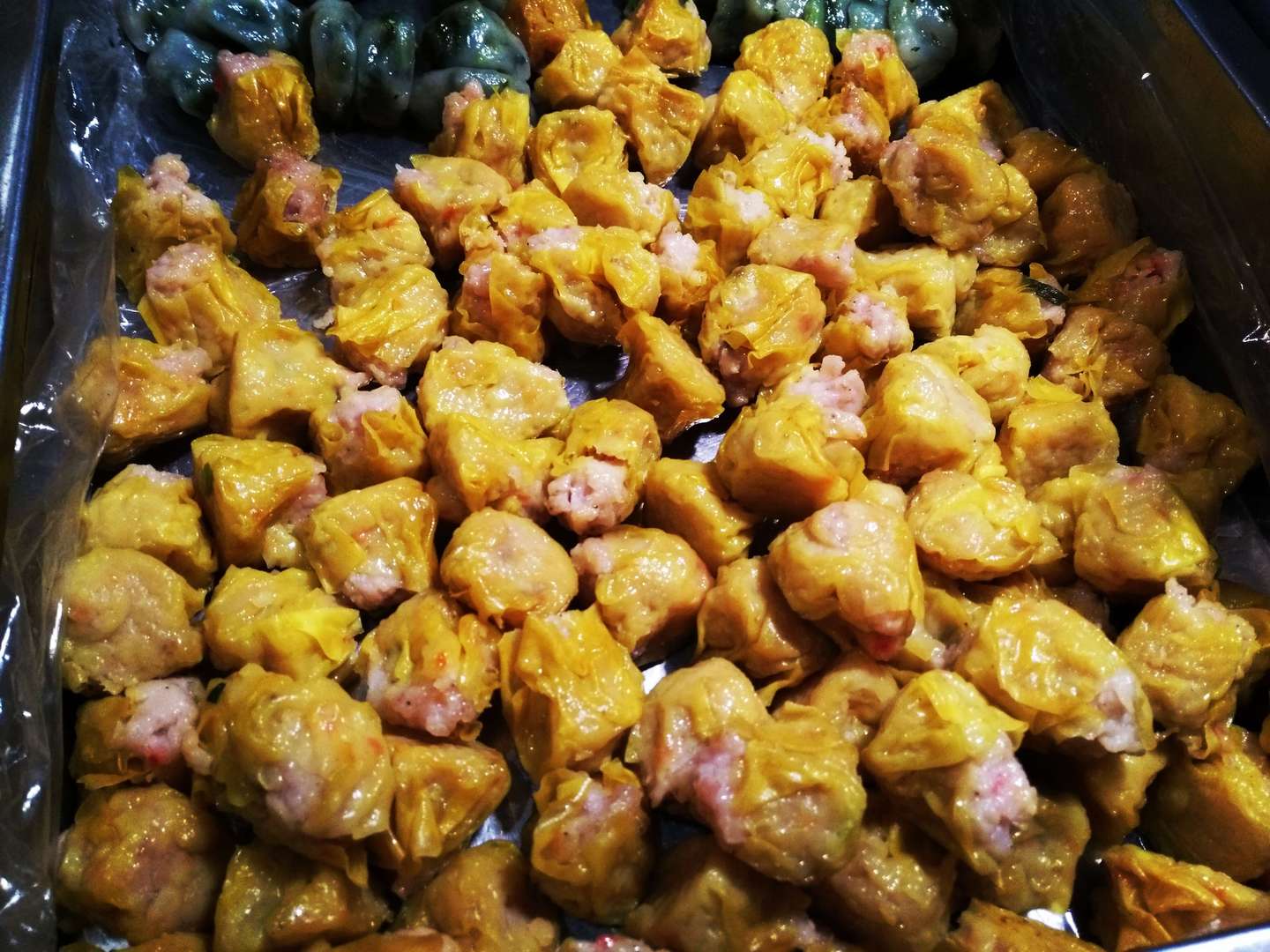
Similar to Chinese dim sum, these steamed dumplings are filled with shrimp, pork or crab and widely eaten during Chinese New Year.
Bajang – Sticky Rice in Banana Leaves
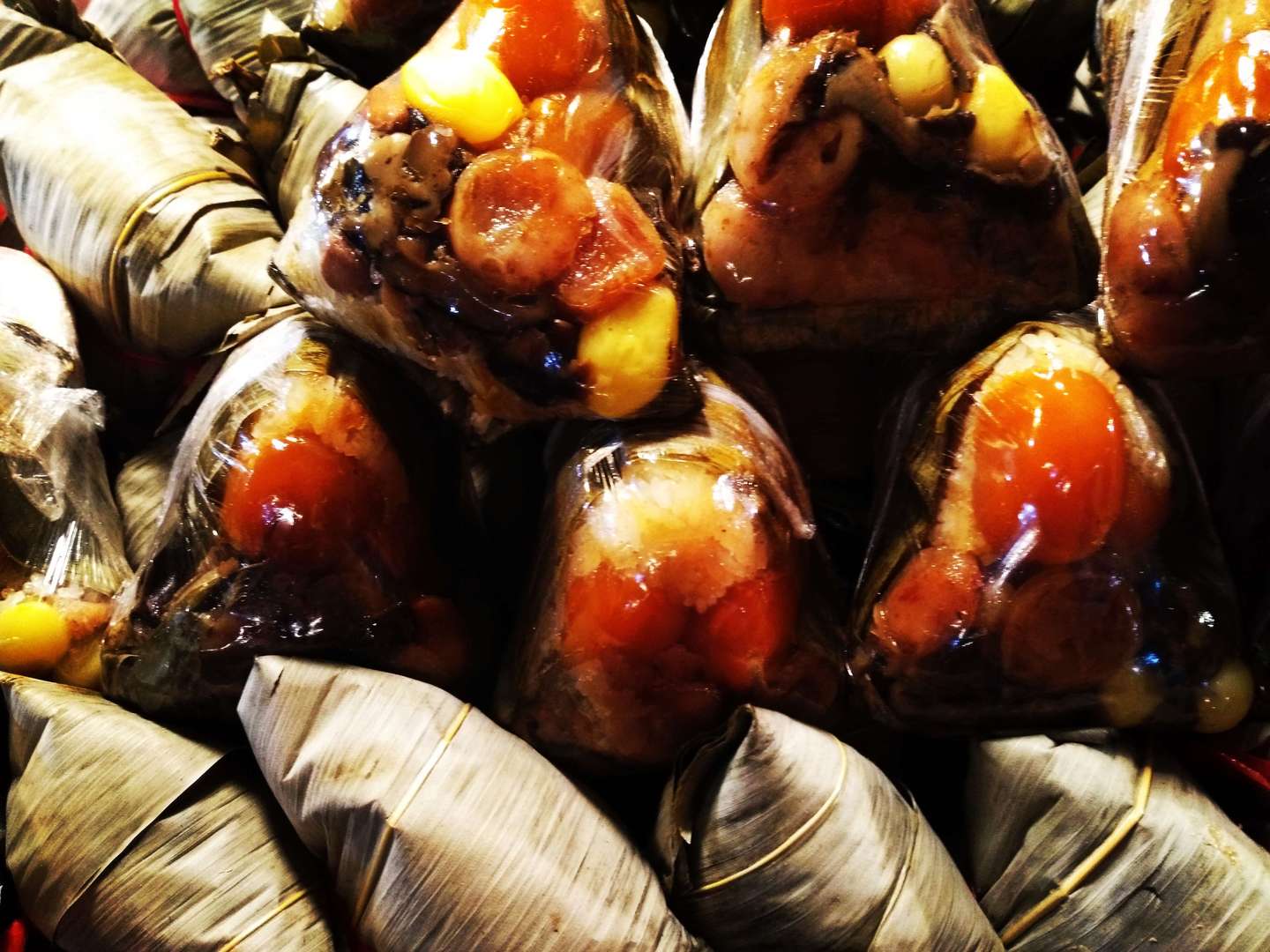
Comparable to Chinese zongzi, Bajang represents Sino-Thai culinary tradition.
Kao Larm – Coconut Sticky Rice in Bamboo
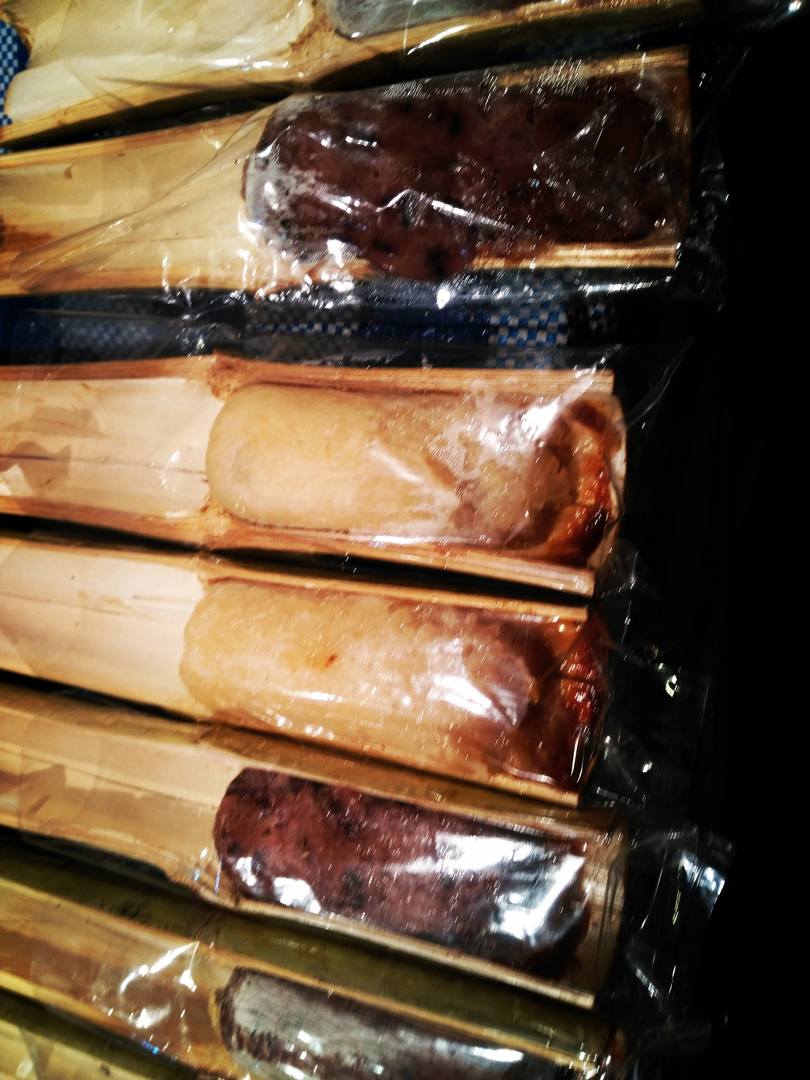
A Thai dessert made of sticky rice cooked in coconut milk inside bamboo tubes.
Grilled Prawns
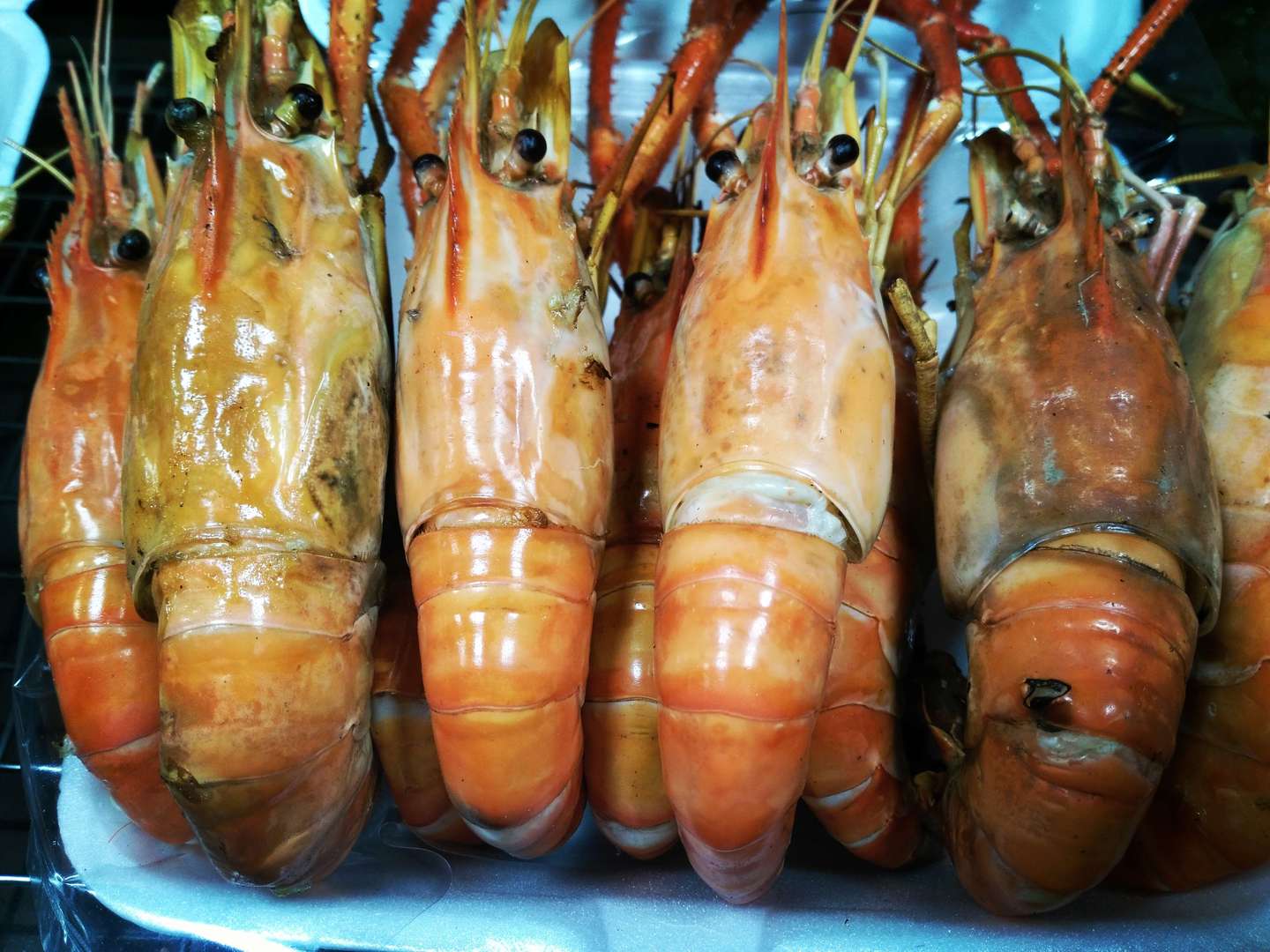
Shrimp symbolize happiness and vitality in Chinese tradition and are highly popular during the festival.
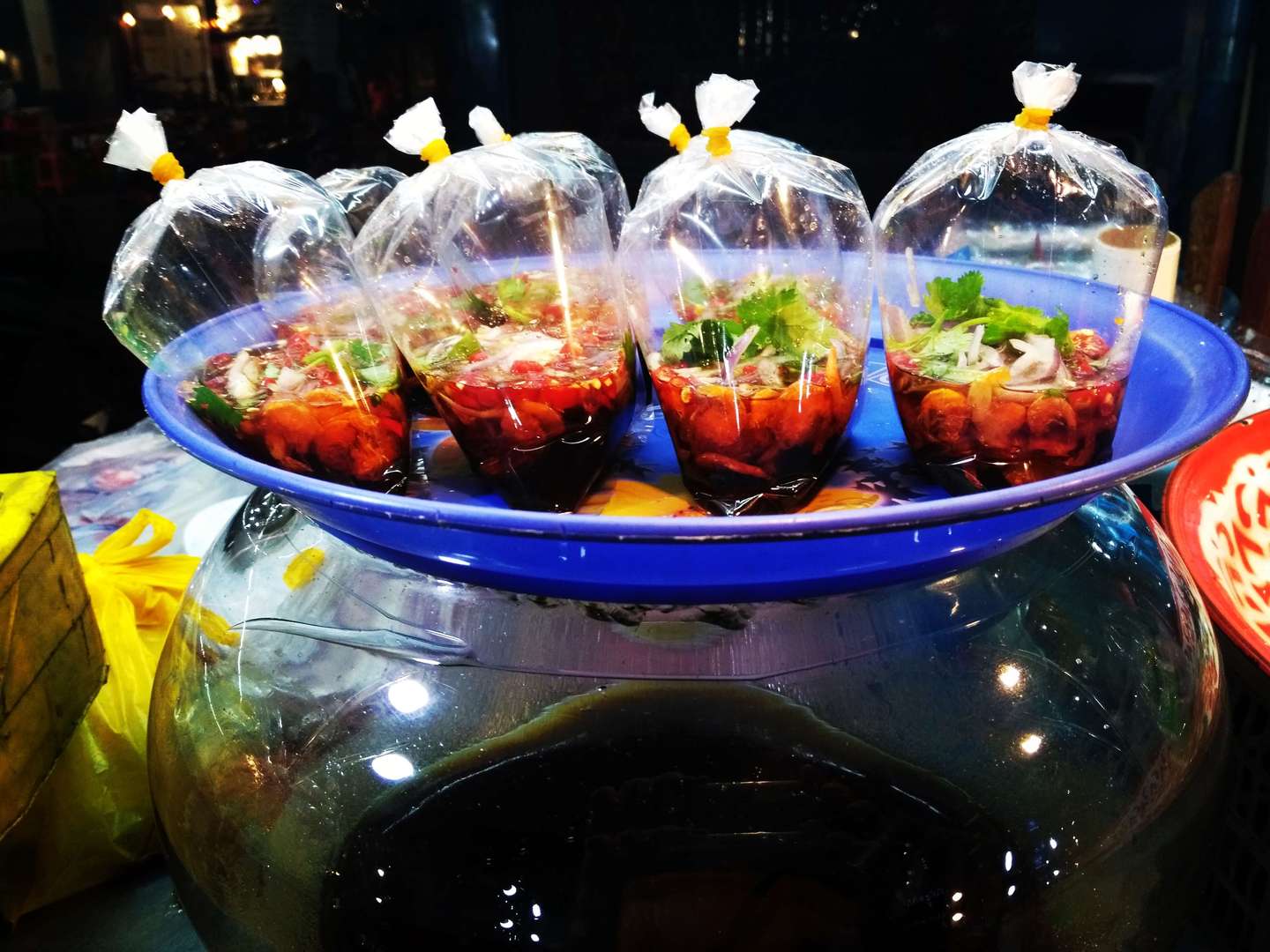
… and its seafood dipping sauce
Mango Sticky Rice – Thailand’s Iconic Dessert
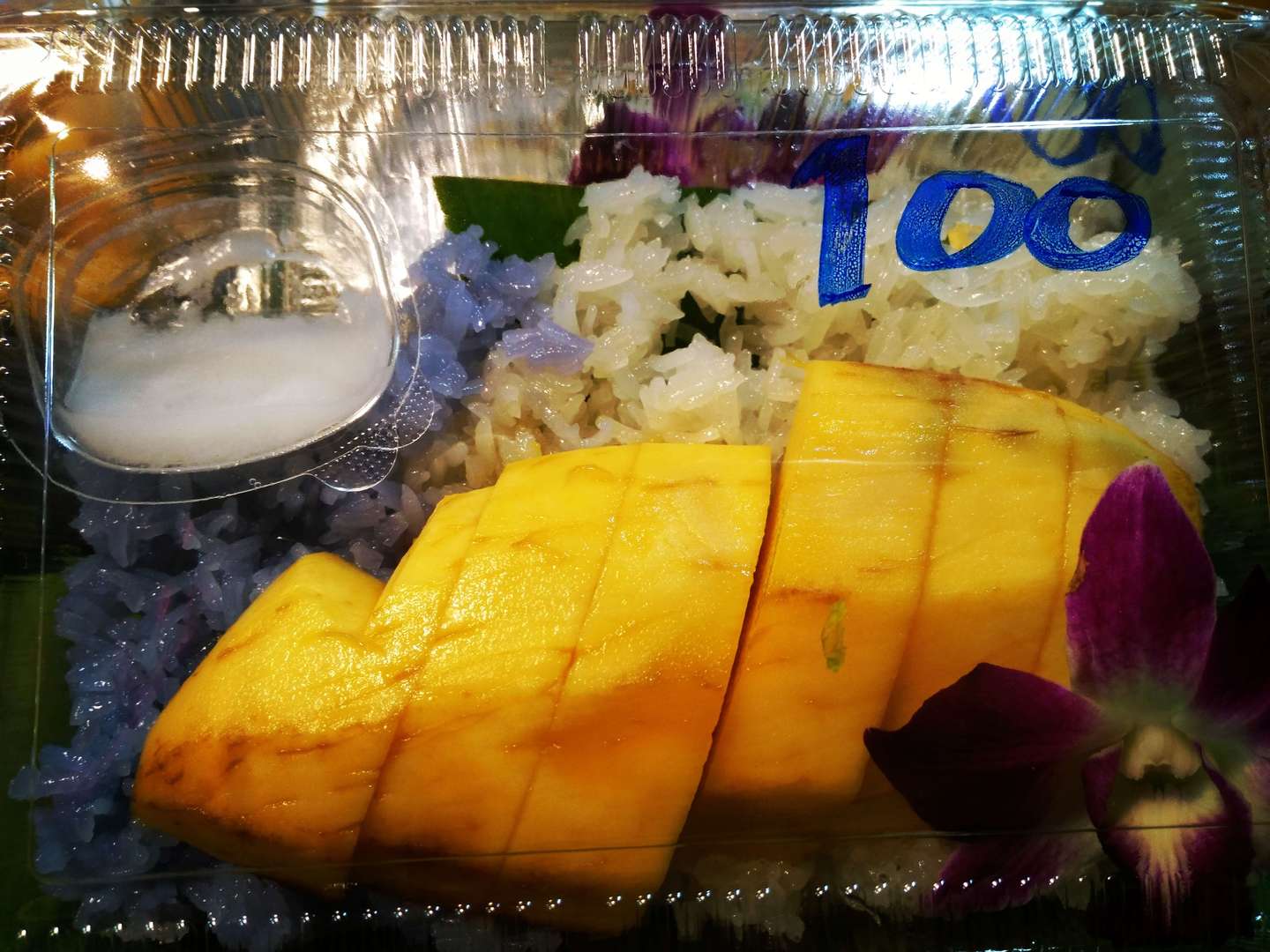
Sweet sticky rice served with ripe mango remains one of Thailand’s most emblematic desserts.
Durian – The King of Southeast Asian Fruits
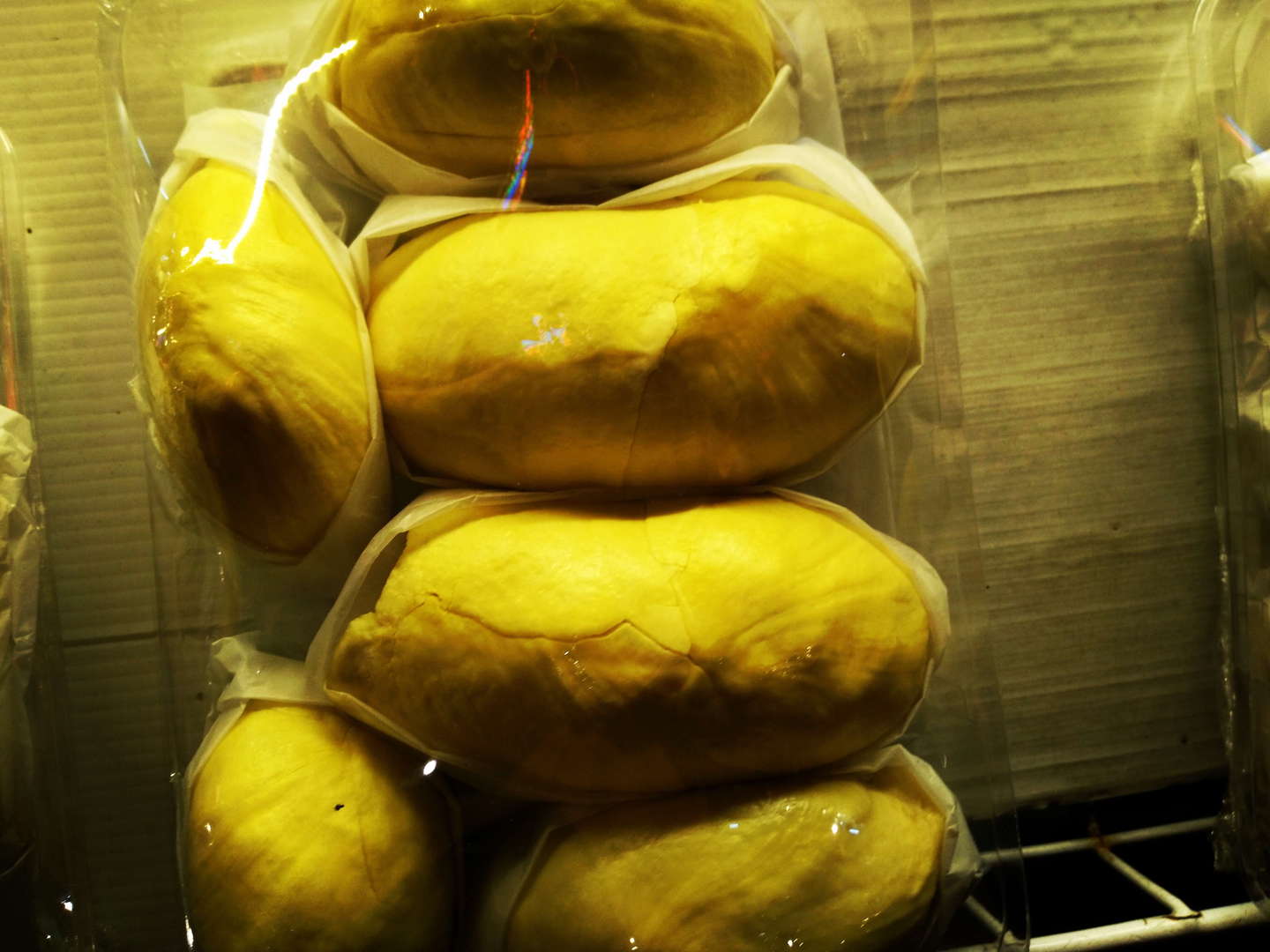
Extremely popular in Thailand, durian is often eaten fresh during festive periods.
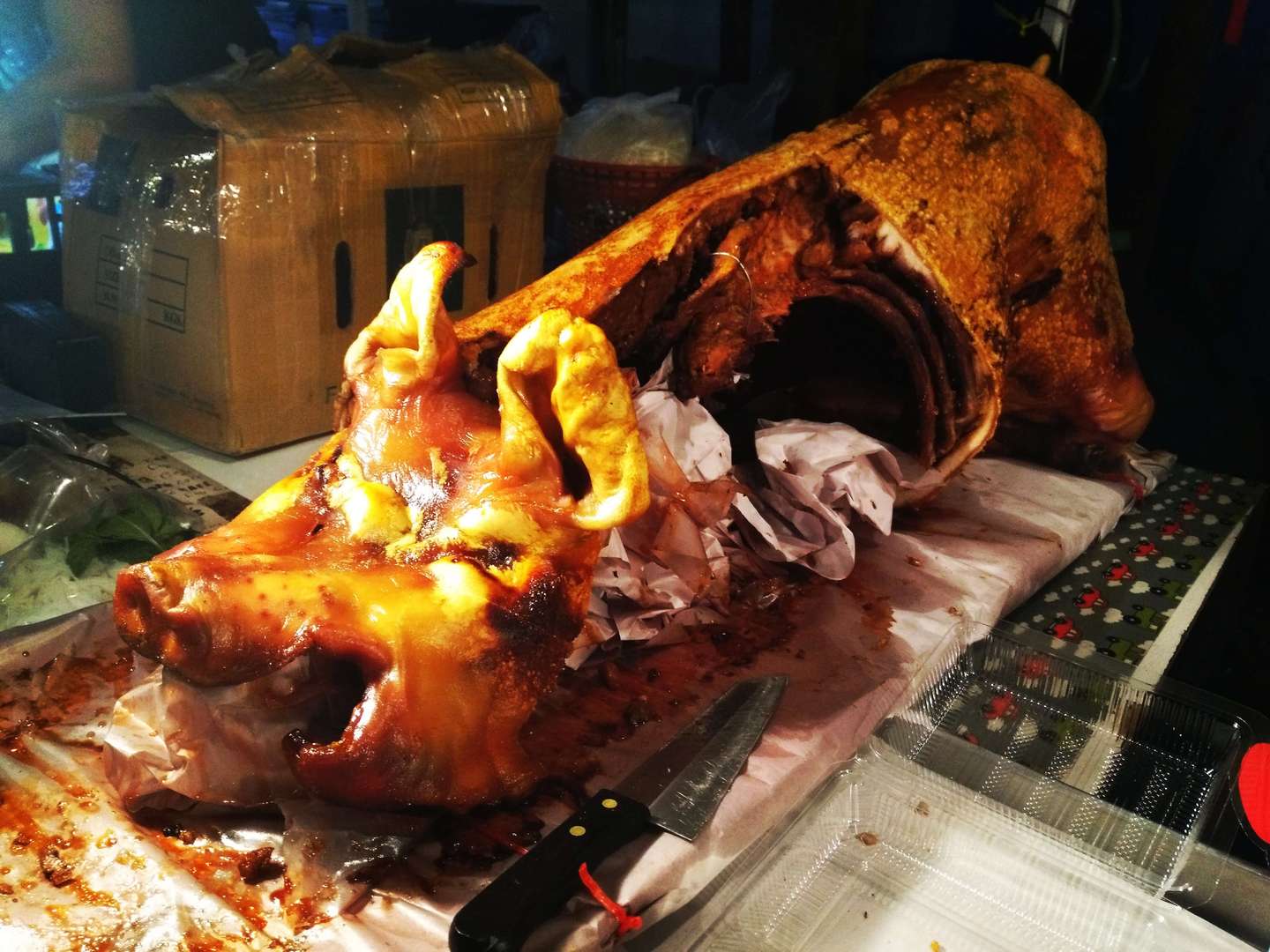
Roasted Pork – Symbol of Prosperity
Whole roasted pork symbolizes wealth and success during Chinese New Year celebrations.
Summary Table of Chinese New Year Specialties in Bangkok
| Dish | Origin | Sweet / Savory | Meaning or Feature |
|---|---|---|---|
| Roasted pork | Sino-Thai | Savory | Prosperity and abundance |
| Whole fish | Chinese tradition | Savory | Success and surplus |
| Kanomjeap | Chinese influence | Savory | Prosperity |
| Kao Larm | Thailand | Sweet | Popular festive dessert |
| Mango sticky rice | Thailand | Sweet | Iconic Thai dessert |
| Grilled prawns | Sino-Thai | Savory | Happiness and vitality |
Symbolism of Chinese New Year Dishes
Beyond taste, many dishes carry symbolic meaning:
- Whole fish represents abundance.
- Roasted pork symbolizes wealth.
- Long noodles signify longevity.
- Dumplings evoke gold ingots and prosperity.
- Red and golden fruits represent luck and fortune.
This symbolism explains why certain foods are especially sought after in Bangkok’s Chinatown during Lunar New Year.
Difference Between Chinese New Year in China and in Bangkok
In China, the festival is primarily a family-centered celebration focused on reunion dinners and returning home. In Bangkok, especially in Chinatown, the celebration becomes more public and urban. The Sino-Thai community blends ancestral Chinese traditions with Thai culture, creating a hybrid festival where symbolic dishes coexist with Bangkok’s vibrant street food scene.
FAQ – Chinese New Year Food in Bangkok
What should I try during Chinese New Year in Bangkok?
Roasted pork, whole fish, steamed dumplings, grilled prawns and sticky rice desserts are among the most emblematic dishes in Chinatown.
Is Chinese New Year a good time to explore Bangkok street food?
Yes. Yaowarat is at its liveliest, with temporary stalls and festive specialties.
What is traditionally eaten for Chinese New Year?
Whole fish, pork, dumplings, long noodles and sweet desserts symbolizing prosperity and longevity.
Where should I eat during Chinese New Year in Bangkok?
Chinatown (Yaowarat Road) concentrates most of the celebrations and food stalls.
Are the dishes more Chinese or Thai?
In Bangkok, the cuisine blends Chinese traditions with Thai specialties, reflecting the Sino-Thai community.